Science 2.0

Hank Campbell

Hank Campbell

Hank Campbell is an American science writer, author of the bestselling book 'Science Left Behind', and the founder of Science 2.0®, the world's largest independent science communications site. His work has appeared in the Wall Street Journal, USA Today, Wired, Chicago Tribune, CNN, and many more places.

RSS Feed
Weekend Science: Are You Bitter? You're More Likely To Drink IPA Beers

Weekend Science: Are You Bitter? You're More Likely To Drink IPA Beers

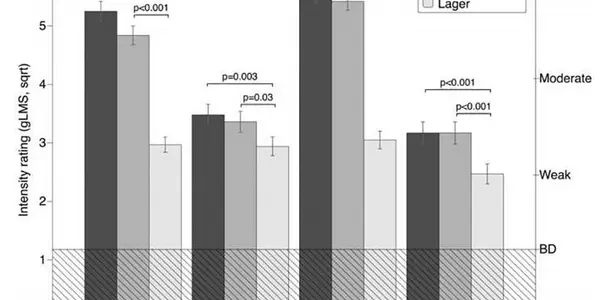
After centuries of converging on balanced, smooth beers, the industry suddenly lurched sideways in the 21st century. While large brands now have to fear for their existence, men in beards are making a fortune selling pronounced, bitter craft brews.The business segment may have been with us all along, according to a new analysis. The survey of 109 beer consumers in a blind experiment found that greater perceived bitterness increased the appeal of beers. This is the opposite of most foods.

Does Genomics Hold Back Advancement Against Racism In Medical Equality?

Does Genomics Hold Back Advancement Against Racism In Medical Equality?

A new Hastings Report compilation is based on the notion that genomics are the reason we still have medical inequality. Since genomics is a field that exists to sequence our DNA content and therefore help understand disease, it seems odd to posit that it could promote inequality when studying biology we all share.

American Academy Of Pediatrics: Children Don't Transmit COVID-19, Schools Should Reopen This Year

American Academy Of Pediatrics: Children Don't Transmit COVID-19, Schools Should Reopen This Year

The American Academy of Pediatrics is a rather reflexive group much of the time, so it seems bold for Pediatrics, the in-house journal for an organization that tried to argue kids should not be allowed to even walk to school until they are age 10, to take the position that children infrequently transmit COVID-19 to each other or to adults and that most schools can and should reopen in August.

Sorry Science, By High School 4X As Many Women As Men Want To Enter Medical Fields Instead

Sorry Science, By High School 4X As Many Women As Men Want To Enter Medical Fields Instead

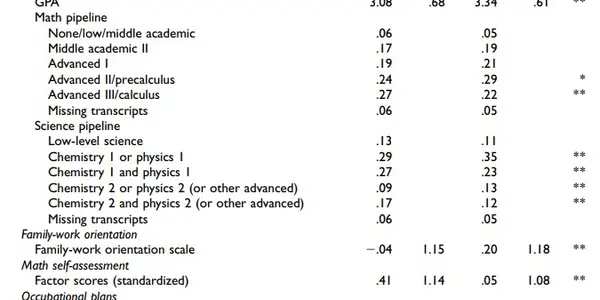
There are more women getting degrees in the life science, social science, and pre-med fields, while more men graduate in engineering and physics. Some contend that is gender bias introduced at a young age, but since education is 70 percent women it is difficult to charge them with sexism against females. Regardless of why, whether it is just that women prefer fields like medicine, where they can help people instead of doing theoretical physics, the data show fewer women than men get degrees in overall Science, Technology, Engineering, and Math (STEM) fields.

To Have Great Science Literacy, We Must Have Greater Digital Literacy - An Experiment Shows How

To Have Great Science Literacy, We Must Have Greater Digital Literacy - An Experiment Shows How

The anti-vaccine and anti-GMO movements are products of the digital age. While there were always vaccine deniers, they were a tiny religious fringe until the 2000s, when it took England and the coasts of the U.S. by storm. Similarly, odd beliefs about food always existed but they were relegated to obscure stores. Social media changed all that. Facebook and Twitter became hotbeds of misinformation because anti-science activists mastered creating 'buzz' by getting cabals of individuals, sympathetic journalists, and groups who capitalized on it to swarm around bombastic claims. Now those tweet storms become 'and here's how Twitter reacted' articles by lazy media outlets.

Would More Women In Academic Medicine Leadership Roles Have Improved Coronavirus Response?

Would More Women In Academic Medicine Leadership Roles Have Improved Coronavirus Response?

The U.S. Centers for Disease Control and Prevention (CDC) were shown to be a bureaucratic mess when the coronavirus pandemic hit - refusing to send coronavirus tests unless hospitals first proved proved patients had coronavirus, then sending faulty reagents - and academic epidemiologists often seemed to be just making things up, but one area came through nicely; academic medicine.Medicine, along with the life sciences and social sciences, are areas where women dominate in graduates but because leadership positions are often held for lengthy periods, when it comes to the top levels the numbers aren't the same. Men are in control.

5G Update: Belief In Harm Is Still Belief In Magic

5G Update: Belief In Harm Is Still Belief In Magic

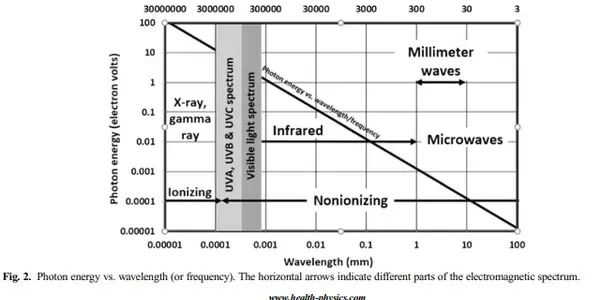
Robert F. Kennedy, Jr. The NYU Arthur L. Carter Journalism Institute, Berkeley psychologist Joel Moskowitz, and other anti-science conspiracy theorists use the language of science against it to advance their beliefs that we're all being harmed by the modern world.So when they see a scientific statement like "very low risk" of harm from any cell phone service, including 5G, they have a ready retort to mobilize the coastal Karens and Darrens who make up their ranks; that's not no risk.

Coronavirus Has Shown Alternative Energy Is Luxury Spending, Not Part Of A Realistic Strategy

Coronavirus Has Shown Alternative Energy Is Luxury Spending, Not Part Of A Realistic Strategy

If you know the government is going to subsidize your business, you are a lot more agreeable to starting a company with questionable prospects than if you have to compete in the free market. If government subsidies decline, you are in real trouble if you have not shown your business model works.That is the plight of alternative energy like solar and wind and ethanol today. Though pundits have insisted their economic models show it works, you can't spend virtual money. Financial reality is that without subsidies funded by governments who force conventional users to pay for those $25,000 solar installations, the industry will collapse.  Governments can't tax economic models. They can't tax an expense.

New Study: Beef In A Healthy Diet Does Not Increase Risk Of Heart Attacks

New Study: Beef In A Healthy Diet Does Not Increase Risk Of Heart Attacks

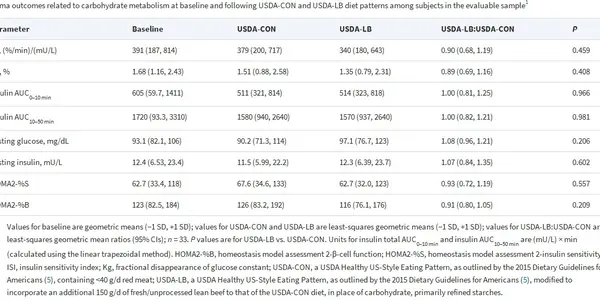
For decades there has been a statistical controversy about meat. By statistical I mean it was never a real health issue. Instead, though we clearly evolved to eat it, epidemiologists statistically correlated meat to dying and said therefore we shouldn't eat it. Though such studies noted down at the bottom that the relationship was not causal, they wanted the public to believe it because they highlighted the causal inference in press releases, and so media rushed to claim that meat causes heart attacks.A few years ago, epidemiologists at France's International Agency for Research on Cancer (IARC) joined in, using their own meta-analyses to declare that meat was just as hazardous to health as plutonium. And smoking. And mustard gas.