Science 2.0

Hank Campbell

Hank Campbell

Hank Campbell is an American science writer, author of the bestselling book 'Science Left Behind', and the founder of Science 2.0®, the world's largest independent science communications site. His work has appeared in the Wall Street Journal, USA Today, Wired, Chicago Tribune, CNN, and many more places.

RSS Feed
12  Years In Science Journalism Have Taught Me Not To Trust Academic Pollution Claims - And Neither Should You

12 Years In Science Journalism Have Taught Me Not To Trust Academic Pollution Claims - And Neither Should You

Academics and their conspiracy-minded followers are always the first to suggest that anyone who debunks their claims must be shills for Big Evil, but Science 2.0 gets no money from any polluter (and in the past, when I have challenged academics who insist Science Is A Corporate Conspiracy by offering to show the donor list in return for a bet that would be a tax-deductible donation if they lost, none have taken me up on it) (1)Here is the problem. They write, for example, that Between "1970 and 2017, combined emissions of six common pollutants (PM2.5 and PM10, SO2, NOx, VOCs, CO and Pb) dropped by 73%, while the U.S. economy continued to grow, Americans drove more miles and population and energy use increased" but then claim it is now rising.
Capricious California: Coffee Won"t Have A Prop 65 Warning, Which Means Few Products Should

Capricious California: Coffee Won"t Have A Prop 65 Warning, Which Means Few Products Should

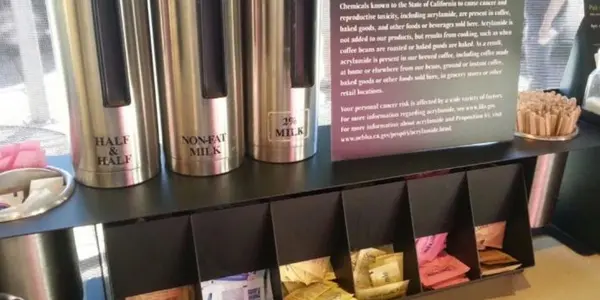
After attracting scorn with bizarre classifications of a weedkiller, bacon, and hot tea, the French statistics group known as the International Agency for Research on Cancer (IARC) decided to puncture claims that activists had manipulated the process by doing a flip-flop on coffee. Though they were widely expected to increase the hazard designation from 1991's already bizarre "possibly carcinogenic", they suddenly reversed course and lowered a classification of a product for the very first time. 

Insects? Lab-Grown Meat? Are You Ready For Lab-Grown Insect Meat?

Insects? Lab-Grown Meat? Are You Ready For Lab-Grown Insect Meat?

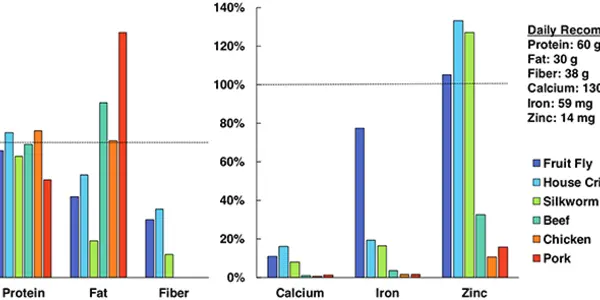
Pop culture is in a bit of a quandary. Though food is essential for life, culturally it is no longer a basic necessity, and that's thanks to science. We grow more food on less land than ever dreamed possible. Even Europe, with all its political limitations in agriculture. Food is a cheap commodity and that makes it a values issue.

RIP Murray Gell-Mann, A Great Physicist Who Taught Science Journalists How To Do Better

RIP Murray Gell-Mann, A Great Physicist Who Taught Science Journalists How To Do Better

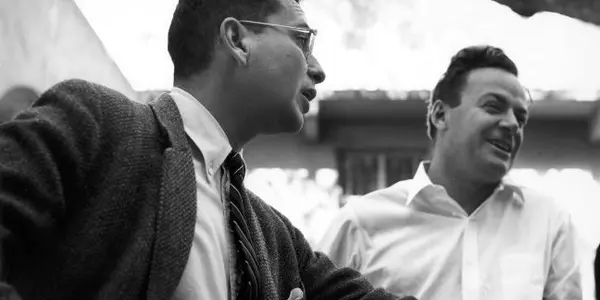
RIP to Professor Murray Gell-Mann, who passed away last week and was famed (including a Nobel prize) for quark theory. I never met him, but if you spent time at Caltech you probably did. He was not like Einstein, I am told, he was approachable if you were a young scientist, but you had to know what you were talking about. A few years ago I taught a class there, invited by my friend the best-selling author and science journalist Greg Critser, who was an instructor for science journalism at the school. He had previously agreed to be on an AAAS panel I was moderating in San Francisco and I was returning the favor for him by being a guest speaker for his class at Caltech.

Why Advertising Doesn't Work Very Well - People Profiled By Demographics Actually Agree On Little

Why Advertising Doesn't Work Very Well - People Profiled By Demographics Actually Agree On Little

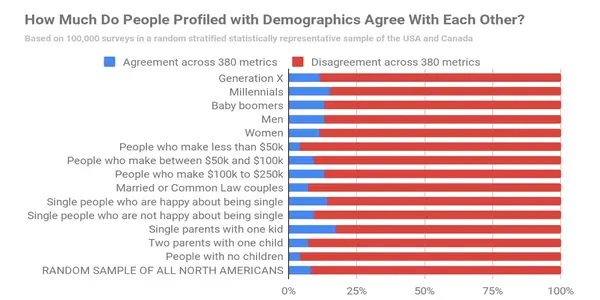
If you want to annoy someone in their late 30s, joke that all they care about are avocado toast points or beard grooming or running off to Coachella when a project needs to be finished. Because they are millennials.You can also stereotype Baby Boomers or Generation X(1) and get a rise out of them. Everyone seems to know that these "generation" classifications were entirely manufactured by advertisers, but they caught on and have become part of the lexicon. Advertisers created these sweeping generalizations based on demographics.Yet they may not be right at all. They may even be shockingly wrong.

Your Meat Does Not Bleed - But That People Think It Does Is Important For Plant-Based Substitutes

Your Meat Does Not Bleed - But That People Think It Does Is Important For Plant-Based Substitutes

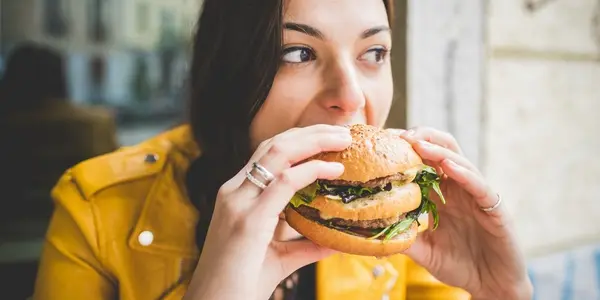
If you have cooked a steak or a hamburger you know that by the time you are ready to serve it, and certainly after you cut or bite into it, there will be liquid that oozes out of it. Anti-meat groups know it isn't blood(1) but they use that imagery to try and sway people to their cause. And groups who make substitutes for meat also use that imagery, because they think that's important to meat eaters. Because marketing groups have long used it, people think it's blood, and even use the term "bloody."

The Voynich Manuscript Has Been Decoded. Again. Except It Hasn't.

The Voynich Manuscript Has Been Decoded. Again. Except It Hasn't.

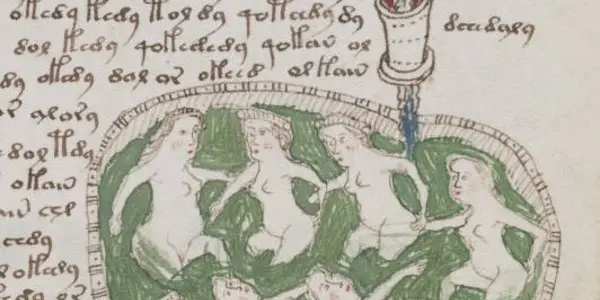
Beinecke MS 408, commonly called the Voynich manuscript (after Wilfrid Voynich, a book dealer who bought it in Italy), has long been dismissed as gibberish by most, but beginning in 1915, and certainly since the 1960s, it has also been a source of fascination for people who believe it must be a code. Or a recipe book. Or something. It is actually a proto-Romance language, according to a new paper. It just had never been written before because educated people used Latin, says Dr. Gerard Cheshire.So uneducated people wrote in a language from 2000 years earlier?

UC San Diego Ghost Whisperer Paul Mills Suggests Organic Food Will Mean Less Liver Disease

UC San Diego Ghost Whisperer Paul Mills Suggests Organic Food Will Mean Less Liver Disease

Scientists seem to have finally had enough of activists who promote every study in mice as if it were relevant to humans. A Twitter account, @justsaysinmice, calls out such bad behavior and quickly grew to 57,000 followers by linking to studies produced each day and noting they are just in mice. Clearly there was a lot of frustration pent up about hyperbolic claims in media using animals.

FDA Warns Public Of Homeopathic 'Remedies' That May Actually Do Something - Like Kill Your Kids With Natural Rat Poison

FDA Warns Public Of Homeopathic 'Remedies' That May Actually Do Something - Like Kill Your Kids With Natural Rat Poison

Homeopathy, now two centuries old, proceeds from a fascinatingly bizarre premise; that there is a u-shaped curve for dose. Reasonable people know the dose makes the poison; a medicine that can help you at normal levels can be harmful at high levels. Homepaths (and the Endocrine Disrupting Chemical community) instead also believe in an upward curve at other end, that chemicals at extremely low levels can also affect people. This u-shaped curve allows all manner of homeopathic "remedies" to be foisted off on people, not to mention allowing anti-science activists to attribute magical statistical harms to chemicals that science can't detect.

Another California Jury Says Glyphosate Might Have Caused Cancer, And That's Worth $2 Billion

Another California Jury Says Glyphosate Might Have Caused Cancer, And That's Worth $2 Billion

Glyphosate, a common weedkiller, doesn't have a mechanism that acts on the biology of humans, at least without falling into a tub full of it and drowning, but trial lawyers know science does not matter to a jury, emotion does. And emotionally an agriculture company can come off stiff compared to a couple who used the product for 35 years and then both got non-Hodgkin lymphoma.