Variety Tap

ashley

ashley

I'm an undergrad in chemistry on my way to getting a Ph.D. I have many different interests including genetics, fire fighting, rock climbing, marine biology and literature. I'm also very concerned with environmental issues and hope to make a dramatic …
RSS Feed
The Evolution Of The Rectangular Eye

The Evolution Of The Rectangular Eye

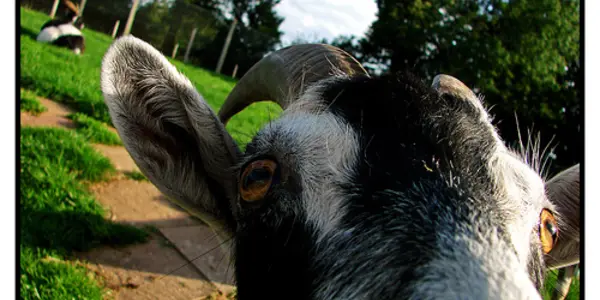
Eyes are the interface between the outside world and our brain's perceptions.   Being the instrument of sight, and therefore a lot of our information, we rely on the functions of our eyes quite obsessively, and why wouldn't we?  They make it possible to observe our beautiful world and really appreciate different species and the unique characteristics they hold - like their eyes. Evolution of the Eye

Create Light Pollution Awareness And See Some Stars - The Great World Wide Star Count

Create Light Pollution Awareness And See Some Stars - The Great World Wide Star Count

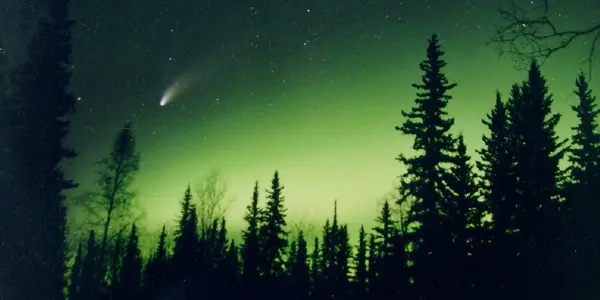
The awe of staring into the never-ending black sky is what brings thousands to the hilltops every year; myself included. I have always been interested in astronomy and the vastness of space. Even as a thirteen year old I was wishing upon stars, plotting constellations, and dreaming of venturing to a world beyond... Knowing how much I loved the sky, my mother set up a trip to the Sierra Nevada's to catch a glimpse of the miraculous night sky. The view was beautiful, just dazzling with stars brighter than I had ever seen. Looking up into a world of pearls nestled in a black canvas, shimmering wildly, and in contrasting colors ... but I wasn't going to settle for just looking at the dots in the sky; I wanted to see the planets up close. To define their unique characteristics and so on, so the few dozen astronomers who had hosted this event set up their telescopes, directly pointing them at various stars and galaxies.I will never forget the feeling it gave me... an irresistible sense of insignificance when I peered into space, almost a euphoria. Realizing that I was smaller than a speck of dust in the whole scheme of things baffled me, and it changed my perspective toward many things as a result... It was an exhilarating experience and it included the outstanding pleasure of seeing other worlds as well as S'mores by the campfire when the event was through. Needless to say, when I returned home the following night, I immediately ran outdoors to capture the remarkable sights yet again. Only something had drastically changed; the millions of stars I had seen the night before were reduced to a handful - if that.  

Carbon Nanotubes?  Spiderman?  It's All Gecko to Me

Carbon Nanotubes? Spiderman? It's All Gecko to Me

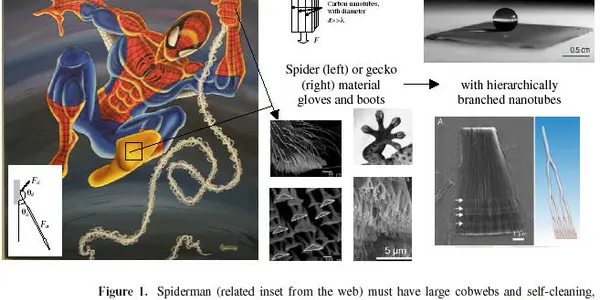
A Gecko's ability to climb sheer walls has long caught the attention of scientists and they've been trying for years to duplicate this strange talent.

Major universities such as UC Santa Barbara, Georgia Institute of Technology and the University of Dayton have recently come to grips with materials that mimic a gecko's ability to stick. Some new research in Science on this is referenced below but there have been a few others over the last year also.

With this recent research, the structural composition of the zoological magic behind the gecko's sticky feet has nearly been reproduced, and then comes the possibility to make it available for human use. This technology may take humans to new heights, literally ... sound like Spiderman anyone?

Who Were (Or Are) The World's Maddest Scientists?

Who Were (Or Are) The World's Maddest Scientists?

I have a secret; as much as I enjoy reading about the latest advancements in biology and physics, I sometimes like reading about the darker side of experimentation.

Most scientists have a fundamental basis for experimentation and results but then there were (and are - we'll get to them in future installments) others who ran with their own rules and avoided opposition by keeping the results mostly secret. These are the people I am referring to as 'Mad Scientists' rather than using the more colloquial 'crazy' meaning of the term. We all know most doctors are around to help patients, for example, but those who perform their own twisted experimentation make this list. Some will be more controversial (you may not think they are mad at all) but they made my list of "World's Maddest Scientists" and we can discuss it. (dun dun dun...)

Acai Berries: Super Food Or Hype?

Acai Berries: Super Food Or Hype?

Chances are that if you've even stepped near a health foods store in the past few months, you've heard tales of an amazing imported fruit claimed to be one of the greatest super-foods of our time; the Brazilian Acai/Açaí (ah-sigh-ee) berry. Rich in antioxidants and packed full of health benefits, the tiny berry sparked an obsession in the health food world, even without significant laboratory testing.

Famous Scientists That Inspire Me (And Maybe You Too)

Famous Scientists That Inspire Me (And Maybe You Too)

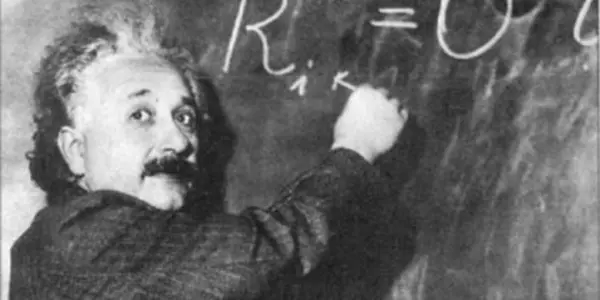
In the day to day hustle of our busy lives full of research, formulae, vats of coffee, etc. we often forget to think about those who walked this road before us and created many of the techniques we use. Without their contributions, it's difficult to imagine where we would be. With that said, here's my way of giving thanks and showing appreciation to all those who came before us in the field of science and to help inspire other people out there trying to do great things now; famous words from famous scientists. 

Humans ... Will You Miss Us When We're Gone?

Humans ... Will You Miss Us When We're Gone?

"We are the most dangerous species of life on the planet, and every other species, even the earth itself, has cause to fear our power to exterminate."

*******

At least that's how Wallace Stegner, American novelist and environmentalist, puts it. And it certainly seems to be the word on the street in a lot of other places these days. Humans are at fault for everything under the sun - figuratively and maybe literally.  I don't disagree we can do better but, for the sake of humanity, someone needs to stick up for us.Humans are the only species in 4.8 Billion years of planetary existence that has completely gone against the basic theory of evolution. Instead of adapting to our surroundings, we've made the environment adapt to us. We like to think of ourselves as simple beings, living day by day doing what we believe is right, but when we finally take a moment to reflect, we still pursue higher issues like why are we here?Of course, I can't answer that question, but it gives us a way to think about the real impact we've come to have. We are leaving a significant imprint by our behavior in the present and, I don't know about you, but I personally don't want the entire human race of the early 21st century to be looked down upon for the few mistakes we have made.Let's begin at the beginning; wayyy back to the age of the Dinosaur.

An Underwater War for Oil

An Underwater War for Oil

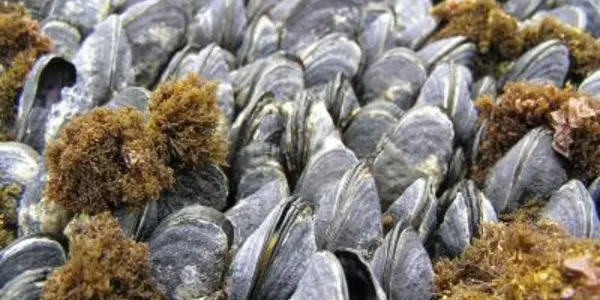
As if fighting other nations over oil wasn't complicated enough, scientists at UC Santa Barbara have discovered an oil-feeding bacteria in their coastal waters that may be stealing the oil right out from under us... literally. Microorganisms have always tested the extent of new boundaries, so even with talk of oil-eating, we seem to just accept their bizarre behaviors. "It takes a special organism to live half a mile deep in the Earth and eat oil for a living," David Valentine, assocaite professor of UC Santa Barbara explains. "There's this incredibly complex diet ...down there. It's like a buffet."A buffet of petroleum. yummy right?

Being Green Causes Happiness - Study

Being Green Causes Happiness - Study

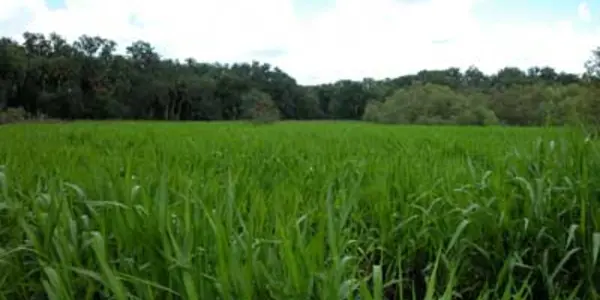
Remember that old expression about your fence, "the grass is always greener on the other side?" Although this may not be entirely true, a recent study shows that a daily dose of the green stuff may actually prove beneficial to both your mental and physical health.  Students attending college in San Marcos, Texas are taking advantage of their luscious green surroundings and are feeling quite good about it. A.L. McFarland, a graduate student at Texas State University's Department of Agriculture, is head of a new "green" study which created data on the effects of outdoor interaction on a student's overall quality of life.

There's A 'Chemical Equator' - And We're On The Wrong Side Of It

There's A 'Chemical Equator' - And We're On The Wrong Side Of It

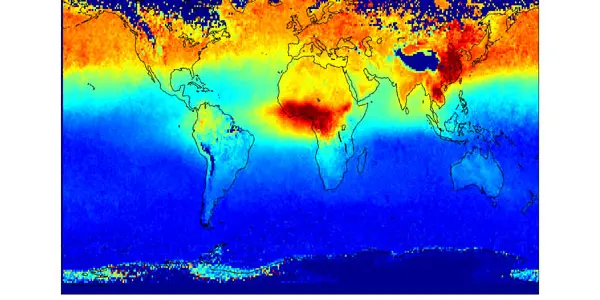
Scientists from Britain's University of York have discovered what they're calling a 'Chemical Equator' that separates the Southern and Northern Hemispheres. This band, which lies in the Western Pacific, is estimated to be 50 km wide and acts as a divider, keeping the pollutants of the northern hemisphere from contaminating that of the hemisphere below.

Coral Reefs: most vulnerable to the effects of Climate Change

Coral Reefs: most vulnerable to the effects of Climate Change

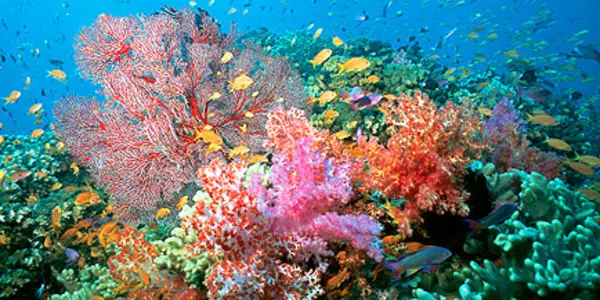
The rise in atmospheric CO2 levels has been a talked-about subject for quite some time, but while scientists and politicians are coming to what they call a “solution,” the impact on marine environments is being ignored.
Proposed emission cuts are aiming to significantly lower the amount of CO2 produced within the United States, but what impact does this value have outside the human world? Scientists say that even the lowest proposed percentages aren’t nearly enough to halt oceanic damage.
 
CO2 is a soluble gas that is easily absorbed into the ocean’s waters. When CO2 is combined with H2O, the reaction releases what is known as Carbonic Acid, or H2C03. When the carbonic acid is dissolved, it loses a hydrogen ion resulting in HCO3, leaving the H+ ion to move freely. This process is known as ocean acidification and is ultimately responsible for the rise in seawater acidity.