Welcome to my Moon Base

Chris Rollins

Chris Rollins

Chris Rollins is a recent graduate in aerospace engineering from Cal Poly, San Luis Obispo. When he's not snowboarding, he's writing about or researching physics, astronautics, or science policy.
RSS Feed
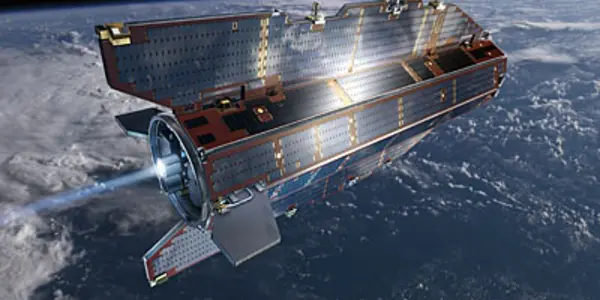
GOCE - An Aerodynamic Satellite That Will Map The Geoid

GOCE - An Aerodynamic Satellite That Will Map The Geoid

In physics classes, we are all taught that the acceleration due to gravity on Earth is 9.8 meters/second2. For the purpose of basic physics education, this value is fine - it represents the average value of the gravitational attraction every object experiences at sea level, and is always directed straight down toward the center of the planet. However, the actual gravitational attraction an object experiences is influenced by the presence of irregularities in the shape of the Earth, the non-uniform distribution of mass beneath the crust, and even large buildings.

Supercomputing In The Humanities

Supercomputing In The Humanities

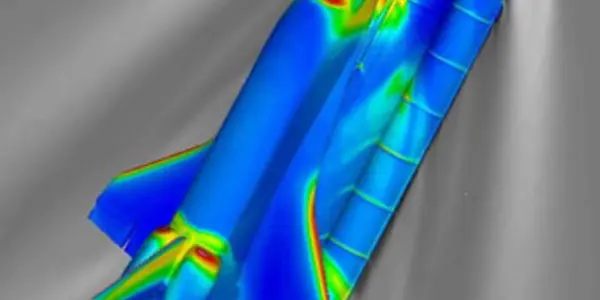
When most of us, especially in the SB community, think of supercomputers we usually think of large-scale hydrodynamics or fusion reaction simulations which stretch our knowledge of the universe and provide us with a validation or a denial or of some complicated physical theory.Indeed, this is what most supercomputers are up to: simulating climate change, the structure of proteins, or the dynamics of a supernova, while producing awesome pictures like this one:An awesome picture of the ascending Space Shuttle and the pressure coefficients of the outside. Photo Credit: NASA Advanced Supercomputing Facility

What Good Is A Fence With Holes?  Some Blizzard Basics

What Good Is A Fence With Holes? Some Blizzard Basics

If you've ever been to a windy beach or a snow-blown landscape, you may have noticed a useless-looking fence with a pile of snow or sand on one side. The fence looks useless because it's full of holes - they're usually about 50% porous - and you might wonder what on earth they could be meant to control. It turns out that in windy conditions such a fence can cause a buildup of snow (or sand) on the downwind side, and that these fences are commonly used to prevent snowdrift across roadways as well as provide a measure of control over where snow or sand might build up.

Is Fusion-Assisted Fission The Future Of Nuclear Power?

Is Fusion-Assisted Fission The Future Of Nuclear Power?

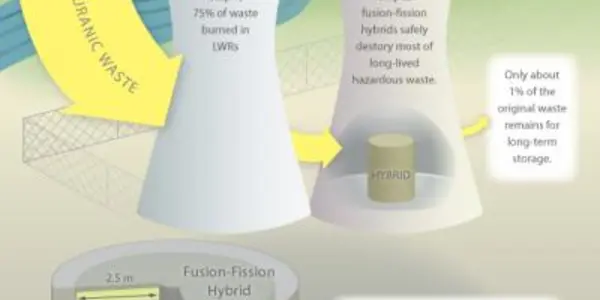
It's been nearly thirty years since the last application for construction of a nuclear power plant was filed in the United States. Despite the age of the reactors already operating, however, the amount of our power generated using nuclear sources is second only to coal. The energy generated by nuclear plants is also increasing steadily, as delays in refueling shorten and reactors operate for longer periods of time. However, there are still numerous environmental concerns regarding the waste products generated by American nuclear reactors - by 2010, the total amount of dangerous waste will exceed 77,000 tons. Now, researchers have found a way to reprocess that waste using new technology while still generating power.

Cryptography - Not Just For Spies Any More

Cryptography - Not Just For Spies Any More

Cryptography isn't just for spies anymore - it's absolutely everywhere around us. Every time we use an ATM or buy something online we are sending data that we hope isn't intercepted on its way, because that would mean our finances were at risk. Additionally, corporations and the government have an interest in securing communications within their organizations and with other companies or governments so that information doesn't fall into the wrong hands.How do these large organizations keep malicious people (commonly called "adversaries" in cryptology circles) from intercepting and reading their messages?

MINOS, Neutrinos And Iron Mines

MINOS, Neutrinos And Iron Mines

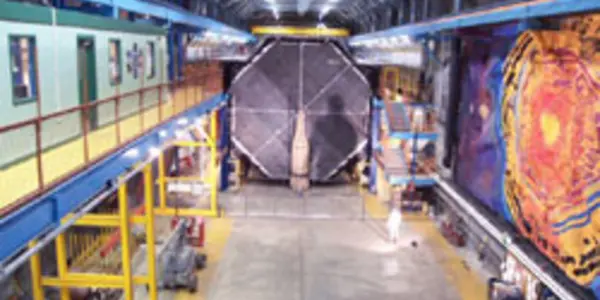
Half a mile underground is probably the last place you might expect to be able to observe atmospheric phenomena. If you knew about the MINOS experiment, however, you might think otherwise. MINOS, which stands for Main Injector Neutrino Oscillation Search, was built to detect particles originating far away but of terrestrial origin.Recently, researchers have noticed that the detectors at MINOS occasionally detect particles from the atmosphere, and that these detections correlate with weather patterns in the high atmosphere.

Emergent Behavior - Thriving at The Edge of Chaos

Emergent Behavior - Thriving at The Edge of Chaos

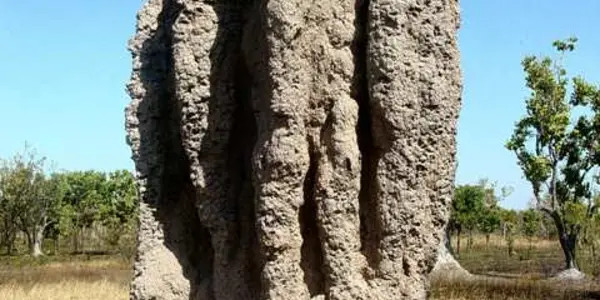
The cathedral termite, found in parts of Australia, is capable of creating mounds for the colony well over 10 feet high. Individual cathedral termites are just standard-looking bugs - head, thorax, abdomen, legs, and so on, with a tiny little primitive brain. But when combined with others of its species, the cathedral termite is capable of constructing a huge, complex hive to house the colony. Unlike human building projects, however, there is no foreman, no plan, and it's unlikely that any termite even knows what it is helping to create.How is this possible?The answer lies in the fact that sometimes, a system can provide more complexity than the sum of its parts - leading to what scientists call "emergent behavior."

Mystery Solved: How Very Massive Stars Form Despite the Force of Light

Mystery Solved: How Very Massive Stars Form Despite the Force of Light

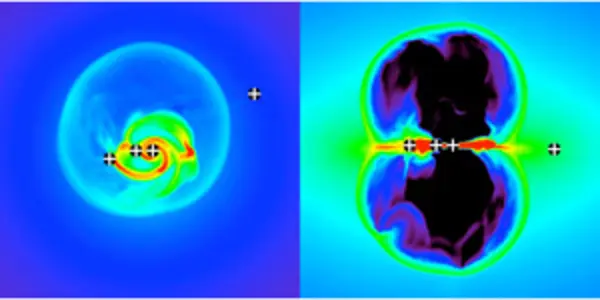
Scientists have finally solved one of the major mysteries of star formation - how very massive stars form without blowing themselves apart in the process. According to star formation theory and previous simulations, the internal pressure created as a very massive star begins to shine should counteract the gravitational force pulling more material in, blowing away the outer layers of the star before it can get sufficiently massive.Observations, however, show that stars exist with masses above the theoretical threshold and often coexist with other massive stars in binary systems - providing a mystery to astrophysicists until now.

Exoplanet Detection Takes Off

Exoplanet Detection Takes Off

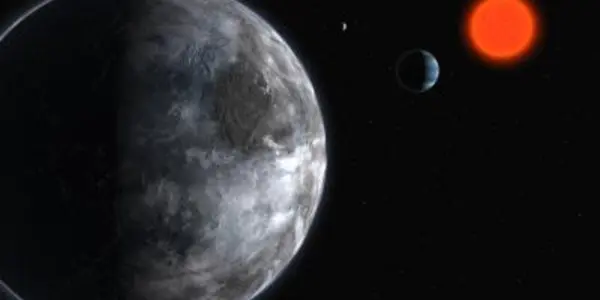
In 1960, Dr. Frank Drake developed an equation that predicts the number of intelligent civilizations in our galaxy. It's a simple equation -- the number of intelligent civilizations in our galaxy is equal to the product of all the following numbers:
The total number of stars in the galaxy
The fraction of stars that have planets orbiting them
The number of planets orbiting each star that are capable of supporting life
The fraction of planets capable of supporting life that actually do support life
The fraction of planets supporting life that support intelligent life

The Magnificent Mystery Of Magnetars

The Magnificent Mystery Of Magnetars

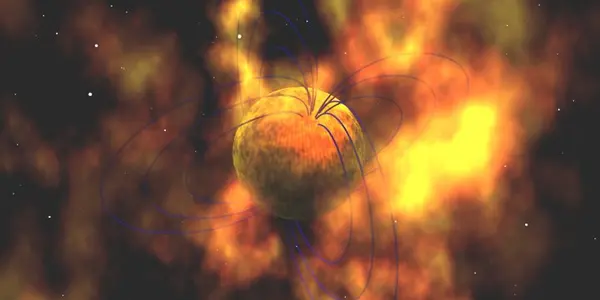
At 1014 gauss, atoms are compressed into tiny needles whose widths are only 1% of their lengths. X-ray photons readily undergo an exotic process where they change into matter and anti-matter particles briefly, before rejoining and turning back into light. Even at a distance of 1000 km, the slight polarization of water molecules would tear apart any Earth organism. So where do you find magnetic fields of such awe-inspiring strength? Attached to exotic objects in deep space, of course.

Does Hypnosis Work To Relieve Pain?

Does Hypnosis Work To Relieve Pain?

The word "hypnosis" conjures a very specific image to most people - usually a man dangling a watch on a chain in front of your eyes and making you count backwards until you fall into some sort of deep trance, where the hypnotist can make you squawk like a chicken or convince you there are bugs in your pants. Judging by the stupid things subjects often do during a hypnotist's show, people often conclude that hypnosis gives the hypnotist total control over his subjects like a puppeteer pulling strings on a marionette. As a result, people don't often think of hypnosis as a viable medical treatment and end up relegating it to the world of crackpot medicine. Lately, however, hypnotic treatments are being used more and more frequently, often for pain relief purposes.

Numerical Modeling Solves Your Traffic Jams

Numerical Modeling Solves Your Traffic Jams

There's nothing quite like the frustration of an unexpected traffic jam. Many of us have been the victim of a sudden slowdown on the freeway, which lasts for a few miles before clearing up for no particular reason. Frustration isn't the only byproduct of bad traffic - by some estimates, traffic flow accounts for as much as one-third of global energy consumption and the resulting CO2 emissions. Improving the traffic situation, therefore, has the potential to greatly reduce our emissions of carbon dioxide as well as our emissions of swear words.