Welcome to my Moon Base

Chris Rollins

Chris Rollins

Chris Rollins is a recent graduate in aerospace engineering from Cal Poly, San Luis Obispo. When he's not snowboarding, he's writing about or researching physics, astronautics, or science policy.
RSS Feed
Sonar in Space? Space-DRUMS Makes It Possible

Sonar in Space? Space-DRUMS Makes It Possible

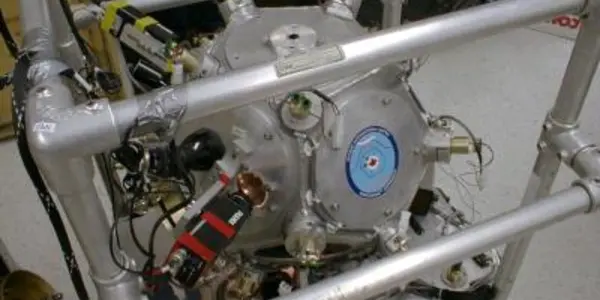
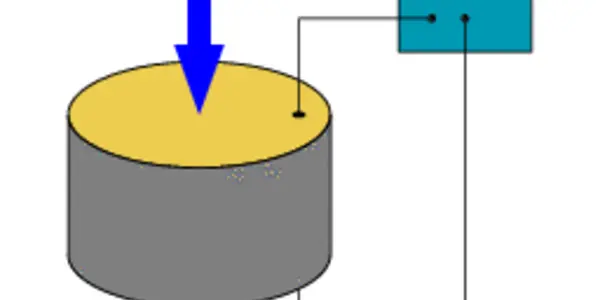
After it's conception and development during World War I, sonar is finally finding use in an unlikely medium: space. Astronauts on the International Space Station will soon be able to conduct experiments in zero gravity with no container contamination using beams of sound to control a sample.Space-DRUMS, or the Space Dynamically Responding Ultrasonic Matrix System, uses a dodecahedron container armed with twenty ultrasonic beams that use sound to control the volume occupied by a sample inside. The SpaceDRUMS 12-sided reactor is able to keep a baseball-sized sample from touching its walls. Photo Credit: University of Bath.

Fully Upgraded C-5M Super Galaxy to Extend Lifetime to 2040

Fully Upgraded C-5M Super Galaxy to Extend Lifetime to 2040

Lockheed Martin has just delivered the most recent upgrade of the military's cargo backbone, the C-5M Super Galaxy, to the U.S. Air Force at Warner Robins Air Logistics Center, Robins AFB, Georgia. The aircraft contains a host of upgrades and modernizations intended to help its keep its status as the dominant cargo plane of the U.S. Military.

Optical Lattice Stores Quantum Information for a 7-Millisecond Eternity

Optical Lattice Stores Quantum Information for a 7-Millisecond Eternity

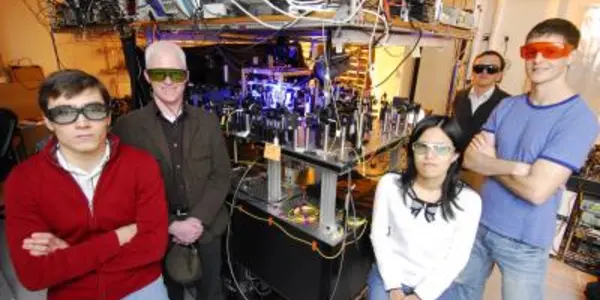
It may seem, at least to those of us who have been alive long enough to witness any of the advances in semiconductor technology, that computer power has been improving at breakneck speed. A quantum computer, however - a theoretical type of computer that utilizes the states of atoms to store information instead of magnetic fields - may make our current conception of computing power completely obsolete. And now, new research into the storage and retrieval of quantum information has brought quantum computing one step closer to reality.

Is Driving and Talking Too Much?

Is Driving and Talking Too Much?

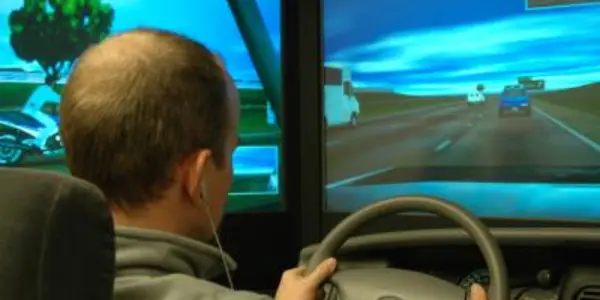
So if you are still unsure whether it's unsafe to drive while talking on a cell phone, come out of your cave.  Multiple recent studies have supported that cell phone use endangers drivers. It seems that every week or so there's a new study out linking increased reaction times to the distraction caused by having a cell phone conversation, often comparing it to other types of impairments such as drinking or listening to the radio. As the research becomes more and more conclusive, scientists have attempted to find comparisons that are relevant than just a number in milliseconds.

Piezoelectrics Promise To Create Energy from Everything

Piezoelectrics Promise To Create Energy from Everything

Wouldn't it be great if your cell phone or mp3 player could charge itself? What if your house could generate electricity from the noise of the cars on the road? Or if the waste heat generated by your air conditioner could help put a dent in that expensive summer electric bill? As the demand for cheaper and more renewable energy sources increases, piezoelectrics - a class of material that produces an electric potential when mechanically deformed - may hold the key to unlocking the energy flowing all around us.

Research into Metamaterials May Pave the Road to Invisibility

Research into Metamaterials May Pave the Road to Invisibility

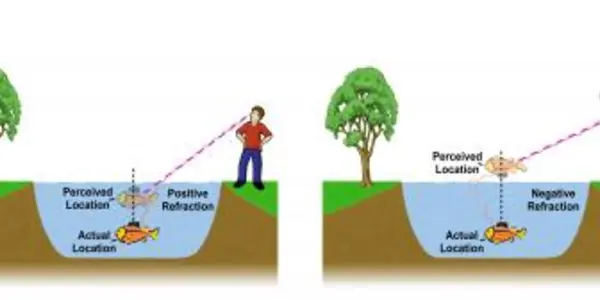
It's an idea that has pervaded a huge amount of science fiction and fantasy stories, from Star Trek to Harry Potter, and there are few of us that would deny a couple of hours with one - but is an invisibility cloak actually possible? Although the lightweight, flowing cloak of Harry Potter may be impossible in the near future, scientists are quickly creating and studying new metamaterials - materials with a negative index of refraction - that are paving the way to making invisibility a reality.

From 'A' to 'Blue' - Blending of the Senses May be More Common Than You Think

From 'A' to 'Blue' - Blending of the Senses May be More Common Than You Think

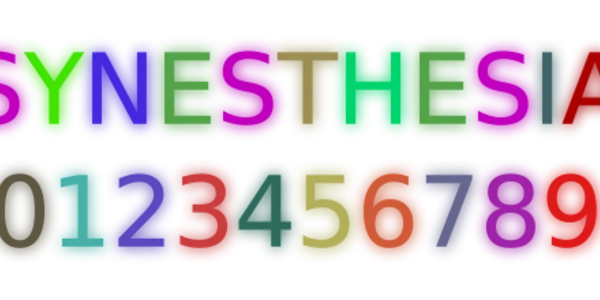
What color is the number 7? How does a symphony taste? What temperature is a muted television? A synesthete could tell you, with great certainty and consistency, the answers to the above questions, and describe many more sensory associations that seem irrelevant to most people.Approximately 1 in 1000 people experience synesthesia - the elicitation of a sensory response independent of the stimulus itself. For instance, viewing a number or hearing a phonetic sound may elicit a colored response in the visual field, or a certain visual stimulus may elicit an auditory response.

Realistic Robots Approach the Edge of the Uncanny Valley

Realistic Robots Approach the Edge of the Uncanny Valley

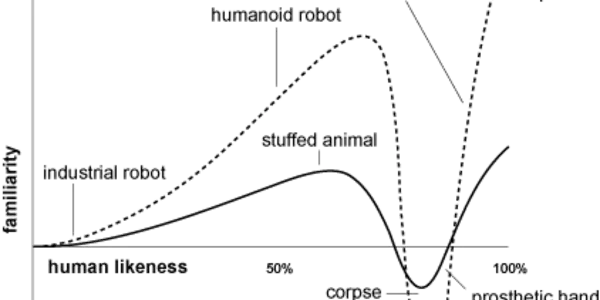
In 1970, a Japanese roboticist named Masahiro Mori described what he called the "uncanny valley" - a point on a graph relating human affinity for a machine to its likeness of humans themselves, where human affinity plummets as the likeness becomes nearly indistinguishable from ourselves. As robots become more humanlike, our fondness for them increases.

What Goes into Making an Herbicide?

What Goes into Making an Herbicide?

Imagine you have two plants - one is a plant you'd like to keep around, like a crop, and the other is a pest of some kind that interferes with the growth of your crop. Now, imagine synthesizing 30,000 different candidates for an herbicide and spraying each one on a different plant - and only finding one that effectively kills the weed while preserving the life of your crop. Until recently, this incredibly inefficient method was the only way for the agrichemical industry to find new herbicides. Now, thanks to the boom in biological technology during the last 15 years or so, agrichemical companies are able to come up with far better predictions about the results of spraying an herbicide on a particular plant - adding a huge degree of elegance to the previous guess-and-check method.

New Research Helps Solve the Mystery of Déjà Vu

New Research Helps Solve the Mystery of Déjà Vu

To some, it's a vague remembrance of a scene from a past life. Others attribute it to viewing something in real life they dreamed the night before. To the leather-clad protagonists of the movie "The Matrix", it happened whenever the machines altered something about the virtual world they created. Regardless of the explanation, déjà vu is the common and unmistakable experience of feeling as if whatever sensory input we're receiving has been received before - even though we can't pinpoint the exact source.

Kapton E Polymide Will Keep the James Webb Space Telescope Chilly

Kapton E Polymide Will Keep the James Webb Space Telescope Chilly

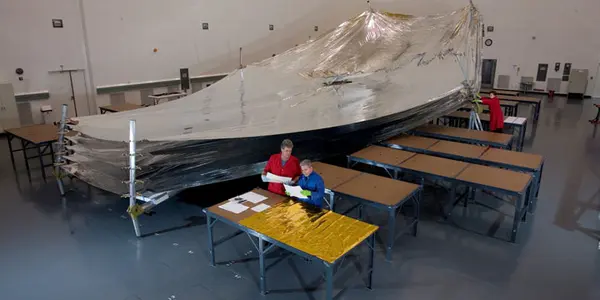
If every beachgoer could have one, we'd never need sunscreen again. The new sunshield for NASA's James Webb Space Telescope, designed by Northrop Grummann  in Redondo Beach, California, is capable of rejecting nearly all of the approximately 250,000 watts of energy the spacecraft will be receiving from the Sun while in orbit - the equivalent to applying sunscreen with an SPF of 1.2 million.