More on Radiacode 110
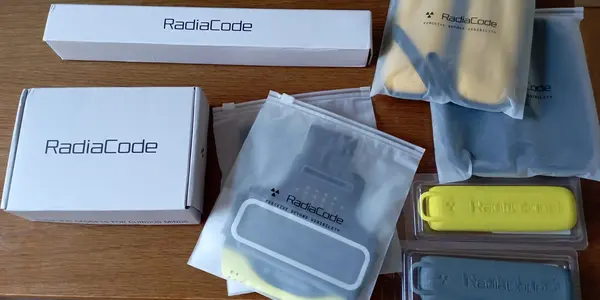
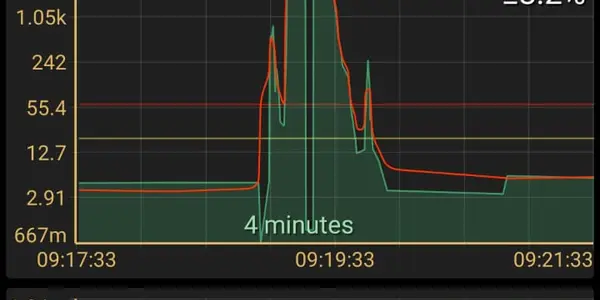
This is the second post reporting a few tests of the Radiacode 110 spectrometer, an extra-cool pocket dosimeter/radiation counter/spectrograph sold by RadiaCode.
This is the second post reporting a few tests of the Radiacode 110 spectrometer, an extra-cool pocket dosimeter/radiation counter/spectrograph sold by RadiaCode.

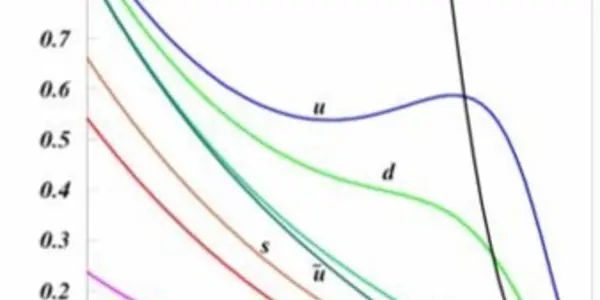
Since most of the building blocks of our own body are protons, the above title might disturb sensitive readers. On the other hand, describing a proton as a bag of garbage has several merits, as it is a fruitful analogy that may be carried forward when we wish to examine experiments that studied the structure of matter. I will explain what I mean in a moment below.
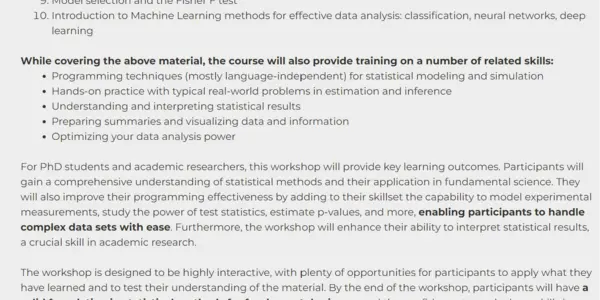
The occasional reader of this blog will excuse me if yet again I do not report here of this or that new result by the LHC collaboration, and instead discuss matters of lesser relevance. But to me, education is important. Even if I am not a University professor, but rather an employee of a research institute (and as such, not obliged to spend some of my time teaching), I do teach courses to university students. I do that because I believe I can give students a positive imprinting on the beauty of physics, on the exciting nature of research in fundamental science, and on how interesting all of that is.

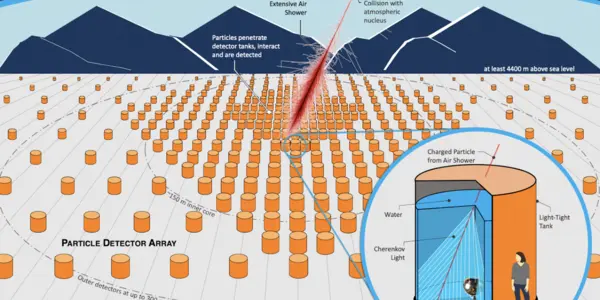
As I am waiting in Prague airport for my flight back home, after a few days spent discussing the options of the SWGO collaboration for the detectors we are going to build, I came across (through compulsive scrolling on twitter) a thread that caught my attention. It was about emails to academics on PhD openings. Since I found the discussion there a bit too forgiving on the academics, I wish to express my position here - possibly in a less toxic environment.
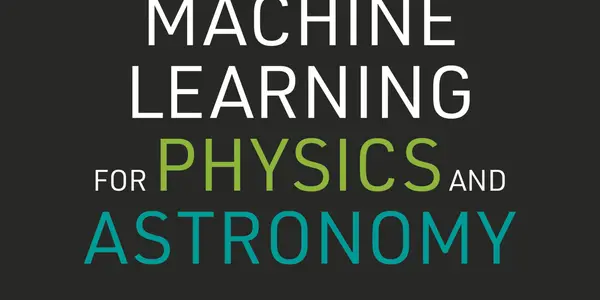
Last week I received in my mailbox a copy of the Princeton University Press book "Machine Learning for Physics and Astronomy" by Viviana Acquaviva. They sent me a copy because I had reviewed its contents for Princeton Press.I am happy with the book. When I accepted to review it, I was a bit hesitant because I am not a computer scientist. I might pass as an expert in machine learning because after all I have been developing such tools for 20 years now (or maybe I should say over 30, as my first attempt was in 1992, with a bootstrap-powered classification method), but I feel I still lack knowledge in some of the theoretical underpinnings, and there are holes in my knowledge base.
Having spent the past 12 months coding up an end-to-end model of an astrophysics experiment, with the sole aim of searching for an optimal solution for its design by use of stochastic gradient descent, I am the least qualified person to judge the aesthetic value of the results I am finally getting from it. Therefore it makes sense to ask you, dear reader, what you think of the eerily arcane geometries that the system is proposing. I do not think that to be a good judge you need to know the details of how the model is put together, but I will nevertheless make an attempt at briefing you on it, just in case it makes a difference in your judgment.
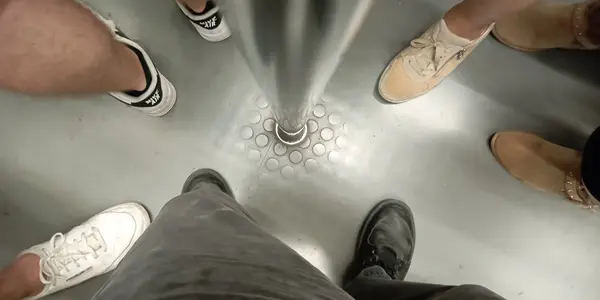
These days I am in Paris, for a short vacation - for once, I am following my wife in a work trip; she performs at the grand Halle at la Villette (she is a soprano singer), and I exploit the occasion to have some pleasant time in one of the cities I like the most.This morning I took the metro to go downtown, and found myself standing up in a wagon full of people. When my eyes wandered to the pavement, I saw that the plastic sheet had circular bumps, presumably reducing the chance of slips. And the pattern immediately reminded me of the Monte Carlo method, as it betrayed the effect of physical sampling of the ground by the passengers' feet:
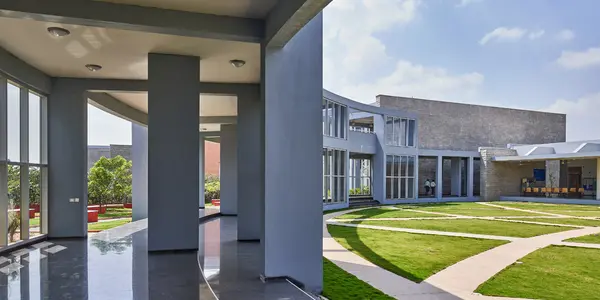
The Indian Center for Theoretical Sciences is located in a rural area a few kilometers north of Bangalore, in southern India. Bangalore is a mid-sized city that saw a very big expansion in the past few years due to having become a center for the information technology in the country - with most of the big multinationals opening sections there. The rapid expansion increased the wealth of the middle class there (but remember, the middle class is the top 5% in India), but it also created stress to the traffic in the city, which is notoriously a plague there.The campus of ICTS is very nice from an architectonic point of view, embedding nature in its buildings and trying to integrate the two realities. Below is a picture.

I recently read a book by Martin Rees, "On the future". I found it an agile small book packed full with wisdom and interesting considerations on what's in the plate for humanity in the coming decades, centuries, millennia, billions of years. And I agree with much of what he wrote in it, finding also coincidental views on topics I had built my own judgement independently in the past.
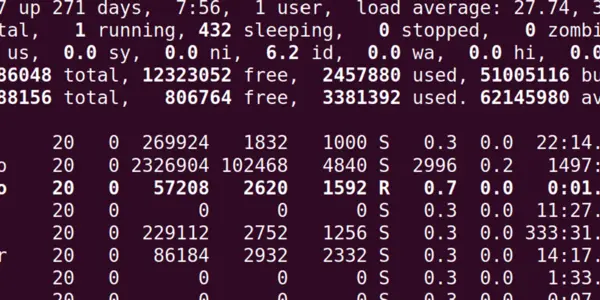
What is multithreading? It is the use of multiple processors to perform tasks in parallel by a single computer program. I have known this simple fact for over thirty years, but funnily enough I never explored it in practice. The reason is fundamentally that I am a physicist, not a computer scientist, and as a physicist I tend to stick with a known skillset to solve my problems, and to invest time in more physics knowledge than software wizardry. You might well say I am not a good programmer altogether, although that would secretly cause me pain. I would answer that while it is certainly true that my programs are ugly and hard to read, they do what they are supposed to do, as proven by a certain record of scientific publications.
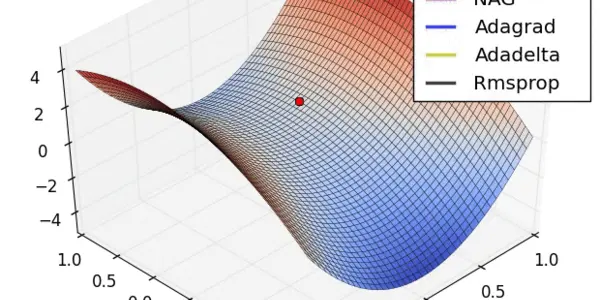
Wait a minute - why is an article about automatic differentiation labeled under the "Physics" category? Well, I will explain that in a minute. First of all, let me explain what automatic differentiation is. Computing derivatives of functions is a rather error-prone job. Maybe it is me, but if you give me a complex function where the dependence on a variable is distributed in several sub-functions, I am very likely to find N different results if I do it N times. Yes, I am 57 years old, and I should be handling other things and leave these calculations to younger lads, I agree.
Although researchers in fundamental science have a tendency to "stick to what works" and avoid disruptive innovations until they are shown to be well-tested and robust, the recent advances in computer science leading to the diffusion of deep neural networks, ultimately stemming from the large increases in performance of computers of the past few decades (Moore's law), cannot be ignored. And they haven't - the 2012 discovery of the Higgs boson, for instance, heavily used machine learning techniques to improve the sensitivity of the acquired particle signals in the ATLAS and CMS detectors.

Summer is supposedly a period where people take it a tad easier, spend some vacation time away from anything that is work-related, and "tune out" of the deadlines and rythms of daily work activities that dominate their existence at other times of the year.