Adaptive Complexity

Michael White

Michael White

Welcome to Adaptive Complexity, where I write about genomics, systems biology, evolution, and the connection between science and literature, government, and society. I'm a biochemist and a postdoctoral fellow in the Department of Genetics and the Ce…
RSS Feed
Physical Chemistry Makes Us Different

Physical Chemistry Makes Us Different

One of my recently developed rules: avoid the last minute rush. I don't run to catch the Metro train, and I don't scramble to put my data into some sort of coherent form when I have to give a lab meeting presentation on short notice.So I'm not scrambling for my lab meeting talk tomorrow. My plan is, in the absence of any solid results to present, to go visionary, saying whatever I want to, without having to back it up with supporting data. And in the spirit of scientific openness, I'm providing a sneak preview of what may tomorrow turn out to be a terrific mess of a lab meeting talk.

The Indiana Jones Method of Science

The Indiana Jones Method of Science

Science is occasionally a life-threatening career choice, particularly for those scientists who risk shipwreck, starvation, disease, and large, arctic carnivores to unlock the mysteries of the life's past.
Sean Carroll, in Remarkable Creatures, looks at how the drive to explore, the itch for discovery that pushed Columbus and Magellan on their great voyages, has worked its magic on those great scientists who have pursued scientific adventures to the most extreme corners of the earth.

Intelligent Software Design vs Evolution

Intelligent Software Design vs Evolution

Do our genomes look designed? Let's address this point, hoisted from the comments of this post:Actually, shared genetics between chimps and humans is agnostic with respect to evolution or "intelligent design". In software engineering, you often find shared code (or even junk code) in the source of various projects as it develops from "Product 1.0" to "Product 2.0" to "Product 3.0". I.e., it's a strawman argument to assume the "intelligent designer" started from scratch for chimps and humans. That doesn't sound intelligent at all.Like a software designer, the "designer" would have hacked up whatever existing code base he had to

Selfish Gene Confusion

Selfish Gene Confusion

In light of the popularity of this piece, here are some things to keep in mind about 'selfish' genes:1. The basic issue is about the unit of selection - does natural selection choose allele, individuals, populations, or species? The answer, like most things in biology, is yes, as Douglas Futuyma puts it in his standard textbook on evolution (p. 354. 3rd edition):If, then, our concept of levels of selection includes causality, natural selection can act at the level of the gene (as in meiotic drive), organism, and at least in principle, population and species.

Failing to Cure Cancer by Playing it Safe?

Failing to Cure Cancer by Playing it Safe?

The biomedical community has become too risk-averse, according to a recent NY Times piece. I agree, although I don't agree with the dramatic presentation (it's not some dirty scientific secret - it's not hard to find scientists, and the leaders of the funding agencies themselves talking about it).

Here are the basic issue:

Yet the fight against cancer is going slower than most had hoped, with only small changes in the death rate in the almost 40 years since it began.

How Proteins Bind DNA (And How Not to Model Them)

How Proteins Bind DNA (And How Not to Model Them)

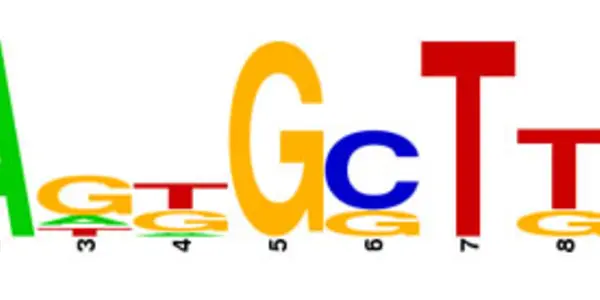
How proteins recognize specific stretches of DNA is one of the key questions of gene regulation. One would like to be able to look at the regulatory DNA sequence adjacent to a gene, and predict which regulatory proteins bind there, and control the adjacent gene. In other words, we want to, just by running a few computer programs over a genome, know how the genes in that genome are regulated.

Who's in Your (Genetic) Network?

Who's in Your (Genetic) Network?

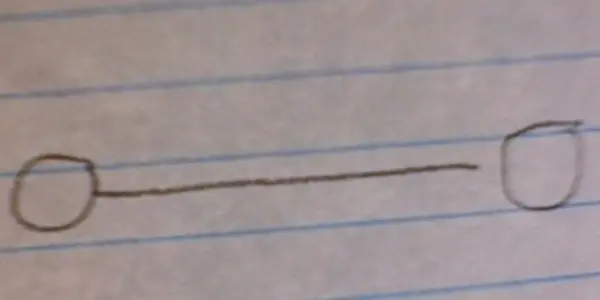
An interesting phenomenon in growing random networks:The number of 3-node, 3-edge connected subgraphs in a random, scale-free network of N nodes scales as N0 (=1). No matter how big your network grows, you're going to have a roughly constant number of 3-node, 3-edge  subgraphs that depends only on the ratio of edges to nodes.Let's back up a minute before we see why this counterintuitive result is so and what it means.  Imagine that we have a network made up of N nodes connected by E edges. You can start out with two nodes connected by one edge:

Is This Your Brain on Evolution?

Is This Your Brain on Evolution?

David Brooks takes on evolutionary psychology and gets it sort of right:The first problem is that far from being preprogrammed with a series of hardwired mental modules, as the E.P. types assert, our brains are fluid and plastic. We’re learning that evolution can be a more rapid process than we thought. It doesn’t take hundreds of thousands of years to produce genetic alterations.

Saving Science for the Non-Believers?

Saving Science for the Non-Believers?

Ken Miller vs. Jerry Coyne: Can you believe in God and evolution? Many creationists say no. But so does Jerry Coyne, as well as a fair number of other non-believing scientists active in the blogosphere. If you follow the science blogging community, you've probably tuned in to, or at least overhead snippets of, the debate between the believing Ken Miller, and the non-believer Jerry Coyne. Both are well-regarded scientists, with impressive research track records, and both are very outspoken opponents of creationism and intelligent design, as well as defenders of evolution.

DNA is Like Your Phone Line

DNA is Like Your Phone Line

DNA is like your phone line. As Northwestern University biophysicist Johnathan Widom put it in a talk recently, DNA simultaneously encodes multiple overlapping signals, just like your phone line that allows you to call home while you're surfing the net via DSL. Written into your DNA is the code for the amino acid sequences of the proteins produced by your genes, as well as the so-called 'non-coding' regulatory sequences which essentially encode when, where, and how much your genes are expressed.

Criminals: You're S&!# Out of Luck

Criminals: You're S&!# Out of Luck

That DNA evidence that could exonerate you? You don't have a right to it, says the US Supreme Court.Actually, not being a lawyer or constitutional scholar, I don't know what kinds of evidence you have a constitutional right to when you go on trial, so I'm not going to comment on the correctness of the decision. But legal scholarship aside, two things are obvious:1) When we try someone for a crime, we want the best, most reliable evidence possible. It's probably reasonably safe to say that most people with at least some wisps of sanity would like our criminal justice system to convict the guilty and acquit the innocent.