Adaptive Complexity

Michael White

Michael White

Welcome to Adaptive Complexity, where I write about genomics, systems biology, evolution, and the connection between science and literature, government, and society. I'm a biochemist and a postdoctoral fellow in the Department of Genetics and the Ce…
RSS Feed
Evolution and Personalized Medicine: How Genes Build Traits

Evolution and Personalized Medicine: How Genes Build Traits

Show Me The Science Month Day 22How do genes work together to build body traits? This is one of the hottest questions in genetics today, and the answer holds implications not only for our understanding of evolution, but also health, agriculture, and wildlife conservation. A recent paper in Science (by Scientific Blogging's own Redneck Geneticist) takes a look at how genetic variants work together to generate the physical diversity that we see in living organisms.

Evolution of Fruit Preference in Fruit Flies

Evolution of Fruit Preference in Fruit Flies

Show Me The Science Month Day 21Why do certain species of fruit flies prefer some fruits over others? Two biologists have looked at the genetic basis behind the evolution of fruit preference, in a paper in this month's issue of Genetics (an incredible issue which happens to contain another amazing, pioneering, paradigm-shifting, ground-breaking paper).Many insects specialize in feeding on just one or a few types of plants. This fact isn't that surprising, since plants have all sorts of defenses for warding off insects, including the production of toxic chemical compounds, and insects that feed on plants have typically evolved ways to get around the defenses of one type of plant, but not another. This phenomenon is dramatically played out in the hundreds of species of fruit flies around the world, many of which specialize in just one or a few types of fruit. Researchers at Michigan State and UNC Chapel Hill have looked at the genetic changes that enabled one species of fruit fly to specialize in the fruit of the Morinda plant, also known as cheese fruit, a fruit that is toxic to other flies.Morinda citrifolia, photograph by Eric Guinther

Critical Thinking Skills - The Cure for Anti-Intellectualism

Critical Thinking Skills - The Cure for Anti-Intellectualism

Over at the Chronicle of Higher Education, Columbia University humanities professor Andrew Delbanco takes stock of recent arguments that the intellectuals are back in charge of government:What goes on here? Was the historian Richard Hofstadter wrong in his classic Anti-Intellectualism in American Life to detect an irresistible current in our society of "resentment and suspicion of the life of the mind and of those who are considered to represent it"? Has that current weakened or been sufficiently dammed up to explain the election of a president who is reflective about history and ideas as well as about policy and practice?

Evolution of A Possible Cancer Fighting Tool in Blind Mole Rats

Evolution of A Possible Cancer Fighting Tool in Blind Mole Rats

Show Me The Science Month Day 20Tumor cells wield the enzyme heparanase like a machete to cut a swaththrough the dense forest of carbohydrates that make up the stickymatrix that helps hold communities of cells into tissues. Aggressive,metastatic tumor cells have to break free of the confines of thisextracellular matrix in order to both grow and colonize new parts ofthe body. In humans, heparanase is expressed at high levels in tumorcells, and it therefore makes an attractive drug target: knock outheparanase, and tumor cells can't bushwhack their way out of theconfines of the extracellular matrix.A group of Israeli researchers has discovered a defective form of heparanase in blind mole rats, animals which spend their whole lives underground and as a result have adapted to deal with low oxygen conditions that parallel conditions experienced by tumor cells. This defective form of heparanse could become a new tool in the cancer treatment toolbox.

The Evolution of Teeth

The Evolution of Teeth

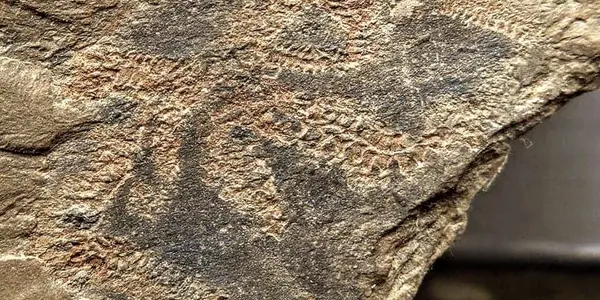
Show Me The Science Month Day 19Some fish have two sets of teeth: oral teeth, set towards the front of the mouth (like ours), and so-called pharyngeal teeth, set far back in in the throat in a strange, second set of jaws. Based on what we learn from the fossils of ancient jawless fish, it appears that teeth first appeared on these deep pharyngeal jaws. So how did most vertebrates come to have the more common set of oral teeth? A group of scientists based in Georgia and Tennessee used paleontology and modern genetics to show that tweaks to an ancient gene regulatory network enabled the evolution of  oral cavity teeth possessed by most vertebrates.Figure 1 from Fraser, et al.

How Single-Cell Organisms Evolve into Multicellular Ones

How Single-Cell Organisms Evolve into Multicellular Ones

Show Me The Science Month Day 18The transition from one-celled microbes to multicellularity was a huge step in the evolution of life on this planet, but as daunting as this evolutionary step seems, it didn't happen just once. Today's plants, fungi, animals, and various types of algae are all descendants of separate transitions to multicellular life. All of these transitions from a single-cell lifestyle to multicellularity occurred in the very distant past, so how can we learn anything about them? It turns out that it is not hard to find living, modern examples that closely parallel the momentous evolutionary transitions that led to animals, plants, and fungi. Right now on earth there are primitive multicellular organisms that, in many ways, resemble the first multicellular creatures that existed a billion years ago. Researchers are using these organisms to understand what kinds of genetic changes are needed to turn a single-celled organism into a multicellular one.

Ancient Cellular Machinery Pumps out Signals for Wandering Fly Cells

Ancient Cellular Machinery Pumps out Signals for Wandering Fly Cells

Show Me The Science Month Day 17Often when something new crops up in evolutionary history, it's usually the result of tinkering with functional, preexisting molecular tools.. In a paper published in Science, some NYU researchers find that the protein cues used by  fruit fly embryos to direct their migrating reproductive cells are processed by some very ancient cellular machinery. The scientists test their ideas with a very weird experiment: they use their newfound knowledge to direct the reproductive cells to migrate into the embryos' brains.

The Genetic Mystery of Black Wolves

The Genetic Mystery of Black Wolves

Show Me The Science Month Day 16Black wolves look like creatures out of frightening fairy tales, but their black color actually came from pet dogs. Today's evolution paper is about a potentially beneficial mutation for black coat color picked up by wolves as the result of interbreeding with dogs. This story got some press, so it may sound familiar, but here we're going to focus on just how scientists could know where the black color gene came from. This research is a great example of the genetic sleuthing that's now possible with easy, affordable DNA sequencing.

In An Evolutionary Pinch, Big Mutations May Be Helpful

In An Evolutionary Pinch, Big Mutations May Be Helpful

Show Me The Science Month Day 15What happens when a big chunk of your genome is accidentally copied? Bad things could obviously happen when when sudden and dramatic changes are made to your genome (which is why we wear sunblock on the beach and lead shields when getting X-rayed). Recent studies have found that accidental duplications in the genome (which can change the copy number of sets of genes) are involved in a growing list of diseases, including autism, psoriasis, and susceptibility to AIDS. And yet we also know that big DNA duplications aren't always harmful, because we can find ancient duplications in our genomes that harbor genes filling useful roles in our physiology.How frequently do these large duplications arise, and what role have they played in human evolution? A group led by Evan Eichler, at the University of Washington, aided by the DNA sequencing powerhouse of the Genome Sequencing Center at Washington University (in St. Louis - not the same place as the University of Washington!), has studied these questions by looking for big, duplicated chunks in our closest relatives - the great apes. Their results show that big DNA duplications have probably played an important role in the evolution of our species.

The Persistent Divisiveness of Darwin

The Persistent Divisiveness of Darwin

Sunday Science Book Club, February 15 2009Monkey Girl: Evolution, Education, Religion, and the Battle for America’s Soulby Edward HumesHarperCollins, 2007It is rare for the world to see born on one day two towering individuals whose imprint on history is strong enough to be noted around the world 200 years later. Abraham Lincoln successfully saw the United States through a near-fatal convulsion, whose early symptoms had been palliated but not cured at the nation’s founding; the after-effects have reached all around the world. Charles Darwin, more than anyone else in the 19th century, put biology on its modern scientific footing, and his ideas play a critical role in the genome sciences at the very forefront of 21st century biology.We celebrate their achievements this week, but both Lincoln and Darwin have left legacies of divisiveness, and in fact these legacies intertwine. The contours of the rift that initiated the Civil War still shape American politics, from Nixon’s influential Southern Strategy to the Red State-Blue State divide in the 111th Congress. Evolution is a poster child for culture war. It may not be a top issue on the national political agenda, but it is a culture war conflict that penetrates just as deeply and personally than any other, as Edward Humes vividly describes in Monkey Girl, the best book about the nation’s first court trial over Intelligent Design in public schools.


What Goldilocks Can Teach Us About Natural Selection

What Goldilocks Can Teach Us About Natural Selection

Show Me The Science Month Day 12Natural selection is often much like Goldilocks - an organism's traits shouldn't be too hot or too cold; natural selection likes them just right. In other words, traits are under pressure to remain near an optimum. If they deviate too far, natural selection will not-so-gently prod things back to the center. This phenomenon is known as stabilizing selection.Stabilizing selection has to push against another powerful evolutionary force - random drift. Much of our genetic makeup is influenced by non-adaptive processes, that is, processes that are not particularly favored or disfavored by natural selection, and which do not perform some function that improves the fitness of the organism. Selection and drift have been especially hard to tease apart when it comes to gene regulation. Related species regulate their genes in different ways, but how many of those differences are simply due to random divergence? Trevor Bedford and Daniel Hartl at Harvard University take a crack at this question in a recent paper. They use a mathematical model based on Brownian motion (the kind of random motion you see when you watch pollen grains buffeted about in a drop of water) to determine how well stabilizing selection counteracts the battering of random drift.