Adaptive Complexity

Michael White

Michael White

Welcome to Adaptive Complexity, where I write about genomics, systems biology, evolution, and the connection between science and literature, government, and society. I'm a biochemist and a postdoctoral fellow in the Department of Genetics and the Ce…
RSS Feed
Solving the Cell: Will the Future of Biology be Boring?

Solving the Cell: Will the Future of Biology be Boring?

How do you know when a scientific problem is finished? Biologists have been cracking open the cell and studying its molecular insides for a very long time now. How much more is there to learn? Perhaps it seems obvious that we are still missing much: we can't cure cancer very well, for example. On the other hand, one could ask, what's really keeping us from curing cancer, a lack of basic understanding or insufficiently developed technology? Nowhere is this problem of defining a scientific endpoint more obvious than in the community of scientists who are focused on some of the most basic questions in cellular and molecular biology - the community of yeast biologists. Yeast biologists now have to figure out what human biologists will be asking in the decades to come: what does it mean to solve a cell? Are there any big questions left in molecular biology?

The Latest Technology May Not Have Transformed Your Health, But It Has Changed Science

The Latest Technology May Not Have Transformed Your Health, But It Has Changed Science

New advances in DNA sequencing technology have been receiving a lot of press, but mostly in the context of how DNA sequencing is going to make personalized medicine possible. Your physician will some day be able to prescribe drugs and give you advice on disease prevention, all based on a reading of your DNA. Obviously that day is not here quite yet; however, the amazing power of next-generation DNA sequencing is already transforming what goes on in a biology lab.
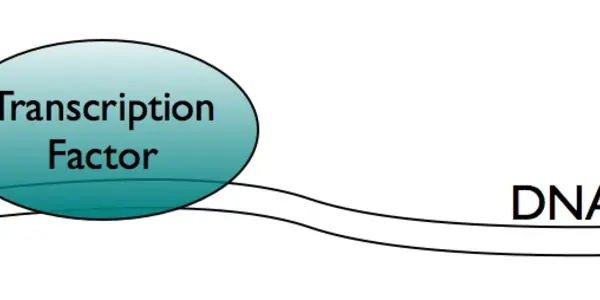
To see this, we can take a look at an old technology and look at the changes it has gone through, from its pre-genome-era state in the 80's and 90's, to its transformation into a genome-scale tool around the turn of the millennium, to its latest incarnation during this emerging era of massive, cheap DNA sequencing. This technology, called chromatin immunoprecipitation (or ChIP), has been a critical tool in studies of how genes are regulated. ChIP, in its current, next-generation DNA sequencing form, is opening up some stunning new approaches to studying gene regulation.

Evolution: Forget Random Mutation - Variation is the Real Issue

Evolution: Forget Random Mutation - Variation is the Real Issue

Part 1 on The Plausibility of Life
Darwin is famous for convincingly arguing that natural selection can explain why living things have features that are well-matched to the environment they live in. In the popular consciousness, evolution is often thought of as natural selection acting on random mutations to produce the amazing tricks and traits found in the living world. But “random mutation” isn’t quite right - when we describe evolution like this, we pass over a key problem that Darwin was unable to solve, a problem which today is one of the most important questions in biology. This key problem is the issue of variation, which is what biologists really mean when they talk about natural selection acting on random mutations. Variation and mutation are not the same thing, but they are connected. How they are connected is the most important issue covered Kirschner and Gerhart’s The Plausbility of Life. It is an issue Darwin recognized, but couldn’t solve in those days before genetics really took off as a science.
Natural selection really works on organisms, not directly on mutations: a particular cheetah survives better than other cheetahs because it can run faster, not because it has a DNA base ‘G’ in a particular muscle gene. A domesticated yeast can survive in wine barrel because of how it metabolizes sugar, not because of the DNA sequence of a metabolism gene. I know what you’re thinking: this is just a semantic game over proximal causes. But this is not just semantics, it is a real scientific problem: what is the causal chain that leads from genotype to phenotype, that is, from an individual organism’s DNA sequence, mutations included, to the actual physical or physiological traits of the complete organism?

E. coli As Biology's Decoder Ring

E. coli As Biology's Decoder Ring

If you had to pick one organism with which to tell the story of the modern science of biology, you couldn't do better than to pick the tiny gut bacterium Escherichia coli, commonly called just E. coli. In his latest book Microcosm: E. coli and The New Science of Life, Carl Zimmer, uses E. coli as a decoder ring to open up the dense and diverse world of biological research, taking us on a panoramic tour of some of the most important conceptual advances and outstanding scientific questions in this important realm of science.
Biology, in contrast to a science like physics, is a science of particulars. In physics, if you understand one electron, you understand them all, but in biology every organism is unique. In biology it is more challenging to find universals, to pick an object of study that let's you ask big questions with the hope of finding general answers.
With E. coli we can come quite close: this tiny bacterium is the hydrogen atom of biology, a model simple enough to be experimentally tractable, but representative of general principles that apply to all life. As the pioneering molecular biologist Jacques Monod put it, "What is true for E. coli is true for the elephant," and also true for us. In Microcosm, we follow E. coli through a survey of some of the deep foundations and controversies of biology.

Anti-evolution 'Academic Freedom' Bills: What is Academic Freedom Anyway?

Anti-evolution 'Academic Freedom' Bills: What is Academic Freedom Anyway?

You may have heard the news that Louisiana's governor recently signed an "Academic Freedom" bill, the first such bill to pass in a recent string of efforts to allow public school teachers to push non-scientific alternatives to evolution. (I previously wrote about Missouri's failed version.) All of these bills claim to promote academic freedom for public school teachers to teach the Intelligent Design movement's so-called evidence against evolution. But the concept of academic freedom in a high school curriculum makes no sense.
In the New Scientist story linked to above, Josh Rosenau of the National Center for Science Education points out that "if you look at the American Association of University Professors' definition of academic freedom, it refers to the ability to do research and publish." The whole point of academic freedom is, like tenure, to protect independent scholars and scientists from having their work suppressed, manipulated, or managed by administrators or other people outside the research community who might want to pressure scholars to alter their conclusions or not research unfavorable topics.

ScienceDebate2008 and 14 Questions on Science Policy for US Presidential Candidates

ScienceDebate2008 and 14 Questions on Science Policy for US Presidential Candidates

ScienceDebate2008 has come up with 14 questions they would like to see answered by the US presidential candidates. This group has been pushing for a science policy-focused debate among presidential candidates. That debate is looking more and more unlikely, but in an effort to keep some of the election focus on science, this group is now urging the candidates to answer a set of questions on science policy (abbreviated below - go read the questions in full at the ScienceDebate2008 site):
1. What policies will you support to ensure that America remains the world leader in innovation?
2. What is your position on the following measures that have been proposed to address global climate change—a cap-and-trade system, a carbon tax, increased fuel-economy standards, or research?
3. What policies would you support to meet demand for energy while ensuring an economically and environmentally sustainable future?
4. What role do you think the federal government should play in preparing K-12 students for the science and technology driven 21st Century?
5. What is your view of how science and technology can best be used to ensure national security and where should we put our focus?
6. In an era of constant and rapid international travel, what steps should the United States take to protect our population from global pandemics or deliberate biological attacks?

Getting Your DNA Sequenced: Should Regulators Crack Down on Genetic Testing Companies?

Getting Your DNA Sequenced: Should Regulators Crack Down on Genetic Testing Companies?

California and New York regulators have been in the news lately (such as here and here), with their attempts to crack down on the nascent direct-to-consumer genetic testing industry. These states argue that companies like 23andMe, Navigenics, and several others, are offering unproven and unlicensed clinical tests directly to consumers. Are the services offered by these companies clinical tests, subject to the normal regulations of other clinical tests? Should the government be able to stop you from getting your DNA sequenced?
The answer to the second question is a flat-out no. The government has no legitimate reason to prevent you from getting genotyped. The technology used by these personal genetics companies is very good - in the future, this technology will be cheaper and cover more variants in your genome, but what is available right now is very good. And there are reasonable non-clinical reasons to get yourself sequenced, out of sheer curiosity, or for genealogy purposes, for example. More importantly, this sequence data is a permanent resource for you. Although we may not have very good clinical tests for complex genetic diseases right now, we'll have them in the future, and any DNA sequencing you get done now will be suitable for these future analyses. Once you have your raw DNA data in hand, it's there if you need it in the future.
So, as things stand now, the genotyping serviced offered by 23andMe, DecodeMe, and Navigenics have enough non-clinical use to justify themselves, and these services should not be blocked by state regulators. But simply offering people DNA sequencing is one thing - making disease risk predictions is another.

The Pope Has Delayed My National Institutes of Health Progress Report

The Pope Has Delayed My National Institutes of Health Progress Report

How is it that a statement by the Vatican has delayed my annual report to the National Institutes of Health? Not being Catholic, I generally don't pay much attention to Papal announcements, but maybe I need to start listening. Apparently back in March, the Vatican suggested that "genetic manipulations which alter DNA" are mortal sins.
Since just about everything I do in the lab involves genetic manipulations which alter DNA (in fact the only organisms in our lab which aren't genetically engineered are the people who work there), I can add one more item to my long list of reasons for why I'm headed to eternal condemnation.
But before I get to Hell, I need to submit my annual NIH Fellowship update. I have a fellowship from the National Institutes of Health, which pays my not-so-large salary. In return for the money, I tell the NIH what I've been doing every year. That's fair enough - the NIH should expect something for their money.
Everything that I have done this year, however, has involved some sort of genetic engineering - which apparently upsets the Pope. This is unfortunate, because if we eliminated all genetic engineering, essentially all biomedical research would grind to a halt. Genetic engineering, in some restricted applications, has its risks, but the vast majority of genetic engineering that goes on every day in thousands of labs all over the world is essential to our efforts to understand both basic biology and the impact of genes on our health.

Where Do Genes Come From?

Where Do Genes Come From?

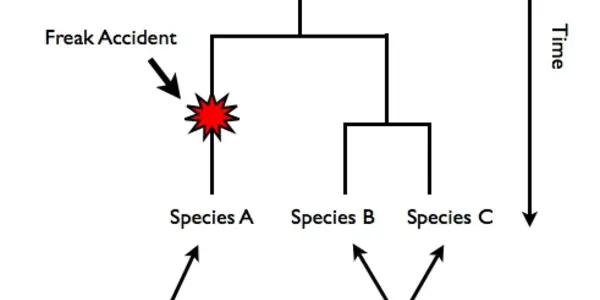
In biology, everything has a history. Creationists love to try to calculate the probability of a new gene spontaneously coming into existence, but that's not how genes are born. New genes most often come from other genes: one gene gets duplicated by a freak accident (like the accidental duplication of a chunk of chromosome, a whole chromosome, or even an entire genome), so that you suddenly have a cell with two working copies of the same gene. As time goes on (that is, time on an evolutionary scale), those two duplicate genes start to divide up the work that was originally done by just one gene. One copy might end up specializing in one particular task, picking up mutations along the way that gradually transform this copy into an independent gene in its own right, with its own specialized function. From one gene, you get two, each with a distinct role in the cell.
It sounds like a nice evolutionary story, but do scientists have any real examples of duplicate genes evolving new functions?

How to Date Your Fat Cells With Nuclear Bombs

How to Date Your Fat Cells With Nuclear Bombs

Scientists have been trying to understand how and when we gain or lose fat cells, and now a paper in this week's issue of Nature reports that nuclear bombs are the key to solving this problem.
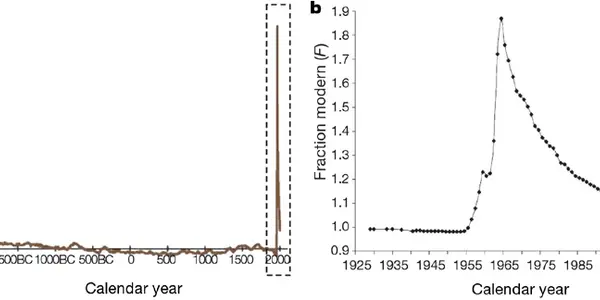
To understand how our bodies regulate our weight, researchers are interested in knowing how the number of fat cells changes over our lifetime - do we stop making more fat cells after adolescence? Do we keep the same fat cells all of our adult lives, or do some die off and get replaced by new ones? The typical way to study the birth and death of cells in live animals is to use radioactive tracers that label DNA, but these experiments are too toxic to try in humans. It turns out though, that the US and Soviet militaries did the experiment for us, with above-ground nuclear bomb tests in the late 1950's, tests which spewed large amounts of radioactive carbon in the atmosphere. That radioactive carbon is now in our DNA (at least for those of us alive during the cold war), and it provides a convenient "manufactured on" date for our long-lived fat cells.

Progress In The Hunt For Autism Genes

Progress In The Hunt For Autism Genes

Much of the coverage of autism in the media focuses on the arguments of advocates, scientists, and government officials over the relationship between vaccines and autism. But out of the spotlight, a bigger story is brewing: the hunt for autism genes, a technically difficult hunt which is pressing forward using all of the tools modern genetics has to offer. If you are like me, news stories about autism have left you with only a vague impression of the current scientific state of understanding, the impression that researchers strongly deny any link between autism and vaccines, but have little else to say about what the real cause of autism might be.
If that is your impression, you'll perhaps be surprised to learn that roughly 20% of autism cases in the US are linked to known genetic changes, a minor fraction of autism cases to be sure, but much higher than I would have guessed. That autism has a genetic basis is a well-established finding, and while this by no means rules out environmental factors, genetics is at the core of the recent progress scientists have made in understanding autism. The genetics of autism, however, is not simple - no surprise, since autism involves our most complex organ, the brain, in one of its most complex functions, social interaction. Untangling the genetic and environmental factors that underlie autism will be tough, but in the process we will learn more about how many different genes work together in a child to control the developing brain.

Growing Human Heart Tissue from Embryonic Stem Cells

Growing Human Heart Tissue from Embryonic Stem Cells

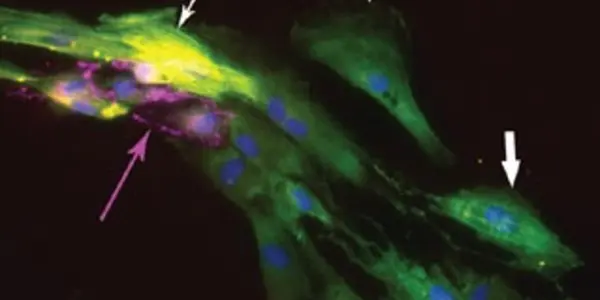
We understand in amazing detail how a heart develops - in mice. Whether the same processes that produce mouse heart tissue also generate heart tissue in humans has been unclear, because we obviously can't do the required experiments on human embryos. But a paper published on Thursday in Nature describes research that used human embryonic stem cells to generate human heart cells, and in the process demonstrated that human and mouse stem cells use similar molecular signaling pathways to develop, or differentiate, from stem cells to various types of heart cells. What this means is that we now have the molecular recipe needed to grow heart tissue from embryonic stem cells. Having that recipe in hand brings us a step closer to an embryonic stem cell-based treatment for damaged hearts.

Human Cardiac Cells - Figure 4c from Yang, et al., Nature 453 (2008) doi:10.1038/nature06894