Adaptive Complexity

Michael White

Michael White

Welcome to Adaptive Complexity, where I write about genomics, systems biology, evolution, and the connection between science and literature, government, and society. I'm a biochemist and a postdoctoral fellow in the Department of Genetics and the Ce…
RSS Feed
Intelligent Design's Day In Court On NOVA

Intelligent Design's Day In Court On NOVA

Last night the PBS series NOVA featured a two-hour show on the 2005 Dover, PA Intelligent Design trial. If you missed it, go check out clips and some great evolution resources at the show's website. As a creation/evolution junkie, I had previously read all of the trial transcripts, but reading transcripts was no substitute for seeing and hearing the major participants on camera. And while the big players from the Discovery Institute refused to be interviewed, NOVA managed to get just about everyone else on camera, including one of the defense's expert witnesses and the two ex-school board members who started the whole mess. These guys made it abundantly clear in their own words that intelligent design in Dover was not about improving science education - it was all about pushing creationism among the students.

Do Universities Care About More Than Image?

Do Universities Care About More Than Image?

"What makes the modern university different from any other corporation?" That's the question asked in the NY Times this week. In light of increasingly unaffordable tuition rates and the profitable but corrupt business of lending huge sums of money to students, do universities deserve their nonprofit status? Is the tight competition for federal grants corrupting the mission of universities?

The Times isn't so sure:

"Driven by big science and global competition, our top universities compete for “market share” and “brand-name positioning,” employ teams of consultants and lobbyists and furnish their campuses with luxuries in order to attract paying “customers” — a word increasingly used as a synonym for students."

Evolution's Balancing Act

Evolution's Balancing Act

Evolution carries out an incredibly tricky balancing act: the genetic program of a species has to be resistant to small changes, yet also susceptible to the adaptive remodeling of natural selection. The human genome is so robust that over 6 billion variations give rise to viable organisms that have successfully traversed the complex developmental program that produces a live human infant from a single cell. Yet the human genome is the product of major evolutionary innovation, even over the relatively short period since the human and chimp lineages diverged. How can genomes be robust and malleable at the same time?

Domesticating Biotechnology in the 21st Century

Domesticating Biotechnology in the 21st Century

Will we domesticate biotechnology in the next 50 years? More than 150 years of spectacular advances in physics, chemistry, and computing have thoroughly transformed the way we live. Yet so far, the big revolutions in molecular biology have had their impact primarily on professional laboratories, not our everyday lives. What do we need to do in order to domesticate biotech?

More Confusion about Junk DNA and Regulatory Sequences

More Confusion about Junk DNA and Regulatory Sequences

Back in June, John Greally, a biologist at Albert Einstein, wrote a frustrating Nature commentary on the ENCODE project in which he repeatedly and wrongly suggested that before ENCODE, biologists were only paying attention to regulatory sequences:

Junk DNA in the Opossum Genome

Junk DNA in the Opossum Genome

Vertebrate genomes are full of junk. Despite the occasional confusing magazine article, the spurious claims by creationists, or obfuscatory statements by some scientists, we know that our genomes are stuffed full of DNA sequence that serves no functional role for the organism. The vast bulk of this junk sequence consists of molecular parasites, called transposable elements, whose only 'function' is to replicate themselves. While our genomes obviously contain critical information required to build and maintain ourselves, they are also vast ecosystems of virus-like parasites that have colonized our DNA.

Untangling the Logic of Gene Circuits

Untangling the Logic of Gene Circuits

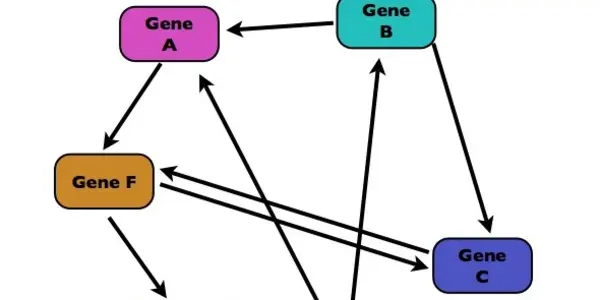
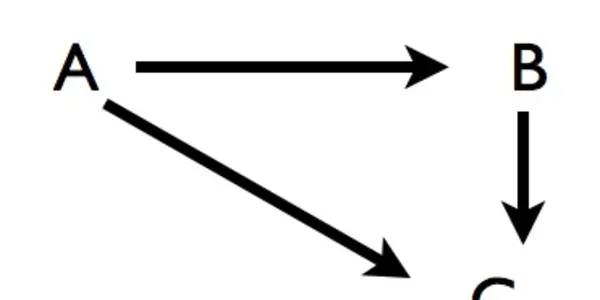
How does a cell process information? Unlike computers, with CPUs to carry out calculations, and animals, which have brains that process sensory information, cells have no centralized device for processing the many internal and external signals with which they are constantly bombarded. And yet they somehow manage just fine. The single-celled brewers's yeast, for example, can know what kind of food source is available, tell when it's hot or cold, and even find a mate.

One key way that cells sense and respond to their environment is via genetic circuits.

Our Genomes, ENCODE, and Intelligent Design

Our Genomes, ENCODE, and Intelligent Design

What has the ENOCODE project done, and how do their results change our understanding of the human genome? In Time to Rethink the Gene? I put this project into perspective by briefly outlining some past concepts of the gene and highlighting some of the ENCODE findings.

Now it's time to take a closer look at the results of the ENCODE project and their significance for our understanding of the human genome.

ENCODE's genome snapshot is unquestionably fascinating, and it suggests that some features of genome regulation that were previously viewed as exceptions to the norm are really quite common. But are these results revolutionary?

Time to Rethink the Gene?

Time to Rethink the Gene?

After the tremendous discoveries in basic biology of the last 100 years, you might think that we would understand by now what a gene is. But the big news in genome biology this week is the publication of the results of the ENCODE project, a large scale experimental (as opposed to just computational) survey of the human genome. The leaders of the ENCODE project suggest that we need to, yet again, rethink just what exactly a gene is.

Sean Carroll's Smackdown of Michael Behe

Sean Carroll's Smackdown of Michael Behe

This week's issue of Science has a book review (subscription required unfortunately) of Michael's Behe's latest effort to defend Intelligent Design Creationism. Michael Behe's latest book, The Edge of Evolution, contains Behe's latest incarnation of his idea of irreducible complexity. A few years ago he put forward this latest argument in a paper in Protein Science (a journal which one of my mentors dismissed, maybe a little unfairly, as a "junk journal"), and he elaborates on this argument more extensively in his new book.