Adaptive Complexity

Michael White

Michael White

Welcome to Adaptive Complexity, where I write about genomics, systems biology, evolution, and the connection between science and literature, government, and society. I'm a biochemist and a postdoctoral fellow in the Department of Genetics and the Ce…
RSS Feed
Evolution: Winning in Court But Losing In Class?

Evolution: Winning in Court But Losing In Class?

In the perpetual fight over evolution in public schools, there is good news and bad news. The good news is that supporters of science education have largely been successful in shutting down creationist attempts to undermine evolution through state legislatures and state school boards. While there is still mischief going on in many state legislatures, these efforts rarely go anywhere, thanks to vigilance by supporters of good science education. An essay in PLoS Biology today argues that, at the state level, things are going well:
At this time, not a single state uses its content standards to explicitly promote ID or creationism. School boards are monitored by organizations like the National Center for Science Education, by state academies of science, and by local scientific and professional organizations. As a result, few state school boards can formally consider measures like the one adopted in Dover without scrutiny and challenge from organizations representing the scientific profession.
But here comes the bad news:
There are many reasons to believe that scientists are winning in the courts, but losing in the classroom.

What Makes Cells Tick? Reverse Engineering Biological Cycles

What Makes Cells Tick? Reverse Engineering Biological Cycles

Physics can explain the cycle of the earth around the sun, but what drives cellular cycles? Two of the most important cycles in cells are the series of events that take place when cells divide, and circadian rhythms - the cycle of day-night events that even bacteria participate in.
Unlike a planet, a cell's cycle can't be described by simple physical laws, nor does it have a CPU like a computer to keep time and and control the order of events. So how do cells control their cycles? Researchers have been trying to reverse engineer cell cycles, and two recent successes give a fascinating molecular view of what's going on.

Capitalists, Genetic Tests and Your DNA

Capitalists, Genetic Tests and Your DNA

Everyone knows there is a lot of crazy stuff on the internet, but did you know there is a lot of great writing about genes, genetics, and human diseases? And believe it or not, sometimes these pieces are written by people who know what they're talking about. If you're looking for what's new in human genetics, you've come to the right place.
Welcome to the 31st Gene Genie, a blog carnival dedicated to great blogging about human genes and how they impact our health. This Mother's Day edition includes an in-depth highlight of the growing industry of personalized genetics.

What The Platypus Genome Is and Isn't

What The Platypus Genome Is and Isn't

I haven't contributed a single thing to the platypus genome project, but since my desk sits one floor above where people and robots broke the platypus DNA into chunks, cloned those chunks into bacteria, sequenced the pieces of DNA, and used massive amounts of computing power to assemble the stretches of sequence into a complete genomic whole, I'm going to consider myself somewhat of an authority on the subject and tell you what's wrong with other people's ideas about the platypus.
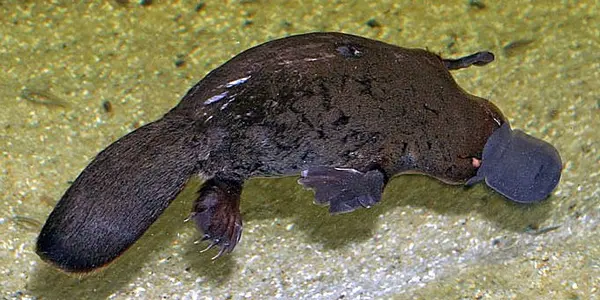
The genome sequence of the platypus was published Thursday in Nature, and from the press headlines, you could be excused for thinking that genomics has in fact confirmed that the platypus is a freak of nature: part bird, part reptile, and part mammal. The animal certainly looks like it - the platypus has the webbed feet and bill of a duck, and venomous spines and rubbery eggs that remind us of reptiles, but it has fur and feeds its young with milk, so it must be a mammal. The confusing press headlines might even lead you to believe that we sequenced the platypus genome just to figure out what this thing is, when the truth is, as we'll see below, that the genome sequence has essentially confirmed what evolutionary biologists have already deduced about the position of the platypus on the tree of life.
Is the platypus part bird, part reptile part mammal, an amalgam of very different groups of animals? Is it a primitive mammal that resembles the early ancestors of all mammals? Can we figure out just what this creature is by gazing at its genome?

Photo Credit: Stefan Kraft, courtesy of the Wikipedia Commons

Intelligent Design: Coming To A State Legislature Near You

Intelligent Design: Coming To A State Legislature Near You

Would you recognize a legislative push for Creationism if you saw one? After decades of failed legal strategies to overtly ban evolution or make equal time for Creationism in public schools, the latest tack used by the opponents of evolution is to have 'academic freedom' bills that encourage school teachers to include supposed evidence against evolution, or the presentation of 'both sides' of a controversial issue in science class. If you support the integrity of science education, you should oppose bills like this, both because they are redundant when it comes to good science (teachers already can teach both scientific sides of a legitimate scientific debate), and because the Creationist legislators pushing them are up to no good. But are we reaching a point where Creationism is defining itself out of existence? Are they creating a legal loophole too small for their anti-evolutionary propaganda to fit through?

The Benefits of Our 100 Million-Year Relationship With Herpesviruses

The Benefits of Our 100 Million-Year Relationship With Herpesviruses

We go back a long way with herpesviruses. Our evolutionary line has been living with these genomic parasites for more than 100 million years, and today herpesviruses infect nearly all humans, as well as all other mammals, birds and reptiles that scientists have checked. We aren't born with these viruses, but most of us acquire multiple infections of various types of herpesviruses during childhood.
Unlike our relationship with many other, more notorious viruses, we've learned to peacefully coexist with herpesviruses for the most part. They set up shop in our cells, they use our molecular machinery to replicate themselves, and they take advantage of the influx of energy we provide from our diet. Sometimes the relationship goes sour, with the unfortunate results ranging from chickenpox to mononucleosis, genital herpes, and Burkitt's lymphoma, but by and large, most humans, and mammals in general, are never seriously harmed by these house guests. But do we get anything out of this relationship? Remarkably, recent research suggests that this 100 million-year coexistence may have been good for us too, helping our immune system to ward off even more serious pathogens.

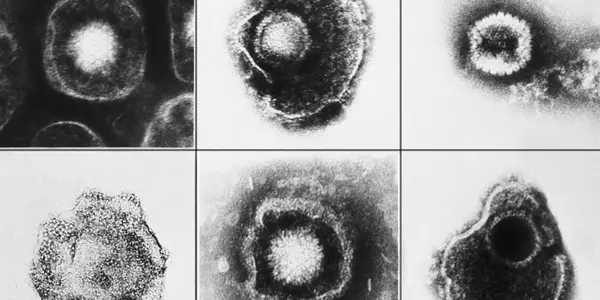
Photo Credit: US Centers for Disease Control, courtesy of the Wikipedia Commons
Using Our Genomes To Reconstruct Human Geography

Using Our Genomes To Reconstruct Human Geography

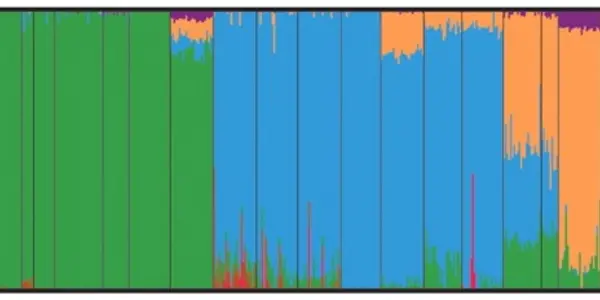
If you had one hundred unlabeled DNA samples, taken from people all around the world, could you use that DNA to determine where the original donors came from?
With major improvements in genotyping technology, geneticists are now getting better and better at this game, and a recent paper in Science reports the largest study to date of human genetic diversity: 650,000 genetic differences scrutinized in nearly 1000 different individuals from 51 different populations.
Studies like this one lay important groundwork to help us understand how human genomes differ around the world, how differences in our genes and environments together make us healthy or sick, and how very ancient migrations led to the structure of today's human populations around the globe.

Yeast, Sex, and You

Yeast, Sex, and You

Wild sex is a staple of nature films, but there is one sex scene David Attenborough has never narrated: the mating ritual of yeast. That's right: yeast. Sex isn't just limited to lions, birds of paradise, and aphids; single-celled fungi do it too. Although most people don't like to hear the words 'fungus' and 'sex' used in the same sentence, yeast mating is a remarkable phenomenon and worth a closer look.
You can see this amazing scene, played out billions of times every day in wine vats and under oak trees, captured on film. As is the case with most wild mating rituals, filming yeast sex requires great patience - yeast are slow to commit and even when they do, they don't rush things. The beginning of foreplay itself takes several hours, as you can see below:

Bad Science Journalism And The Myth Of The Oppressed Underdog

Bad Science Journalism And The Myth Of The Oppressed Underdog

There is a particular narrative about science that science journalists love to write about, and Americans love to hear. I call it the 'oppressed underdog' narrative, and it would be great except for the fact that it's usually wrong.
The narrative goes like this:
1. The famous, brilliant scientist So-and-so hypothesized that X was true.
2. X, forever after, became dogma among scientists, simply by virtue of the brilliance and fame of Dr. So-and-so.
3. This dogmatic assent continues unchallenged until an intrepid, underdog scientist comes forward with a dramatic new theory, completely overturning X, in spite of sustained, hostile opposition by the dogmatic scientific establishment.
We love stories like this; in our culture we love the underdog, who sticks to his or her guns, in spite of heavy opposition. In this narrative, we have heroes, villains, and a famous, brilliant scientist proven wrong.

Mind-Bending Science in Thomas Pynchon's Mind-Bending Novel Against the Day: Part II - The Quaternion Wars

Mind-Bending Science in Thomas Pynchon's Mind-Bending Novel Against the Day: Part II - The Quaternion Wars

Interested in the strange, turn-of-the-century science and math in Thomas Pynchon's novel Against The Day? In part 2 of my primer on Pynchon's science read about the obscure conflict among mathematicians over quaternions, before modern vector analysis largely won the day. (If you missed part 1, read it here).
Science and Against The Day Part 2: Vectors and Quaternions
I. The need for algebra in more than one dimension
In Against the Day, Pynchon frequently refers to a relatively obscure conflict in the mathematics and physics community that took place in the early 1890's between advocates of quaternions and proponents of the newer vector analysis. This conflict is tied in to major themes in the book, such as the tensions between the old and the emerging world that culminated in the conflict of World War I, and the ability to perceive and describe the world in more than the three dimensions of Euclidean space. Quaternions, like the luminiferous aether discussed in Part 1 of this essay, became superfluous and obsolete, mostly unnecessary in the efforts of physicists to describe the natural world after the advent of modern vector algebra and calculus.

Hank's tetrahymena DNA

Hank's tetrahymena DNA

don't know how to upload pictures into the comments without making a draft column.

Mind-Bending Science In Thomas Pynchon's Mind-Bending Novel Against The Day: Part I

Mind-Bending Science In Thomas Pynchon's Mind-Bending Novel Against The Day: Part I

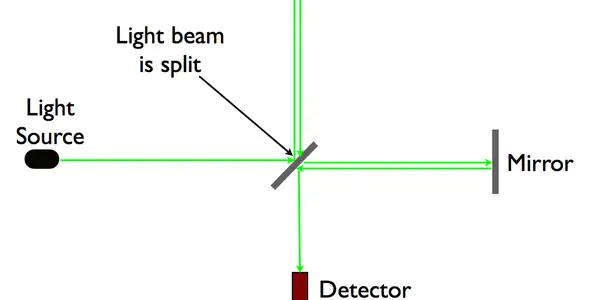
Do you like Thomas Pynchon, but are you stumped by the crazy turn-of-the-century science in his latest novel, Against The Day? You're not alone! I've put together a little guide for the perplexed, a three-part primer on special relativity, vector analysis and quaternions, and Riemann surfaces, just for Pynchon readers.