Adaptive Complexity

Michael White

Michael White

Welcome to Adaptive Complexity, where I write about genomics, systems biology, evolution, and the connection between science and literature, government, and society. I'm a biochemist and a postdoctoral fellow in the Department of Genetics and the Ce…
RSS Feed
Sunday Science Book Club

Sunday Science Book Club

Oppenheimer: The Tragic IntellectCharles Thorpe, University of Chicago 2006For decades, there was a dearth of comprehensive Oppenheimer biographies. As Thomas Powers noted in the New York Review of Books, biographies of other major Manhattan Project figures came out long before adequate Oppenheimer biographies: "Oppenheimer, the truly central figure, seemed to resist the attempt to write his life on the grand scale." That is no longer the case, and a shelf of very good biographies makes it difficult to know where to start reading.

Making Sense of Biological Networks

Making Sense of Biological Networks

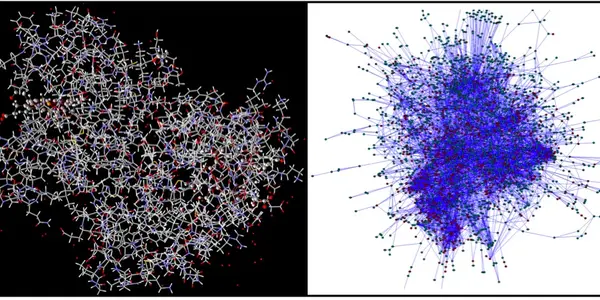
Molecular biologists have long operated on the principle that knowing the structure of a biological entity is critical for understanding how it works. Most famously, this was the premise behind one of biology's most iconic discoveries, Watson and Crick's model of the structure of DNA. Structure-function studies have been the foundation of much of molecular biology ever since.Although the structure of DNA yielded almost immediate insight into an important biological problem, solving structures hasn't always resulted in a eureka moment. The same year Watson and Crick received their Nobel Prize, two other scientists, John Kendrew and Max Perutz, were also awarded the Nobel for determining the structure of a biological molecule. Unfortunatly for Kendrew and Perutz, instead of a flash of insight the result was incomprehension. They had determined the structure of two related proteins, myoglobin and hemoglobin, and these structures at first glance looked like just an irregular mass of thousands of atoms.Happily, the befuddlement didn't last long. Scientists quickly learned how protein structures explain their function, and today we have amazing structural snapshots of proteins in action. These studies of structure have helped biologists understand the gritty details of key biological processes, such as how membrane-embedded ion pumps enable our nerves to conduct electrical signals. Using a protein's structure to understand its function has now become routine.But today biologists are facing another moment of incomprehension. We're staring at structures of a different type of biological entity: a network, not an irregular mass of atoms, but one of connections. We know that biological networks give cells their ability to make sense of the world, to process information, to sense the environment or the cells' own internal state, and to take appropriate action. Scientists have been mapping these networks in great detail for years now, but the result is frequently just a giant, molecular hairball (or 'ridiculogram', as a friend calls it).In other words, scientists are facing yet another giant structure-function problem. How do the strucures of biological networks result in something functional?


What Our Genes Tell Us About Race

What Our Genes Tell Us About Race

Which species is more diverse, humans or chimps? Most of us would be tempted to answer 'humans'. Unless you're a primatologist or you work at a zoo, you would likely have trouble telling one chimp apart from another, not to mention distinguishing between West African and Central African chimpanzees. By contrast, we can easily spot differences among humans - if asked to guess whether someone was from China, Pakistan, or Kenya, few of us would have any trouble getting the answer correct.By the measure of genes though, humans are amazingly uniform. Humans are genetically less diverse than chimps, and both chimps and humans are much less diverse than a common species of fruit fly. Given our species' long history of racial conflict, our genetic uniformity may come as a surprise. Not too long ago people in polite company would debate whether different human races really all belonged to one species. Our DNA tells us that our genetic differences don't even come close to matching the variety found within a single, apparently monotonous fruit fly species.

Number Crunching and Evidence-Based Medicine

Number Crunching and Evidence-Based Medicine

Newt Gingrich, John Kerry, and someone named Billy Beane (I have no clue who he is) argue that medicine is not yet sufficiently data driven.:In the past decade, baseball has experienced a data-driven information revolution. Numbers-crunchers now routinely use statistics to put better teams on the field for less money. Our overpriced, underperforming health care system needs a similar revolution...Remarkably, a doctor today can get more data on the starting third baseman on his fantasy baseball team than on the effectiveness of life-and-death medical procedures. Studies have shown that most health care is not based on clinical studies of what works best and what does not — be it a test, treatment, drug or technology. Instead, most care is based on informed opinion, personal observation or tradition.

Politics and US Innovation: It Has To Be About The Future, Not Just The Present

Politics and US Innovation: It Has To Be About The Future, Not Just The Present

The US Presidential candidates on fostering science and technology innovation:
For decades, the United States dominated the technological revolution sweeping the globe. The nation’s science and engineering skills produced vast gains in productivity and wealth, powered its military and made it the de facto world leader.

Sunday Science Book Club

Sunday Science Book Club

Only A Theory: Evolution and the Battle for America's Soulby Kenneth R. Miller Viking, 2008
Ken Miller is not preaching to the choir. Although he has a day job as an active research biologist at Brown University, Miller has spent more than two decades on the front lines of the battle over evolution as a writer, lecturer, and expert witness in court. During these two decades of culture war, he has come to realize that, although the stakes are high in this fight, sometimes the best tactic is the non-martial one: don't treat the American public as pawns in a propaganda war.
Miller starts with the assumption that most people will be fairly open-minded about evolution and intelligent design. Before they make a firm judgment on the role of evolution in our public schools, people genuinely want to know what the scientific status of evolution is, and whether intelligent design is truly a scientific challenger. Many previous books debunking evolution have missed people like this. Such books typically fall into two categories: necessary but dense, technical works that provide, in detail, the scientific community's best response to the claims of intelligent design advocates, and scathing, hard-hitting attacks that fire up those who already accept evolution, but turn off readers who are trying hard to understand this issue without being strongly biased either way. Only A Theory is a genuine attempt at persuasion, and its approach is a result of Dr. Miller's years of practice speaking to audiences who want to give both sides a fair shot.
Don't be fooled, however, into thinking that Miller is trying to find some mutually satisfactory middle ground. For those who want to know whether evolution really is good science, his answer is unambiguous - evolution is one of the most successful and important theories we have in biology. And what about intelligent design? Its advocates have not even attempted to make this a real scientific discipline; evolution is the only scientific game in town.

Green Fluorescent Protein is Cool, but is it Nobel Prize-Level Cool?

Green Fluorescent Protein is Cool, but is it Nobel Prize-Level Cool?

This year's Nobel Prize in Chemistry goes to three scientists responsible for transforming a green-glowing jellyfish protein into a ubiquitous tool in molecular biology. Green fluorescent protein (or GFP in lab jargon) and its various colored relatives have made many previously impossible experiments cheap and easy, and you would be hard-pressed to find any molecular or cell biologists who have never used some variant of GFP. There is no denying the influence of GFP, but was its discovery Nobel-caliber?

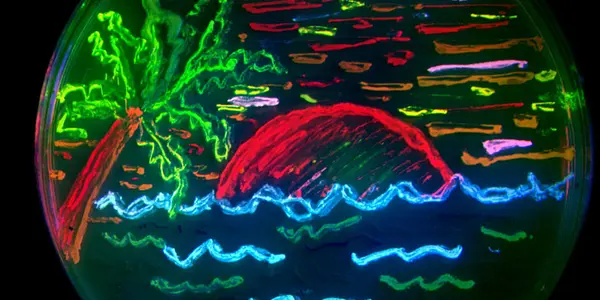
San Diego Beach Scene, Fluorescent E. coli on agar, Nathan Shaner, photography by Paul Steinbach, created in the lab of Nobel Prize winner Roger Tsien, posted under the GNU Free Documentation License

Stopping Cancer Drug Resistance at the Source

Stopping Cancer Drug Resistance at the Source

We have many great anti-tumor drugs that can do a fantastic job destroying the molecular insides of tumor cells. There is, however, a major catch: tumors have a nasty habit of become drug resistant. Such is the case with the breast cancer chemotherapeutic agent docetaxel. This drug can be effective at stopping breast cancer, but unfortunately many tumors are docetaxel-resistant. 50% of breast cancer patients receiving their initial course of chemotherapy are resistant to docetaxel, and it gets worse for patients who have already had chemotherapy - 70-80% of patients who have already received chemotherapy don't respond to this drug.
Administering docetaxel to resistant patients obviously wastes time that could be spent on other treatments. It also causes needless suffering of side effects. But is there some way to predict in advance who is going to be resistant? Or better yet, is there something we can do to eliminate docetaxel resistance altogether?
A Japanese group from the Japanese National Cancer Research Institute set out to tackle this problem, and their encouraging results have been reported in Nature Medicine. These researchers discovered a gene that makes breast cancer cells resistant to docetaxel, and they used that knowledge to knock out the source of docetaxel resistance. Although this study was largely confined to petri dishes and mice, cancer researchers can now use this result to identify patients who won't respond to docetaxel, and they are ready to test this new therapy target in real human cancers.

Steven Weinberg, Ralph Waldo Emerson And The Impact of Science on Religion

Steven Weinberg, Ralph Waldo Emerson And The Impact of Science on Religion

Emerson looked forward to the day when America would be self-reliant and not second rate in its scholarship. In science, the U.S. has fulfilled Emerson's ambition, but at what cost to religion?
Physicist Steven Weinberg muses on religion's fate in the West as science has come to dominate our culture:
Let's grant that science and religion are not incompatible—there are after all some (though not many) excellent scientists, like Charles Townes and Francis Collins, who have strong religious beliefs. Still, I think that between science and religion there is, if not an incompatibility, at least what the philosopher Susan Haack has called a tension, that has been gradually weakening serious religious belief, especially in the West, where science has been most advanced. Here I would like to trace out some of the sources of this tension, and then offer a few remarks about the very difficult question raised by the consequent decline of belief, the question of how it will be possible to live without God.

Are We Losing the War on Cancer?

Are We Losing the War on Cancer?

Imagine that instead of setting out to invent a better lightbulb, Thomas Edison had announced his intention to invent a light-emitting diode that you could use to illuminate your kitchen. This isn't completely far-fetched: the first examples of light-emitting diodes (LEDs) began to appear as early as 1907. But it wasn't until the 1960's and 70's that useful, visible-spectrum LEDs began to appear, and LEDs haven't been used to light kitchens until very recently. Thomas Edison, had he set out to make a useful, household LED, would have been doomed to failure beacause it would be years before basic science made the necessary technologies possible.
When Richard Nixon declared the conquest of cancer "a national crusade" in 1971, cancer researchers were inevitably set up to be viewed as failures. Although at the time the recent molecular biology revolution led people to think that disease conquest was just around the corner, now we can look back and see that the War on Cancer had no hope of achieving its goals in the 1970's. Scientists are being punished for that hubris now, in the form of misguided news pieces such as Newsweek's current exposé: "We Fought Cancer...And Cancer Won".

Evolution's Most Important Molecular Inventions

Evolution's Most Important Molecular Inventions

Most people probably think of change when they hear the word evolution, but some of evolution's most amazing molecular inventions have stuck around hundreds of millions, even billions of years. The complex protein machinery needed to express genes, metabolize energy sources, reproduce sexually, and lay out body plans has remained in place largely unchanged in spite of the tremendous variety we see in the living world. These constant core cellular processes are why biologists could crack the universal genetic code by experimenting with bacteria, and why we gain insight into cell division and cancer by studying yeast.
The big question, argue the authors of The Plausibility of Life, is not how evolution keeps inventing new genes - it's how evolution can produce so much variety when the basic processes change so little. Later in the book Kirschner and Gerhart are going to argue that these basic systems have persisted so long because they are versatile, that they posses features which make them well-suited to facilitating the biological diversity we see today. We'll come to that argument later; today we'll take a closer look at the core conserved molecular systems that carry out the most basic cellular functions.

Evolution as the Recycler of the Cell's Tools

Evolution as the Recycler of the Cell's Tools

Part 2 on The Plausibility of Life
How does evolution shape living things? The fact that evolutionary forces, such as natural selection, can shape living creatures is well-established, but how malleable those creatures are, and what the increments of change are is less well established. We have a fairly good idea of how genes can change, but how does that genetic change translate into physical changes in the shape and functioning of the organism itself - that is, how does genetic change translate into changes in the organism's phenotype?
The authors of The Plausibility of Life, Marc Kirschner and John Gerhart, argue that this issue has been ignored in evolutionary theory (although they go on to say that it was justifiably ignored for a long time - before modern molecular and cell biology, there was no way to effectively address this question):
What if evolutionary biologists were wrong to think of phenotypic variation as random and unconstrained? How much would it matter if we really understood how genetic variation leads to phenotypic variation, and in particular, how facile or difficult is it to achieve a specific phenotype?
These questions get to the heart of the evolution of complexity.