Adaptive Complexity

Michael White

Michael White

Welcome to Adaptive Complexity, where I write about genomics, systems biology, evolution, and the connection between science and literature, government, and society. I'm a biochemist and a postdoctoral fellow in the Department of Genetics and the Ce…
RSS Feed
Plug-And-Play Inside Your Cells: Signals and Side Effects

Plug-And-Play Inside Your Cells: Signals and Side Effects

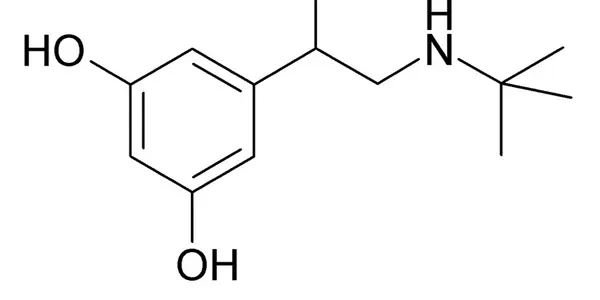
If you've ever had a severe asthma attack or gone into premature labor, there is a good chance you were given the drug terbutaline. Terbutaline can relax your involuntary smooth muscle when it's causing problems: in constricted airways during an asthma attack, or in the uterus during contractions. But if you've taken terbutaline, you've probably also noticed another effect: it can induce a pounding, racing heartbeat. How can one drug produce such opposite effects - relaxing smooth muscle in some parts of your body, while making your cardiac muscle work harder?
The answer is that terbutaline switches on a common information-processing module, called a signaling pathway, which gets used over and over in different cells to perform very different jobs. This information-processing module can be plugged into different cell types, where it will transmit signals from the environment outside the cell to the inside where the information is processed and acted upon. Because our cells use a common set of information-processing modules to carry out so many different jobs, it's easy for drugs that act on these modules to produce a wide range of side-effects.

If Darwin Had A Web Browser, He Would Never Have Written The Origin

If Darwin Had A Web Browser, He Would Never Have Written The Origin

How can today's wired, multitasking scientists ever compete with the great scientists of the past? One feature of Darwin's work as a scientist was that it proceeded slowly, very, very slowly. He wrote massive groundbreaking books, compiled huge amounts of data on orchids, barnacles, and Galapagos animals, but all over a long period of time. Scientists in Darwin's day had hours to kill on long voyages, took long walks out in the field, and waited while their scientific correspondence leisurely wended its way across oceans or continents.
Even in the first half of the 20th century, great scientists are famous for what they accomplished on long walks, hiking trips, and train rides. Niels Bohr would walk for hours around Copenhagen and come up with groundbreaking ideas, while Werner Heisenberg spent weeks every year hiking in the mountains. Even Richard Feynman, working in our more modern (but still pre-internet) era, insisted on long blocks of time to concentrate; he likened his thought process to building a house of cards, easily toppled by distraction and difficult to put back together.
Does that mean the kind of science we do in our overscheduled, multitasking world will never be the same as it was in the past? Certainly in one sense it won't - earlier generations of scientists had one distinct advantage we don't have today: Servants.

An Evolution Reading List

An Evolution Reading List

As a book junkie, I love to get and give book recommendations. Here is my Darwin Day recommended books list:
What Evolution Is, Ernst Mayr - My favorite brief, single-volume primer on evolution for non-specialists.

Darwin Day Book Review: Your Inner Fish, By Neil Shubin

Darwin Day Book Review: Your Inner Fish, By Neil Shubin

“What does the body of a professor share with a blob?” Neil Shubin answers this and other questions about the evolutionary history of our anatomy in Your Inner Fish: A Journey Into The 3.5-Billion-Year History of the Human Body (Pantheon, 2008).
As an undergraduate student considering a research career in science, I once endured a 7 AM human anatomy course. In my semi-conscious state, breathing the slightly disturbing fumes of the preservative that the teaching assistant kept spraying on the cadavers, I was thinking, ‘this is morbidly fascinating, but really not that relevant to what scientists do today.’
If Neil Shubin had been teaching my anatomy course, I wouldn’t have struggled to get out of bed and make it to class on time. His book is a fun, compelling tour of the evolutionary history of the human body, filled with dozens of examples that nicely illustrate why our anatomy only makes real sense when it is understood in the context of evolution.

Sequencing 1000 Human Genomes - How Many Do We Really Need?

Sequencing 1000 Human Genomes - How Many Do We Really Need?

A group of the world's leading sequencing centers have announced plans to sequence 1000 human genomes. The cost of the first human genome project was about $3 billion; by comparison, the next 1000 will be a steal at possibly only $50 million dollars (and that's total cost, not per genome). But that's still a lot of money - why are we investing so much in sequencing genomes?

It may be a lot up front, but the benefits, in terms of both economics and medical research, easily outweigh the cost of such a large project. By pooling sequencing resources and making large amounts of genome sequence data available up front, we can avoid inefficient and redundant sequencing efforts by groups of independent research groups trying discover gene variants involved in disease. In fact, it would probably be worthwhile to sequence 10,000 human genomes. With 1000 genomes, we're at least making a good start.

What Next Generation DNA Sequencing Means For You

What Next Generation DNA Sequencing Means For You

Of all the 'Greatest Scientific Breakthroughs' of 2007 heralded in the pages of various newspapers and magazines this past month, perhaps the most unsung one is the entrance of next-generation DNA sequencing onto the stage of serious research.

Prior to this year, the latest sequencing technologies were limited in their usefulness and accessibility due to their cost and a steep technical learning curve.

That's now changing, and a group of recent research papers gives us a hint of just how powerful this new technology is going to be. Not only will next-generation sequencing be the biggest change in genomics since the advent of microarray technology, but it may also prove to be the first genome-scale technology to become part of every-day medical practice.

What Genes Did We Lose to Become Human?

What Genes Did We Lose to Become Human?

When we think of the genetic changes that had to take place during our evolutionary history, we typically think of changes that resulted in a gain of function, like genetic changes that resulted in a larger and more sophisticated brain, improved teeth for our changing prehistoric diet, better bone anatomy for bipedalism, better throat anatomy for speech, and so on.

In many cases however, we have lost genes in our evolutionary history, and some of those losses have been beneficial.

The most widely known example, found in every introductory biochemistry textbook, is the sickle-cell mutation in hemoglobin - a clear example of a mutation that damages a functional protein yet confers a beneficial effect. People with mutations in both copies of this particular gene are terribly sick, but those who have one good and one bad copy are more resistant to malaria. Another example is the CCR5 gene - people with mutations that damage this gene are more resistant to HIV. In the more distant past, a universal human mutation in a particular muscle gene that results in weaker jaw muscles may have played a role in brain evolution, by removing a constraint on skull dimensions.

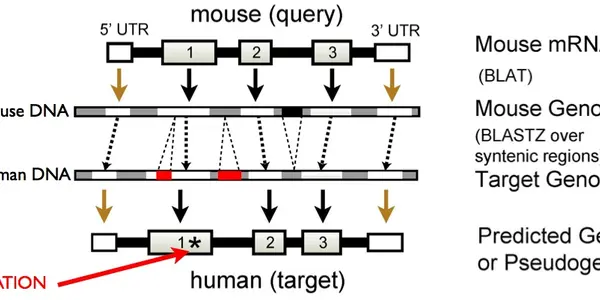
These few examples were found primarily by luck, but now with the availability of multiple mammalian genome sequences, researchers can systematically search for human genes that show signs of being adaptively lost at some point in our history. David Haussler's group at UC Santa Cruz, in a recent paper, looked for the genes we lost as we developed into our modern-day human species. What they found could help us better understand our evolutionary history, and possibly the human diseases that are the side-effects of that history.

How to Grow a New Head: The Amazing Regenerative Powers of Planaria

How to Grow a New Head: The Amazing Regenerative Powers of Planaria

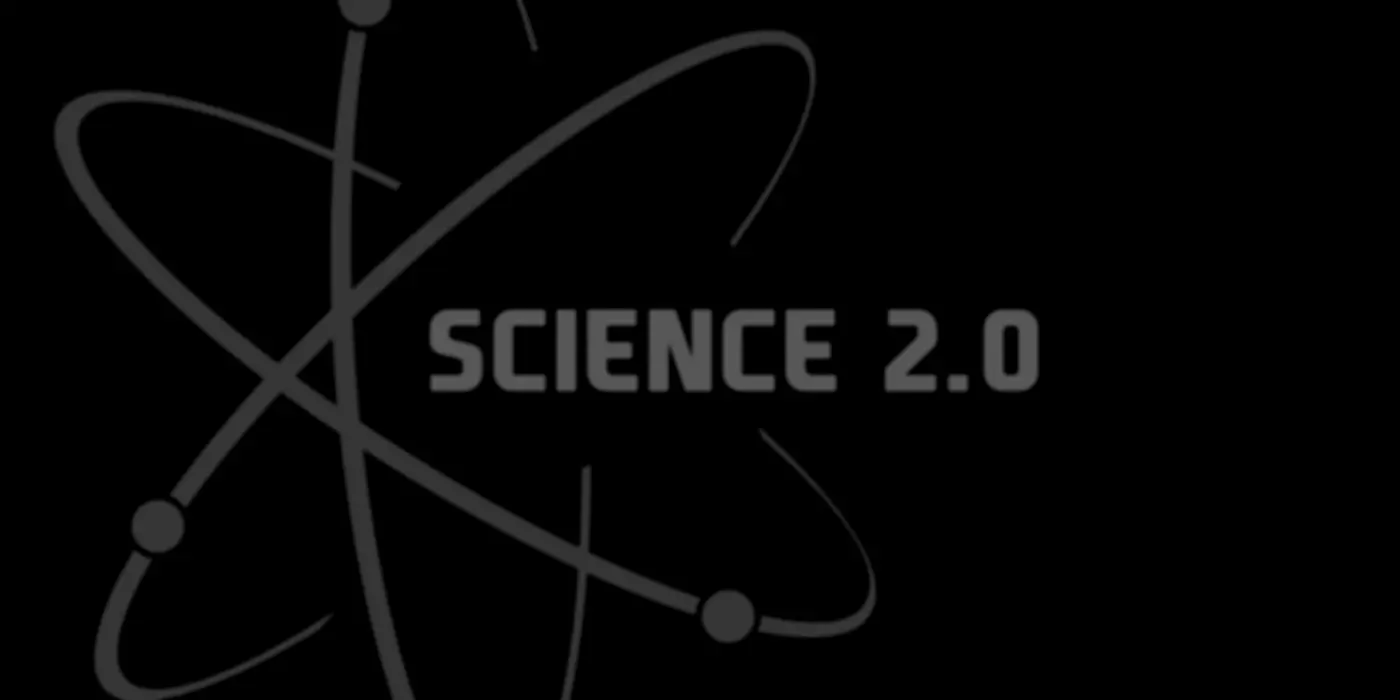
Planarians have fascinated centuries of biologists by their amazing powers of regeneration. If you decapitate a planarian, the body can grow a new head, and the head can grow a new body. In fact, if you cut out a very tiny chunk from the side of a planarian, that chunk will be able to regenerate a new, complete organism. How do these strange critters manage this? What genes do they have that we don't have? As it turns out, most planarian genes are shared with humans, and several groups of scientists are using the latest tools of genomics and molecular biology to figure out just what it is that gives planarians their remarkable powers of regeneration. These researchers hope that planarians will ultimately teach us how to regenerate human injuries.

What's The Matter With Texas? Creationism On Its Way Back

What's The Matter With Texas? Creationism On Its Way Back

Is the State of Texas about to offer Master of Science degrees in creationism? The Institute for Creation Research (ICR), an organization that officially believes the earth sprang into existence less than 10,000 years ago, has applied to offer a state-approved Master's program in science education. Last week, an official advisory committee recommended that the State of Texas approve the ICR's request to offer Master's degrees (read about it here and here). If this request is granted, the ICR has two years in which it can offer state-approved Master's degrees while seeking accreditation for its program from a recognized, outside accreditation organization. Coming on the heels of news that one of the state's science education officials was forced out of her job because she was not "neutral" about standing up for evolution education, this latest event suggests that creationism is about to again become a big issue in the Texas educational system.

We Can Reprogram Skin Cells Into Stem Cells - So Do We Still Need Embryos?

We Can Reprogram Skin Cells Into Stem Cells - So Do We Still Need Embryos?

This month we've witnessed the first-time success of two important stem cell research techniques in primate cells. Both techniques were previously developed in mice, but their success in humans and monkeys is important. Stem cells from cloned embryos have been generated from macaque cells. And now this week, two papers (here and here - this last one is a PDF file) have been published that are reporting that adult human skin cells can be reprogrammed to become stem cells. However, do the results of this week's papers mean that we no longer need to get stem cells from embryos? The answer, for now, is a resounding no - reprogrammed skin cells currently have some serious drawbacks that need to be overcome before they can become worth trying in disease treatments.

Monkey Stem Cells From Cloned Embryos - Humans Are Next...

Monkey Stem Cells From Cloned Embryos - Humans Are Next...

Headlines last week reported that researchers successfully produced stem cells from cloned monkey embryos. Using a process that has become almost routine with mice, scientists can now make make primate embryonic stem cells that are genetically identical to a given DNA donor. Once we learn to do this in humans, the possibility of stem cell based treatments for heart disease, neurodegeneration, and more will be closer to reality. But in the US and elsewhere, can we develop the political will to let this research move forward?

Making a Weed that Eats Explosives

Making a Weed that Eats Explosives

RDX is a common military explosive, and it’s dangerous not just because it explodes - it’s also toxic. Places where RDX is used, produced, or stored often present a serious hazardous waste problem, such at the Massachusetts Military Reservation on Cape Cod, where the local aquifer has been contaminated with RDX. A group of researchers from the University of York in the UK and Canada’s Biotechnology Research Institute have shown how it might be possible to clean up RDX with explosives-eating transgenic plants.