Adaptive Complexity

Michael White

Michael White

Welcome to Adaptive Complexity, where I write about genomics, systems biology, evolution, and the connection between science and literature, government, and society. I'm a biochemist and a postdoctoral fellow in the Department of Genetics and the Ce…
RSS Feed
Creationism's Legal History: The Door is Wide Open

Creationism's Legal History: The Door is Wide Open

Nearly every summary of creationism and the law that I've read includes some sort of statement to the effect that 'the judicial decisions have left the door cracked slightly open for creation science.' Two generally excellent books on the subject illustrate this phenomenon.Edward Humes, in Monkey Girl writes about the 1987 Edwards v. Aguillard Supreme Court decision striking down a Louisiana law requiring that "creation science" be taught. Humes quotes Scalia's rather juvenile dissent (the man couldn't help but drape his argument in insults for his colleagues), and writes:

Darwin and Racism

Darwin and Racism

Edward Larson, author of a Pulitzer Prize-winning history of the Scopes trial (which I highly recommend), writes in Bookforum about the influence of racism on Darwin's thinking. Creationists argue (as most recently exemplified in Ben Stein's widely panned film Expelled) that "practically all the harmful practices and deadly philosophies that plague mankind have their roots and pseudo-rationale in evolutionism." To these people, in this year of big Darwin bicentennial celebrations,  "all the hoopla must seem like throwing a birthday party for Hitler."

Bringing Skeletons Out Of The Quantum Closet

Bringing Skeletons Out Of The Quantum Closet

The Age of Entanglementby Louisa GilderAlfred A. Knopf, 2008Perhaps there is no greater demonstration of Einstein's brilliance and famous independence than his rejection of the spookiness at the heart of quantum theory. Einstein recognized early that quantum mechanics plays a "risky game with reality", and the stakes are nothing less than our deep beliefs about cause and effect that make up the support beams holding science together as a coherent structure.

Steven Pinker Confronts His Genome

Steven Pinker Confronts His Genome

Harvard psychologist Steven Pinker's genome is being sequenced as part of the Personal Genome Project, and he's been gazing at the results, attempting to divine some meaning in the A''s, T's, G's and C's. He shares his musings in a Sunday Times Magazine essay that captures both the excitement of personal genomics and its pitfalls.Personal Genomics and Disease

Science Writing that Drives Me Crazy: The Beak of the Finch

Science Writing that Drives Me Crazy: The Beak of the Finch

Can you tell why this passage comparing Darwin's finches and humans is wrong?Many paths lay open when the finches first arrived, and the smallest flights and trials of their descendants were rewarded. That is why they have traveled in more directions than any other creatures on the islands, that is why they have evolved farther and faster than any other creatures: because they got here early.Our own line is now radiating farther, faster, and in more directions than any other single species in the history of the planet - and for a similar reason. We are the first creatures to arrive in the strange territory we now occupy. We stumbled into our new niche before any other creatures on the planet. We discovered it.

Intelligent Design Advocates Confused by Their Own Arguments

Intelligent Design Advocates Confused by Their Own Arguments

If you read almost any science blog other than mine, you're probably aware of Brown University biologist Ken Miller's smackdown of Intelligent Design (ID) shill Casey Luskin, posted on Carl Zimmer's Loom: part 1, part 2, and part 3.At issue is the tired old concept of irreducible complexity, and it's amazing that after all this time, many ID advocates don't understand what the original point of arguing irreducible complexity was. ID advocate Michael Behe, in various publications including his book Darwin's Black Box basically argued that there are molecular systems inside of cells that, even in principle could not have been produced by evolution - systems like the bacterial flagellum and the blood clotting cascade. Such systems, according to Behe, are irreducibly complex - they need all of their parts in order to function, and if you're missing any parts, you have a non-functional system. Thus, without all of the parts there is nothing functional for natural selection to act on.In other words, the only way evolution could produce a system like the blood clotting cascade would be to have all of the relevant genes suddenly appear at one time by mutation - an event improbable to the point of impossibility (which is one thing ID advocates and evolutionary biologists agree on).


The New Religion of Emergent Properties

The New Religion of Emergent Properties

Salon has an interview with Stuart Kauffman, a biologist who has written multiple fascinating books about complex systems. Kauffman has a new book, Reinventing the Sacred, in which he argues that we need to toss out scientific reductionism and take a new, holistic approach to science and rename it God. But how bad is the problem really?Laplace famously claimed that if we knew the initial position and momentum of all the particles in the universe, we could confidently predict the future of the universe - that is, the universe is completely deterministic. Quantum mechanics seems to indicate that it is not - there is a graininess to the universe at a fundamental level (unless there are so-called 'hidden variables' determining the quantum behavior of particles).

Sunday Science Book Club, December 14 2008

Sunday Science Book Club, December 14 2008

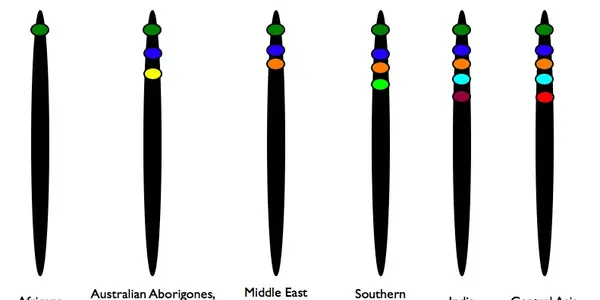
The Journey of Man: A Genetic Odyssey, Spencer WellsRandom House, 2002Spencer Wells, in his short, accessible book designed to accompany a similarly titled documentary film, describes the deep history of humans as it has been inscribed in Y chromosomes. This history has only recently become decipherable through modern genetic tools, and the results have settled some centuries-old controversies about how humans in different parts of the world have become so diverse. The biggest surprise is that our differences are recent: the dramatic differences that distinguish Kenyans, Swedes, Han Chinese, and Polynesians all arose less than 50,000 years ago.

Going Beyond Nature's Limits to Learn the Logic of Gene Regulation

Going Beyond Nature's Limits to Learn the Logic of Gene Regulation

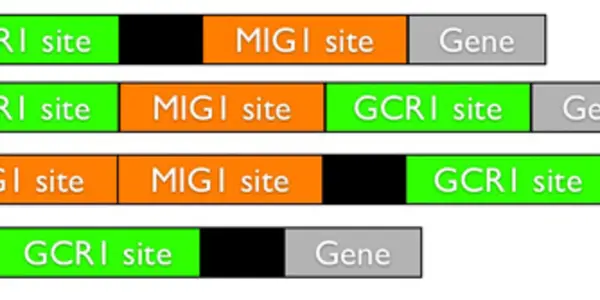
How can we share 98% of our DNA with a chimpanzee and still be so different? One of the biggest biological surprises found in our genomes is that chimps, mice, and even flies don't differ very much from us in either number or types of genes. What makes the many diverse animal groups different is not what genes they have; the secret is in how those genes are used.Something similar takes place inside ourselves: nearly every one of our cells carries the exact same DNA, and yet some cells transmit electrical signals in the brain, while others break down toxic compounds in the liver. How do you get such different cells from the same DNA? Again, the secret lies in how genes are regulated.It should be no surprise then that gene regulation has been the subject of intense study. Most of these studies have focused on taking known genes and describing how they are regulated, but what biologists would really like to do is predict how an unfamiliar gene is controlled, simply by analyzing that gene's regulatory DNA. Once we can predict how genes are regulated, we're not far away from being able to design new regulatory DNA, which we can use to control the fate of stem cells, manipulate dosing in gene therapy, and design microbes that make better biofuels or degrade toxic waste.  A new report in Nature describes an innovative new way to learn the logic of gene regulation.

Finding a New Gene Behind Language Disorders

Finding a New Gene Behind Language Disorders

Why can humans talk while chimps can't? The answer is more than just vocal cord anatomy; our brains have a lot to do with our ability to learn and use language. One 'language gene' is FOXP2. Mutations in FOXP2 lead to a rare but dramatic language disorder. Characterized by an inability to use grammar. We all know people who are grammatically challenged (stemming from illiteracy, for example), but this disorder is not the same thing - the affected people have a strong genetic barrier that prevents them using grammar, no matter how hard they work at it.This disorder is a dramatic example of a language development disorder, but millions of children have much more mild language disorders. Many of these kids outgrow their language problems but not all. A group of researchers working in the UK and the US asked whether some of these relatively mild language disorders are somehow connected to the FOXP2 gene, which so far has only been found to be involved in dramatic speech disorders. Sure enough, they found that variants in a gene regulated by FOXP2 are strongly correlated with mild language disorders.

Don't Do It! Testing Your Kid for the 'Athletic' Gene is Useless

Don't Do It! Testing Your Kid for the 'Athletic' Gene is Useless

Wouldn't it be great to know if your three-year-old has the potential to be a soccer star or a top marathon runner? One genetic testing company is offering to tell you just that, so that all of you obsessive, controlling parents can get your toddlers in the proper training program right from the start.I'm sure most of you are probably cringing at the thought of using genetics to decide what sort of future you're going to push your kid into before she can even brush her own teeth. But even if you are a parent who sees nothing wrong using a little prior information to get a head start on your kid's bright athletic career, DON'T DO IT! Leaving ethical arguments aside, there are good reasons to stay away from these tests: they are not good predictors of athletic performance.

Evolution in Detail: The Grants' Study of Darwin's Finches

Evolution in Detail: The Grants' Study of Darwin's Finches

Yesterday our department hosted Peter and Rosemary Grant, who spoke about their 30+ years studying natural selection and finches in the Galapagos. (If you're interested in the book version of their work, check out Jonathan Weiner's Pulitzer Prize-winning The Beak of the Finch.) While the Grants give a great presentation, full of pictures the Galapagos finches in action, my first impression was that none of this was really groundbreaking. As the Grants mentioned multiple times in the talk, Darwin anticipated so much of what they observe in the Galapagos. In an age of molecular genetics, a long-term, non-molecular field study is bound to seem a little old fashioned, although the Grants have recently been taking DNA samples and incorporating the tools of molecular genetics into their work.In the end, I came away from the talk satisfied. This work may not be conceptually groundbreaking, but I find it important for at least one reason: this is evolution in detail, in the wild.