Hairy Ball Theorem Updated
The Hairy Ball Theorem (HBT) was first postulated (and then proved) by Luitzen Egbertus Jan Brouwer in 1912. An informal statement of the theorem is that : “One cannot comb the hair on a coconut”.
The Hairy Ball Theorem (HBT) was first postulated (and then proved) by Luitzen Egbertus Jan Brouwer in 1912. An informal statement of the theorem is that : “One cannot comb the hair on a coconut”.


Although robotic jockeys for camel racing have been successfully
deployed for several years now, some have voiced concerns about them –
for many of the 'bots are configured to vigorously cane the competing camels.
(Hi-res photographic example here – the Swiss-made KMEL - manufactured by the K-Team Corporation
– note the robotic whipping mechanism).
As
some have observed, popular cinema is an influential medium that
reflects and shapes social attitudes. Bearing that in mind, how have
twentieth century North American movies portrayed accountant
stereotypes?
Despite criticism from some quarters, Neuroeconomics has now become a well-established field of academic study (with dedicated research departments at New York University, Duke University, and Claremont Graduate University). A logical extension of the field, however, remains considerably less mainstream – Neuroaccounting.

What happens in our brain when we see banknotes being ripped up?
“Conversation analysts have used the term ‘laughter’ to refer to the free-standing tokens heh, hah, huh and the like.”
In his 2010 discussion paper Competitive careers as a way to mediocracy Professor of Business Administration, Matthias Kräkel, (presently at the Bonn Graduate School of Economics, Germany), provides a contemporary corollary to the well-known Peter Principle (1969). Which famously states that:
“Individuals are promoted until they reach their level of incompetence.”
Or, put another way,
“Work is accomplished by those employees who have not yet reached their level of incompetence”.
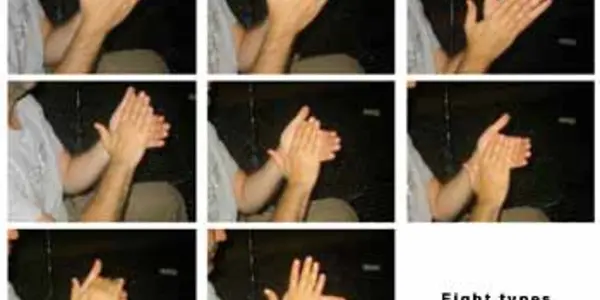
“Hand claps are a relatively primitive conveyor of sonic information, yet they are widely applied for different purposes.”
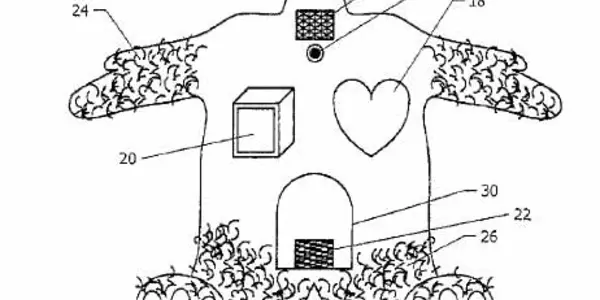
Almost three years have passed since the US
patent for a Domestic
Animal Telephone was issued. The patent describes :
“A phone for pets and pet owners is
taught [sic?] which allows the owner to call the house and
‘talk’ to the pet”.
But then, in Feb. 2011 a
new patent was issued (also entitled 'Domestic Animal Telephone') to the same inventors – at first
glance strikingly similar to the original :
Can owning a dog or cat be classed as a dangerous activity? Judy A. Stevens PhD.
and colleagues at The Division of Unintentional Injury Prevention, of
the US National Center for Injury Prevention and Control have completed
their report – Dogs and cats as environmental fall hazards – which is published in the Journal of Safety Research,Volume
41, issue 1, February 2010, Pages 69-73.
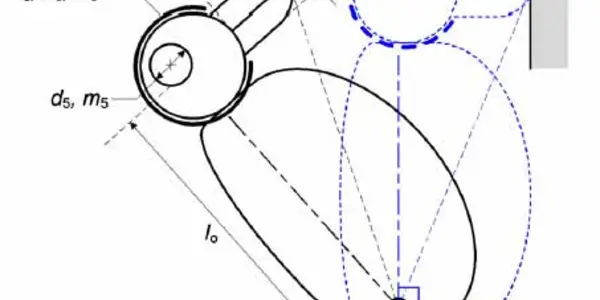
“A woodpecker is known to drum the hard woody surface of a
tree at a rate of 18 to 22 times per second with a deceleration of 1200
g, yet with no sign of blackout or brain damage.”

Q.1 Is it possible to use one’s tongue as a subatomic particle detector?
Q.2 If so, would that be a good idea?
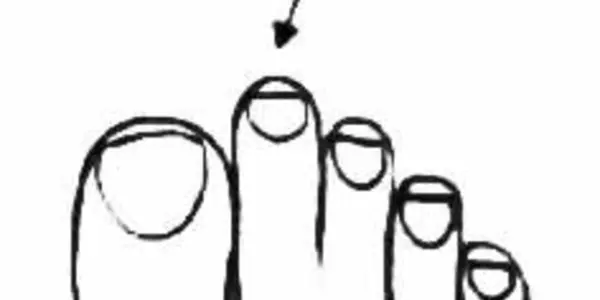
A growing body of scientific studies have examined the implications of finger length ratios. But until recently up to 50% of humanoid distal appendages may have
been largely overlooked – for what of toe-length ratios? Progress
towards rectifying this digital imbalance has been made with a recent
study from the Department of Psychology, Penn State University,
Harrisburg, US. Professor Marissa Harrison has published one of the very few studies to investigate :