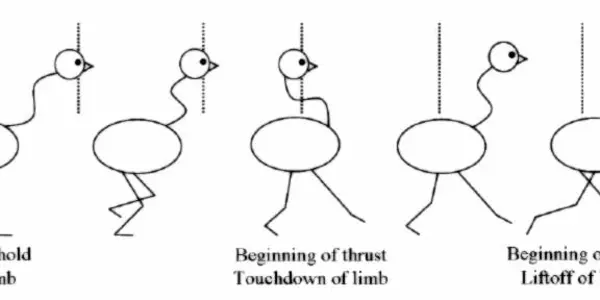
Hairy Ball Theorem Updated
The Hairy Ball Theorem (HBT) was first postulated (and then proved) by Luitzen Egbertus Jan Brouwer in 1912. An informal statement of the theorem is that : “One cannot comb the hair on a coconut”.
The Hairy Ball Theorem (HBT) was first postulated (and then proved) by Luitzen Egbertus Jan Brouwer in 1912. An informal statement of the theorem is that : “One cannot comb the hair on a coconut”.


Is karaoke a passing fad? Kevin Brown PhD. Associate Professor of Theatre History, Theory, Criticism, Performance Studies, New Media, Non-Western Theatre, and Popular Culture at the University of Missouri, US. believes not. For his doctoral dissertation, he conducted a two-year ethnographic study of karaoke in America, a portion of which is: ‘Liveness Anxiety: Karaoke and the Performance of Class‘, and is published in Vol. 1, Issue 2, of the academic journal Popular Entertainment Studies.“It is very tempting to dismiss karaoke as a passing fad.”explains the professor.
“Considerable work exists to describe the functions of yeah.” explain authors Chad D. Nilep and colleague Tamara Grivičić from the Department of Linguistics at the University of Colorado. And there has also been some academic research investigating the so-called ‘Creaky Voice’. But the team’s study is one of the very first to investigate the two together (i.e. Yeah + Creaky Voice).
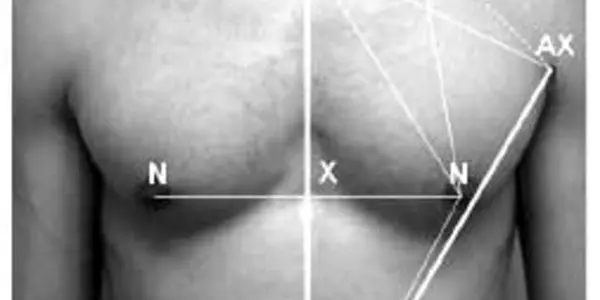
For aesthetic reasons, plastic surgeons are sometimes required to re-position male nipples – after dramatic weight-loss for example. In such a case they are presented, in effect, with a substantially blank canvas. But the presently accepted methods for calculating ideal nipple locations are far from straightforward.“Currently available guidelines create areolas that are too large, place the nipple-areola complex too high and too far medially, and/or require complex abstract mathematical calculations.”
Does subglottal resonance have a significant influence on register transition when singing falsetto? To find out, investigators at the University of Iowa decided on an innovative approach – involving helium. Or, more accurately, Helox (a.k.a. Heliox) a mixture of helium and oxygen [see safety note below].Because helium is considerably less dense than normal air mixtures, the vocal resonant frequencies of those who breathe it tend to be higher – suggesting a possible application in falsetto research.Reference: see this video of Lionel Ritchie singing ‘Hello’ (with helium).
“Our results raise important questions about our representation of tastes and flavors and could also lead to applications in the marketing of food products.”- say a research team who have been investigating possible associations between flavors and various musical instruments. The Crossmodal Research Lab at Oxford University in the UK have presented their paper : ‘As bitter as a trombone: Synesthetic correspondences in nonsynesthetes between tastes/flavors and musical notes’ in a recent issue of the journal Attention Perception&Psychophysics.
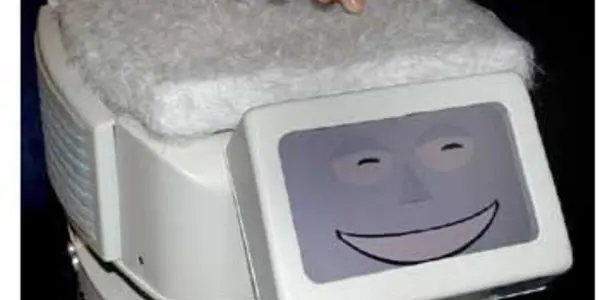
“Under what conditions can we engage in a meaningful, expressive interaction with an electronic device?” Say, for example, by ‘tickling’ a robot? This question is examined in a recent article by Patrizia Marti, assistant professor and senior lecturer at the Department of Communication Science, University of Siena, Siena, Italy, which features in the International Journal of Design.

“Ears are a particularly appealing approach to noncontact biometrics because they are relatively constant over a person’s life and are unaffected by expressions, unlike faces.”

The question is posed, and then answered, by Jonathan Harrison, former chair of Philosophy at the University of Nottingham, UK, in his online essay “Is Eating People Wrong?” The professor points out that -“Animals that can be eaten are often better taken care of than men, whose artificially induced inedibility provides those responsible for them with no such incentive. “That said, however -

The word ‘Nerd’ is thought to have originated in the US in the early 1950s – but it took three full decades before a comprehensive academic paper describing ‘Nerdism’ appeared. As the authors of the study explained at the time :“It is not clear why a social transformation of such depth and proportions has so long escaped the scrutiny of social scientists; perhaps they are too close to the issue.”
What does “Uh(m)” mean?Professional linguists from a selection of highly respected international academic institutions have pondered the question in some detail over the years, but now a new paper from Emanuel A. Schegloff, Professor Emeritus at the Department of Sociology, University of California, Los Angeles, goes considerably further towards consolidating the answer(s).

It is believed that the first mustache transplants were performed by the late trichological pioneer Dr. Okuda in 1930’s Japan. Since then, considerable progress has been made – some of which is described by Dr. Damkerng Pathomvanich (pictured) of the DHT clinic in Bangkok, Thailand who is a key contributor to Hair Restoration Surgery in Asians 2010, Part XII, Where Dr. Pathomvanich explains that -
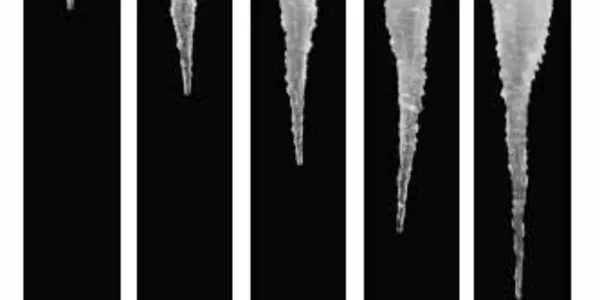
“A complete theory of icicle shape, including tip growth, self-similarity and the ripple instability, is currently lacking.”Prompting professor Stephen W. Morris and Antony Szu-Han Chen from the Department of Physics, at the University of Toronto, Canada to construct ‘An apparatus for the controlled growth of icicles’. The team used their specially designed table-top apparatus (with a rotating support) in an attempt to grow what they call ‘ideal icicles’: In total, they managed to grow 93, both from distilled water and common tap water.