Fossil Huntress

Fossil Huntress

Fossil Huntress

Palaeontology / ARCHEA / In Search of Ancient BC / Clinical Research / Pharmacology / Medicine / FOSSIL HUNTRESS — PALAEO SOMMELIER — If you love palaeontology, you'll love this podcast. Listen to the Fossil Huntress Podcast on Spotify, Google Play, …
RSS Feed
Protoeaster Nodosus: Charmers Of The Indo-Pacific

Protoeaster Nodosus: Charmers Of The Indo-Pacific

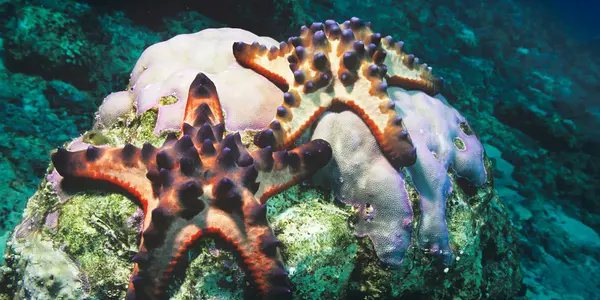
 If you're lucky enough to swim in the warm, shallow waters of the Indo-Pacific region, you may encounter one of the most charming of all the sea stars, the Protoeaster nodosus. These beauties are commonly known as Horned Sea Stars or, my personal favorite, Chocolate Chip Sea Stars.

Ichthyosaurs Of The Blue Lias

Ichthyosaurs Of The Blue Lias

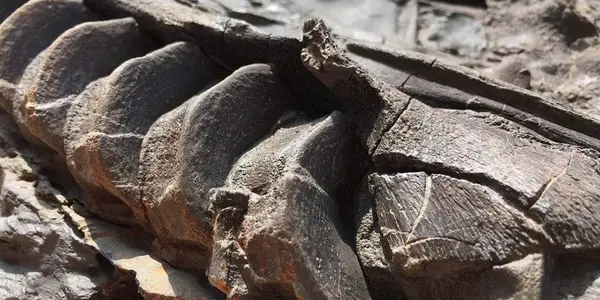
This well-preserved partial ichthyosaur was found in the Blue Lias shales by Lewis Winchester-Ellis. The vertebrae you see are from the tail section of this marine reptile. The find includes stomach contents which tell us a little about how this particular fellow liked to dine. As with most of his brethren, he enjoyed fish and cephalopods. Lewis found fish bone and squid tentacle hooklets in his belly. Oh yes, these ancient cephies had grasping hooklets on their tentacles. I'm picturing them wiggling all ominously.

Chengjiangocaris: UNESCO Cambrian Arthropod

Chengjiangocaris: UNESCO Cambrian Arthropod

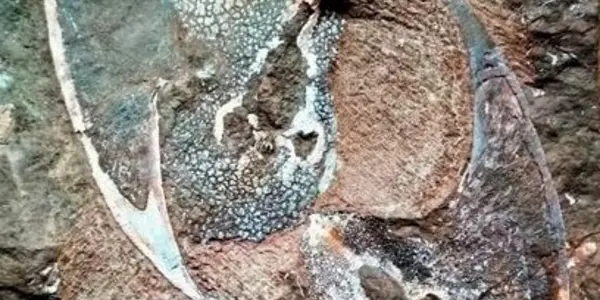
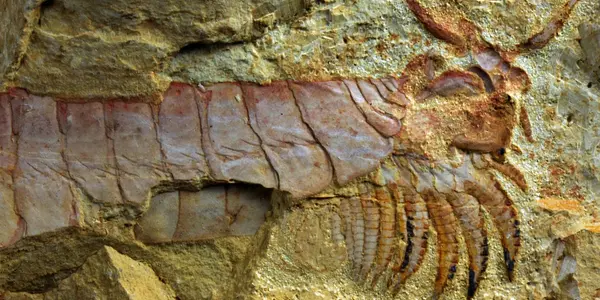
This fellow is Chengjiangocaris kunmingensis, a rather glorious fuxinhuiid arthropod. While he looks like he could be from the inside of the Lascaux Caves and their fire-kissed Palaeolithic paintings, albeit by a very ancient Picasso, he was found at a UNESCO World Heritage Cambrian fossil site in southern China.

Living Fossil: Elephant Shrew

Living Fossil: Elephant Shrew

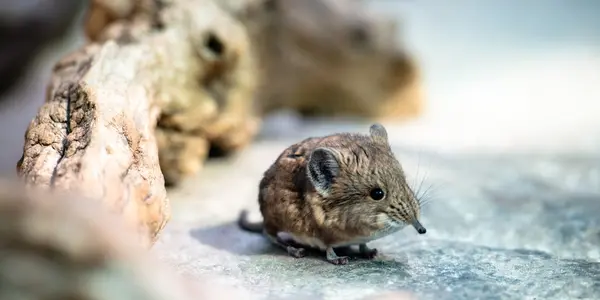
Meet one of the most adorable of all the Living Fossil species, the Elephant shrew, Macroscelides proboscideus, one of 15 species of this order. These small, quadrupedal, insectivorous mammals strongly resemble rodents or opossums with their scaly tails, elongated snouts, and rather longish legs. 

A New Cambrian Lagerstätten From China

A New Cambrian Lagerstätten From China

Move over Burgess, there's a new Cambrian Lagerstätten in town. Meet Tuzoia sinesis from the Balang Formation of southern China. China has some very interesting fossil specimens being unearthed that challenge the Burgess Shale for preservation and variety of fauna. This large extinct bivalved arthropod, Tuzoia sinesis (Pan, 1957) is from one of those sites.

Pleistocene Salmon Knock The Glaciers Back 6,000 Years

Pleistocene Salmon Knock The Glaciers Back 6,000 Years

Salmon have permeated First Nations mythology and have been prized as an important food source for thousands of years. For the Salish people of the Interior of British Columbia, Canada, salmon was the most important of the local fishing stock and salmon fishing season was a significant social event which warranted the nomination of a “Salmon Chief” who directed the construction of the hooks, weirs and traps and the distribution of the catch.

Plesiosaurs: Four-Paddled Vortex Swimmers

Plesiosaurs: Four-Paddled Vortex Swimmers

Plesiosaurus were large, carnivorous air-breathing marine reptiles with strong jaws and sharp teeth that moved through the water with four flippers. We'd originally thought that this might not be the most aerodynamic design but it was clearly effective as they used the extra set to create a wee vortex that aided in their propulsion. In terms of mechanical design, they have a little something in common with dragonflies.

Calcium Carbonate: Mother Natures Little Helper

Calcium Carbonate: Mother Natures Little Helper

. Many First Nations sites were inhabited continually for centuries. The discarded shells and scraps of bone from their food formed enormous mounds called middens. Left over time, these unwanted dinner scraps can transform through a quiet process of preservationTime and pressure leach the calcium carbonate, CaCO3, from the surrounding marine shells and help “embalm” bone and antler artifacts that would otherwise decay. Calcium carbonate is a chemical compound that shares the typical properties of other carbonates. 

Fossils Of The Mysterious Creek Formation

Fossils Of The Mysterious Creek Formation

The unyielding siltstone of the Callovian Mysterious Creek Formation.

A few hours of collecting yield multiple bivalves, ammonites, including what looks to be two new species. Amongst the best specimens of the day are several small, fairly well preserved Cadoceras (Paracadoceras) tonniense, a few Cadoceras (Pseudocadoceras) grewingki and two relatively complete specimens of the larger, smooth Cadoceras comma. Further up the road, we photograph blocks of buchia and large boulders encrusted with perfectly preserved belemnites, cigar-looking numbers from ancient squid.

As part of the Eighth BC Paleontological Symposium, May 15-18, 2009, I led a field trip to the Cretaceous-Jurassic exposures near Harrison Lake, British Columbia.

Unearthing Mongolia: Gigantoraptor Erlianensis

Unearthing Mongolia: Gigantoraptor Erlianensis

The Paleontologist community in China and around the world are all aflutter over a recent find in the Erlian Basin of Inner Mongolia. Known more for its heavy oil potential and favorite export - pollution, northeastern China is the preferred stomping ground for the savvy petroleum geologist. As a complete aside, it also boasts the prettiest portion of the gene pool, or so says one of my stomping friends having explored much of Asia. So, home to pretty women today and, as it would seem, an enormous bird-like dinosaur some 70 million years ago.  Fancy that.

Terra Firma: Washington State Paleontology

Terra Firma: Washington State Paleontology

Over vast expanses of time, powerful tectonic forces have massaged the western edge of the continent, smashing together a seemingly endless number of islands to produce what we now know as North America and the Pacific Northwest. Intuition tells us that the earth’s crust is a permanent, fixed outer shell – terra firma. Aside from the rare event of an earthquake or the eruption of Mount St. Helen’s, our world seems unchanging, the landscape constant. In fact, it has been on the move for billions of years and continues to shift each day.

The Big & Small Of Symbiosis

The Big & Small Of Symbiosis

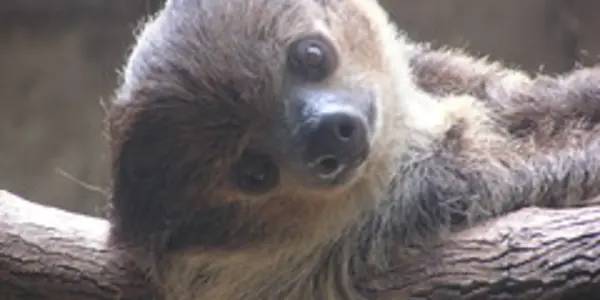
Ever wonder why the slow moving sloth has a slightly greenish hue? Ever consider the sloth at all? Well, perhaps not. Location, location, location, is the mantra for many of us in our macro world, but it is also true for the small world of algae.