Gerhard Adam

Gerhard Adam

Gerhard Adam

I'm not big on writing things about myself so a friend on this site (Brian Taylor) opted to put a few sentences together: Hopefully I'll be able to live up to his claims. "I thought perhaps you wouldn't mind if I wrote it for you... Prolific contr…
RSS Feed
What Is Life - Part 1

What Is Life - Part 1

Before embarking on this discussion it is important to try and resolve some language and definition issues that will likely occur in this post.One of the main difficulties in addressing this problem stems from the limitations of language.  Language exists for humans, so by default, many of our words convey a meaning that is primarily interpreted within a human context.  As a result, when it comes to describing other living things we often find ourselves faced with terms that carry a significance that is misplaced when addressing other organisms.  I want to be clear that there is nothing in the following discussion that is intended to be anthropomorphic.

The Peacock Problem

The Peacock Problem

In a recent set of posts there was a discussion about evolutionary psychology and how it can be used to explain various behaviors.  However, one of the fundamental challenges raised is whether the references to biological phenomenon are, in fact, settled issues and whether they should serve as a basis for drawing additional conclusions.  As a result, I wanted to focus on one particular paragraph from one paper to illustrate the problem.

"Elementary, My Dear Watson"

"Elementary, My Dear Watson"

OK, by now everyone's familiar with "Watson", the IBM Jeopardy machine with all the hype and drama associated with Artificial Intelligence and what it means for the future of humanity.  Is it HAL or Skynet?  Not by any definition.So what's the point?  At present, as a proof of concept, "Watson" has demonstrated that it is possible to use algorithms to produce some understanding of natural human speech.  I don't place much stock in "Watson" winning at Jeopardy since that seems as much a function of how quickly the buzzer can be pushed as it is in having an answer.

Ancient Astronauts?

Ancient Astronauts?

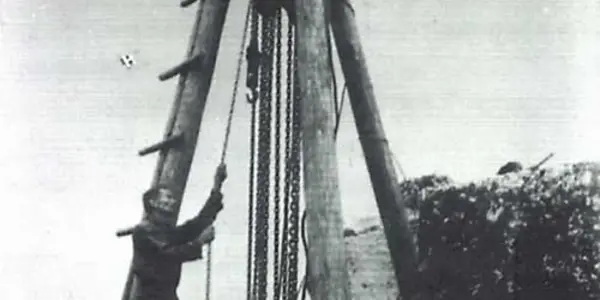
Despite the various claims surrounding the idea of alien visitation in the past, one of the primary arguments has been the creation of immense structures in the past that have been argued as being impossible to create without sophisticated modern technologies.  More to the point, the argument even suggests that it would take quite advanced technologies (even beyond our abilities today), to produce such construction projects.Invariably the size of the blocks is mentioned (on the order of several tons to several hundred tons), as well as the issue of moving them, positioning them, and of course the precision involved in their placement.

Another Worthless Study

Another Worthless Study

Today we find a study published which indicates that children that consume caffeine may sleep less.  Besides the fact that this is an obvious and expected finding, it is interesting to note that this is the result of parents being surveyed during routine visits to the doctor.So, besides the fact that the sleep requirements may vary significantly over the age group studied (5-12 year olds), we are now accepting, as scientific, data on the correlation between caffeine consumption and hours of sleep based on the anecdotal evidence of parents during a doctor's visit.  

Life Isn't Aways Wonderful - Humanity's Third Biggest Problem

Life Isn't Aways Wonderful - Humanity's Third Biggest Problem

The three problems of humanity were outlined in a talk by Nick Bostrom (of Oxford University, UK) at TED in April 2009.In this piece I will continue to examine the "big" problems identified in the TEDTalk.  It is this third point that begins to illustrate what the underlying objective of all the other pieces truly is.  Problem #3:  Life Isn't Usually as Wonderful as it Could Be is a BIG problem

Human Survival - Humanity's Second Biggest Problem

Human Survival - Humanity's Second Biggest Problem

The three problems of humanity were outlined in a talk by Nick Bostrom (of Oxford University, UK) at TED in April 2009.In this piece I will continue to examine the "big" problems identified in the TEDTalk.Problem #2:  Existential Risk is a BIG problem.

Death - Humanity's Number One Problem

Death - Humanity's Number One Problem

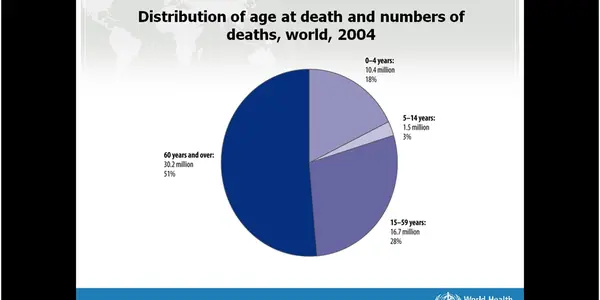
The three problems of humanity were outlined in a talk by Nick Bostrom (of Oxford University, UK) at TED in April 2009.  While I'm sure there are some that will consider these points to be quite reasonable in setting goals, I'm continuously amazed at the lack of rigor or introspection these claims aim at.  In a nutshell, the talk identified three (3) problems that were perceived as needing to be addressed to "fix" humanity. In this article, I will discuss the first one. Problem #1:  Death is a BIG problem.

Why Evolution Is Misunderstood

Why Evolution Is Misunderstood

In reviewing this article, I couldn't help but notice the problems in how this information was reported, so that it became quite apparent why the general public perpetually misunderstands or misinterprets evolution."Our results demonstrate, for the first time, that Coal Forest fragmentation influenced profoundly the ecology and evolution of terrestrial fauna in tropical Euramerica, and illustrate the tight coupling that existed between vegetation, climate, and trophic webs." (Abstract)

Investigating Ghosts - For Real?

Investigating Ghosts - For Real?

Hank recently wrote a piece that dealt with the problem of a "ghost train" and a "ghost hunter" that was killed by a real train while waiting for the apparition.Since these were amateur ghost hunters, it would be a bit much to presume that there was any actual scientific query going on, but nevertheless there seems to be a persistence of belief that ghosts are the subject of active research.  However, the question to ask is whether there's any scientific basis for thinking there's something to investigate.

Flying Or Driving: Which Is Safer?

Flying Or Driving: Which Is Safer?

In reading one of the other posts a casual point was made regarding the relative safety of flying versus driving.  It is generally assumed that flying is, by far, the safest of the two modes of travel, but is this really true?  In looking at the data, it appears that the data is being skewed because of some strange assumptions that tend to favor flying.

Proof Of Aliens Is Just Around The Corner

Proof Of Aliens Is Just Around The Corner

Proof of aliens within 25 years?  What's the basis for this optimism?Well, of course, it's the Drake equation.  It had to be.  While it is certainly reasonable that everyone has their own perspective and opinion about the likelihood of alien life, it is not reasonable to pretend that the "Drake equation" provides some sort of inside track.