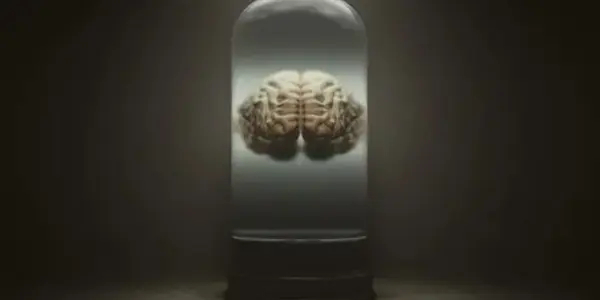
Neuroscience treats consciousness as something produced by the brain but a recent paper suggests that conscious experience is shaped through a continuous, rhythmic dialogue between the brain and body; the regular, predictable signals around which groups of neurons can organize and become more or less receptive to information.
The heart beats, the lungs breathe and the brain produces waves but that last part can become organized by slower bodily cycles, and that coordination may help align neural processes involved in perception, emotion and the sense of self with the body’s ongoing regulation of its internal state.
Two people may have similar heart rates while differing substantially in how strongly cardiac signals influence their brain activity - a pulsed inhibition hypothesis. In a recent paper, the researchers note that the value of this coordination does not follow a simple “more is better” rule. Both unusually weak and unusually strong bodily influences on brain activity are adverse states, so healthy functioning may depend on the brain and body being in a Goldilocks range; connected enough for bodily signals to inform experience, but not so strongly that they dominate it.
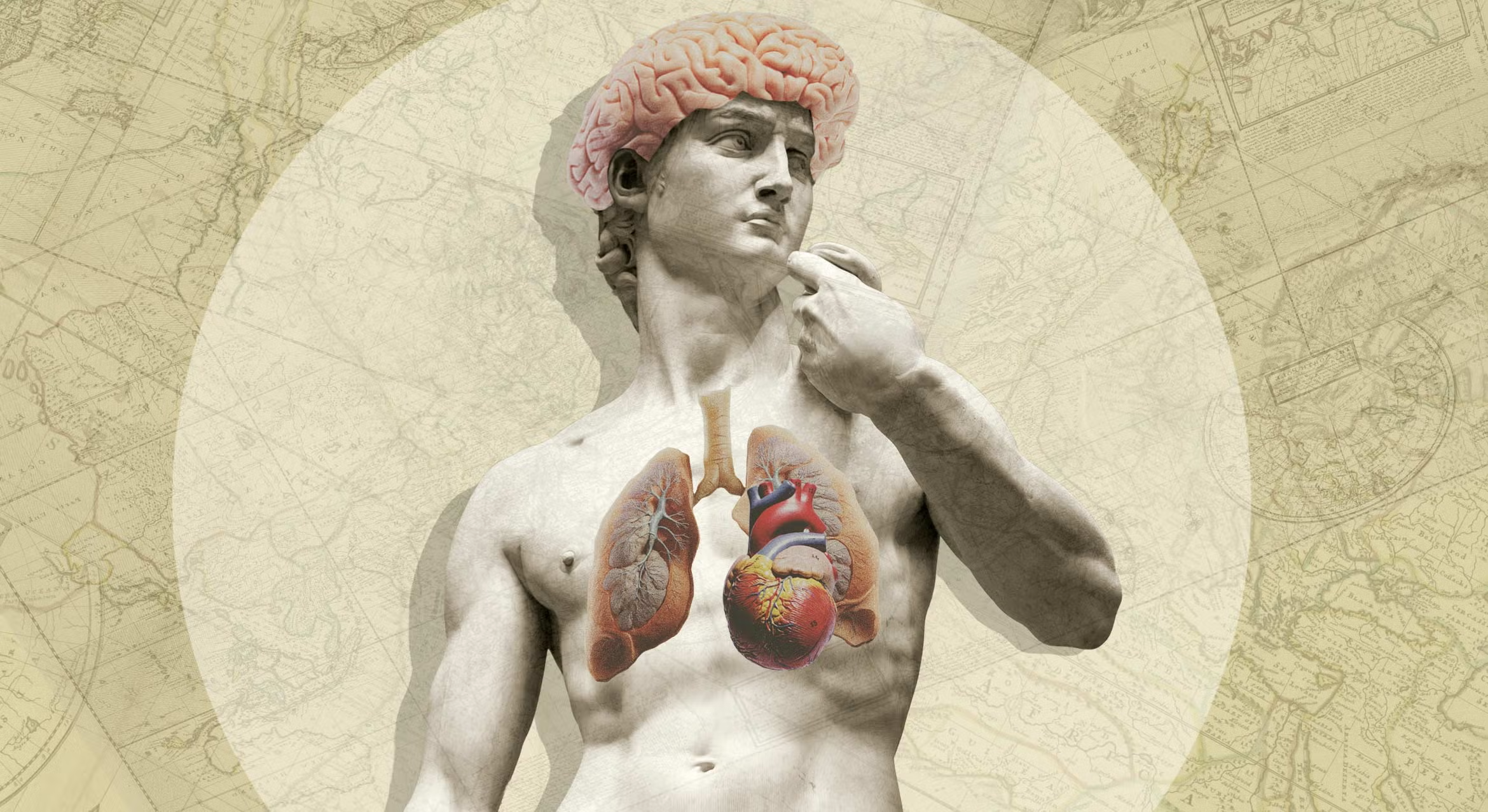
Photo Credit: Matt Perko/UC Santa Barbara
Anxiety-related conditions, for example, connote physical responses becoming difficult to ignore. Depression has a different pattern, including reduced sensitivity to some bodily signals and a diminished sense of connection to the body. Conditions that involve asynchronous timing, strength or flexibility include brain and body interactions showing that coordination between the brain and body matter.
If cognitive processes that characterize conscious experience, such as perception, emotion, bodily awareness and the sense of self, are shaped in part by signals from within the body.
So much for the popular image of a brain in a bubble that can be controlling things by neural power alone.
So, are you your brain or your body? In their paper, Young and colleagues suggest the question it's a false dichotomy. Conscious experience emerges through the ongoing relationship between the two.
Citation: Asa Young, Marissa Ericson, Jonathan W Schooler, I sync, therefore I am: brain–body synchrony in typical and disordered consciousness, Neuroscience of Consciousness, Volume 2026, Issue 1, 2026, niag028, DOI: 10.1093/nc/niag028