Banner
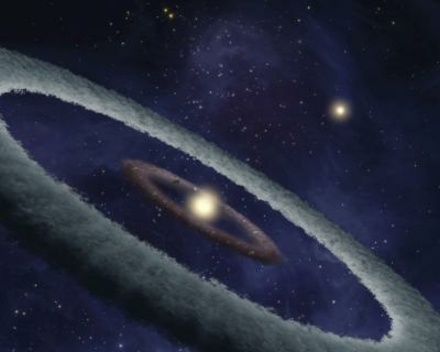
The Scorched Cherry Twig And Other Christmas Miracles Get A Science Look

Bleeding hosts and stigmatizations are the best-known medieval miracles but less known ones, like ...

$0.50 Pantoprazole For Stomach Bleeding In ICU Patients Could Save Families Thousands Of Dollars

The inexpensive medication pantoprazole prevents potentially serious stomach bleeding in critically...
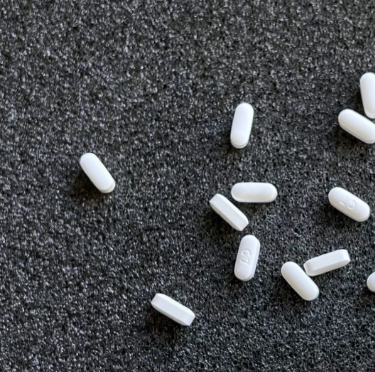
Metformin Diabetes Drug Used Off-Label Also Reduces Irregular Heartbeats

Adults with atrial fibrillation (AFib) who are not diabetic but are overweight and took the diabetes...
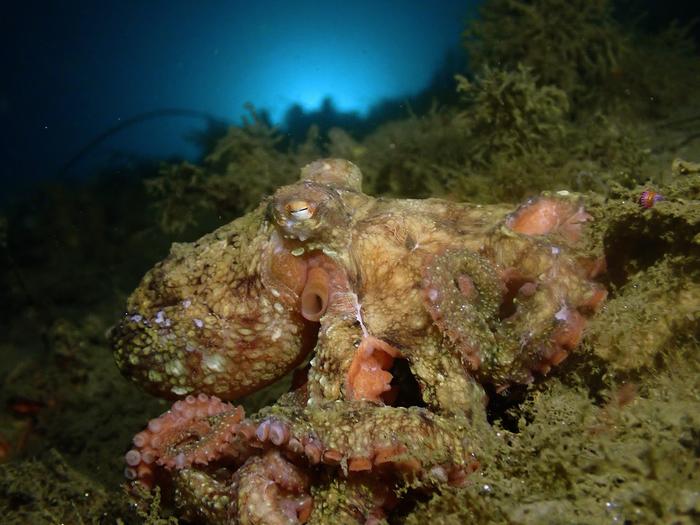
Your Predator: Badlands Future - Optical Camouflage, Now Made By Bacteria

In the various 'Predator' films, the alien hunter can see across various spectra while enabling...
User picture.
News StaffRSS Feed of this column.

News Releases From All Over The World, Right To You... Read More »

Blogroll

Evolution isn't always obvious and some new species haven't been identified because their outward appearance masks their genetic differences.

Research published in BMC Evolutionary Biology suggests that the phenomenon of different animal species not being visually distinct despite other significant genetic differences is widespread in the animal kingdom. DNA profiles and distinct mating groups are the only way to spot an evolutionary splinter group from their look-alike cousins, introducing uncertainty to biodiversity estimates globally.

University of Delaware scientists have invented a novel biomaterial with surprising antibacterial properties that can be injected as a low-viscosity gel into a wound where it rigidifies nearly on contact--opening the door to the possibility of delivering a targeted payload of cells and antibiotics to repair the damaged tissue.

Regenerating healthy tissue in a cancer-ridden liver, healing a biopsy site and providing wounded soldiers in battle with pain-killing, infection-fighting medical treatment are among the myriad uses the scientists foresee for the new technology.

The patented invention by Joel Schneider, UD associate professor of chemistry and biochemistry, and Darrin Pochan, associate professor of materials science, and their research groups marks a major step forward in the de

Frigid geysers spewing material up through cracks in the crust of Pluto’s companion Charon and recoating parts of its surface in ice crystals could be making this distant world into the equivalent of an outer solar system ice machine.

Evidence for these ice deposits comes from high-resolution spectra obtained using the Gemini Observatory’s Adaptive Optics system, ALTAIR coupled with the near-infrared instrument NIRI. The observations, made with the Frederick C. Gillett Gemini North telescope on Hawaii’s Mauna Kea, show the fingerprints of ammonia hydrates and water crystals spread in patches across Charon, and have been described as the best evidence yet for the existence of these compounds on worlds such as Charon.

Jon-Kar Zubieta and colleagues have pinpointed a brain region central to the machinery of the placebo effect—the often controversial phenomenon in which a person’s belief in the efficacy of a treatment such as a painkilling drug influences its effect.

The researchers said their findings with human subjects offer the potential of measuring the placebo effect and even modulating it for therapeutic purposes. They also said their findings could enable measurements of brain function that “would help determine dysfunctions in cerebral mechanisms that may impair recovery across a number of conditions.”

Their studies concentrated on a brain area known as the nucleus accumbens (NAC), a region deep in the brain, known to play a role in expectation of reward.

Researchers have identified a gene-regulating protein in the brains of mice that triggers the animals' ability to cope with the "behavioral despair" caused by inescapable stress. They said their studies have yielded an animal model of resilience that they will use to explore how antidepressants work on the brain circuitry involved in such stress response.

In earlier studies, Eric Nestler and his colleagues showed that exposure to repeated stress caused an increase in a protein called ∆FosB in the brain. This protein is a "transcription factor," a regulatory protein that controls the activity of multiple target genes.

In the new experiments, they sought to explore the role of ∆FosB in regulating adaptation to stress.

Want to make the perfect bandage? Mix the adhesive properties of the Mussel and the Gecko.

Scientists report they have merged two of nature’s most elegant strategies for wet and dry adhesion to produce a synthetic material that one day could lead to more durable and longer-lasting bandages, patches, and surgical materials.

The scientists, supported by the National Institute of Dental and Craniofacial Research (NIDCR), part of the National Institutes of Health, have designed a synthetic material that starts with the dry adhesive properties of the gecko lizard and supplements it with the underwater adhesive properties of a mussel.

The hybrid material, which they call a geckel nanoadhesive, proved in initial testing to be adherent under dry and wet conditions.