You Feel Colder As You Age: The Science Reason Why
Older people report feeling colder, enough that it is clearly happening, but why has been a mystery. Until now.
Older people report feeling colder, enough that it is clearly happening, but why has been a mystery. Until now.

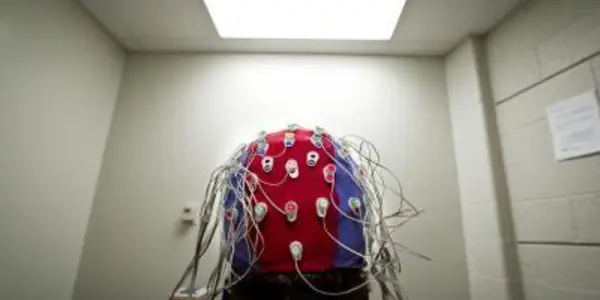
The brain is like a muscle; it can get into a routine. But mixing up the workout a little is healthy in both cases. In the brain, however, it isn't without difficulties.Learning a new task when rules change can be a surprisingly difficult process and entail repeated mistakes, according to a new study. Take a US driver and put them in England where they suddenly have to drive on the left side of the road. The brain, trained for right-side driving, becomes overburdened trying to suppress the old rules while simultaneously focusing on the new rules - putting them on a moped if they are used to driving a car would make it even worse.

What exactly happens to your face when you smile spontaneously, and how does that affect how old you look? Computer scientists from the University of Amsterdam's Faculty of Science recorded the smiles of hundreds of visitors to the NEMO science centre in Amsterdam, creating the most comprehensive smile database ever. The computer scientists behind the project say that you look younger when you smile - if you are over forty. If you are under forty, you should look neutral if you want to come across younger. And be cold and distant and act a little broken inside if you want to date a stripper.
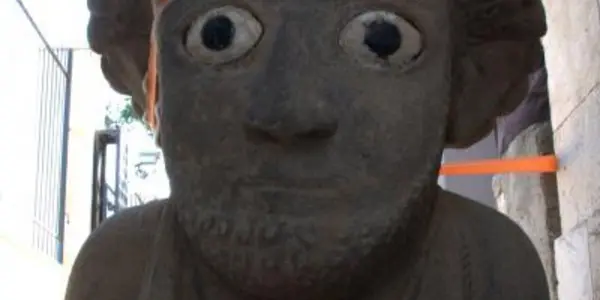
A giant human sculpture has been unearthed at the Tayinat Archaeological Project excavation site in southeastern Turkey. The head and torso of the human figure is intact to just above its waist and stands approximately 5 feet tall, so it likely had a total body length of 10 to 12 feet. The figure's face is bearded, with beautifully preserved inlaid eyes made of white and black stone, and its hair has been coiffed in an elaborate series of curls aligned in linear rows. Both arms are extended forward from the elbow, each with two arm bracelets decorated with lion heads. The figure's right hand holds a spear, and in its left is a shaft of wheat. A crescent-shaped pectoral adorns its chest.

Livestock is an essential part of the human diet and farm productivity is dependent on animals being healthy, which depends on adequate nutrition. Existing evidence shows that livestock feed can be improved by the use of feed additives which improve diet and health but also increase milk yields, suppress the oestrus (female reproductive) cycle or improve digestion in livestock. When properly used in a well-managed environment, many of these additives can substantially improve performance and farm profitability.
Having cancer takes a toll on the body but the emotional strains are considerable. The stresses of undergoing treatment, along with the impact it has on relationships with family and friends, can be overwhelming and it's common for people with cancer to need help learning how to cope with the many emotions that emerge after receiving a diagnosis. When someone is in the middle of a grueling treatment regimen and still trying to mentally process the fact that they have cancer, it can be hard to feel as if anyone understands what they are going through. Toward that, the National Cancer Institute has created easy-to-understand information about ways to cope with cancer.Here are some web-based "Coping with Cancer" resources that may be of interest:

Researchers have created the first artificial molecules whose chirality can be rapidly switched from a right-handed to a left-handed orientation with a beam of light. Chirality is the distinct left/right orientation or “handedness” of some types of molecules, meaning the molecule can take one of two mirror image forms. The right-handed and left-handed forms of such molecule are called “enantiomers” and can exhibit strikingly different properties. One enantiomer of the chiral molecule limonene smells of lemon, the other smells of orange. The ability to observe or even switch the chirality of molecules using terahertz (trillion-cycles-per-second) electromagnetic radiation is a much coveted asset in the world of high technology.

Right now, we protect people and animals against diseases by inoculating them with vaccines based on real infectious agents - but that brings risk of reinfection and the expense of cultivating and handling deadly viruses and bacteria.The future may mean DNA vaccines, basically cutting out the biological middleman.
Sulfur has been portrayed as a secondary factor in regulating atmospheric oxygen - carbon gets all the press - but new findings suggest that sulfur’s role may have been underestimated.As sulfur cycles through the land, the atmosphere and the oceans, it undergoes chemical changes that are often coupled to changes in other such elements as carbon and oxygen. This affects the concentration of free oxygen.
Methicillin-resistant Staphylococcus aureus (MRSA) infections doubled at U.S. academic medical centers between 2003 and 2008, according to a new report published in Infection Control and Hospital Epidemiology.MRSA infections, which cannot be treated with antibiotics related to penicillin, have become common since the late 1990s. These infections can affect any part of the body, including the skin, blood stream, joints, bones, and lungs. The findings run counter to a recent CDC study that found MRSA cases in hospitals were declining. The CDC study looked only at cases of invasive MRSA—infections found in the blood, spinal fluid, or deep tissue. It excluded infections of the skin, which the new study includes.

The horns of creatures as different as elk and rhinoceros beetles - along with other decorative, mate-attracting structures - are sensitive to changes in nutrition. They aren’t diabetic, but they are insulin-dependent; if they want to grow big horns and therefore attract mates.

Is there a 'biological clock' that women recognize innately, and act on accordingly? New research casts some doubt on that.
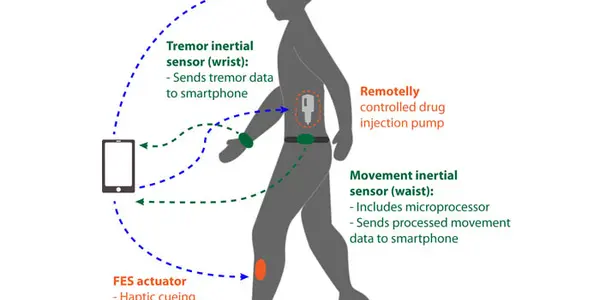
Parkinson’s disease is the second most common neurodegenerative disease after Alzheimer’s disease.Now patients are getting some high-tech help. REMPARK (Personal Health Device for the Remote and Autonomous Management of Parkinson’s Disease) is a wearable monitoring and actuation system that identifies the motor status of Parkinson’s patients in real time. The system will also determine what phase a patient is in while walking or performing everyday activities and provide a cue to initiate movement when a gait-freezing episode occurs.