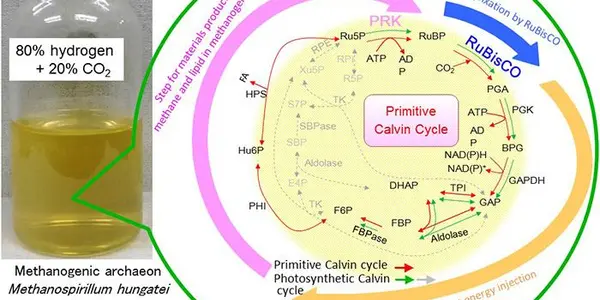
A primitive, non-photosynthesizing microbe, Methanospirillum hungatei, which is thought to have existed since before the development of photosynthesis, possess genes similar to those that play a role in photosynthesis, finds a new study.Photosynthesis, creating oxygen and carbohydrates such as glucose from solar energy, water, and CO2, is indispensable for many species on this planet. However, it is unclear exactly how or when organisms evolved the ability to photosynthesize. A team has discovered an evolutionary model for the biological function that creates CO2 from glucose in photosynthesis.