You Feel Colder As You Age: The Science Reason Why
Older people report feeling colder, enough that it is clearly happening, but why has been a mystery. Until now.
Older people report feeling colder, enough that it is clearly happening, but why has been a mystery. Until now.


Honeybees are hardwired to efficiently search the landscape enabling them to continue working for the greater good of their hives even when they are sick, according to new research co-authored by Queen Mary University of London (QMUL).
Radar technology has been used to show for the first time that bees remain nimble and able to search and respond to their environment even when they have infections or viruses.
Honeybees tirelessly commute between rewarding flower patches and their hive, often hundreds or even thousands of metres apart. Their remarkable navigational skills rely on distinct landmarks, such as trees or houses, which they very efficiently find and memorise on orientation flights.
BOSTON (September 12, 2016)--A new analysis of 100 million Medicare records from U.S. adults aged 65 and older reveals rising healthcare costs for infections associated with opportunistic premise plumbing pathogens--disease-causing bacteria, such as Legionella--which can live inside drinking water distribution systems, including household and hospital water pipes.
Every day, millions of people - including senators, doctors, and teachers -- make consequential decisions that depend on predicting how other people will feel when they experience gains or setbacks. New research looking at events ranging from college football games to US elections shows that our predictions about others are less accurate when we have information about the groups they belong to, such as which political party or sports team they're rooting for. This research suggests that our reliance on stereotypes about social groups interferes with accurately predicting how others will feel.
The findings are published in Psychological Science, a journal of the Association for Psychological Science.

Philadelphia, PA, September 9, 2016 - Many acute and chronic liver diseases, including alcoholic hepatitis, result from apoptotic (programmed) cell death mediated by the enzyme caspase. Caspase inhibitors have therapeutic potential to treat and prevent apoptosis-mediated liver injury, and some are currently in clinical trials. However, a new study published in The American Journal of Pathology raises serious safety concerns regarding the clinical use of caspase inhibitors by demonstrating the occurrence of delayed-onset necrotic, non-caspase-dependent liver cell injury.
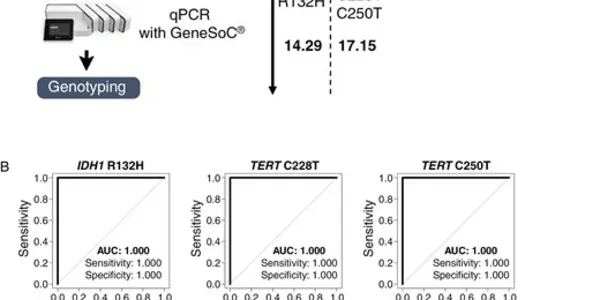
PHILADELPHIA-- For patients with advanced lung cancer, a non-invasive liquid biopsy may be a more effective and suitable alternative to the gold standard tissue biopsy to detect clinically relevant mutations and help guide their course of treatment, suggests a new study published this week in the journal Clinical Cancer Research from researchers at the Abramson Cancer Center at the University of Pennsylvania (ACC).
Here is one more reason American taxpayers should not continue to spend over $100 million a year on complementary, alternative and integrative techniques; after a six-day Ayurvedic-based well-being program that featured a vegetarian diet, meditation, yoga and massages they determined that their program led to measurable decreases in a set of blood-based metabolites associated with inflammation, cardiovascular disease risk and cholesterol regulation.
Six days.
Community characteristics play an important role in perpetuating teen suicide clusters and thwarting prevention efforts, according to a new study by sociologists at the University of Chicago and University of Memphis who examined clusters in a single town.
The study, published in the American Sociological Review, illustrates how the homogeneous culture and high degree of social connectedness of a community can increase suicide risk, particularly among teenagers. Such conditions contribute to clusters in which a series of suicides happen around the same time and in close proximity.
Men's hidden fears about body fat are fuelling gym attendance motivated by feelings of guilt and shame rather than a desire to build muscle, new research has shown.
Psychology researchers from the UK and Australia discovered that while male attitudes towards muscle or body mass index (BMI) did not predict how frequently they would attend the gym, their perceptions of body fat did.
The researchers found that men worried about body fat were more likely than others to undertake spontaneous, unplanned work-outs - and warned that these 'sporadic' exercise patterns tend to be difficult to sustain over time.
A University of Vermont-led team has successfully used social media images to measure the use and value of outdoor recreation on public lands.
The study analyzed more than 7,000 geotagged photos on Flickr to calculate that conserved lands contributed $1.8 billion to Vermont's tourism industry between 2007-2014.
The research is the first to measure of the value of outdoor recreation in Vermont public parks and other conserved lands during these years. The findings were published September 9 in the journal PLOS ONE.
Bacteria transfer to candy that has fallen on the floor no matter how fast you pick it up.
Rutgers researchers have disproven the widely accepted notion that it's OK to scoop up food and eat it within a "safe" five-second window. Donald Schaffner, professor and extension specialist in food science, found that moisture, type of surface and contact time all contribute to cross-contamination. In some instances, the transfer begins in less than one second. Their findings appear online in the American Society for Microbiology's journal, Applied and Environmental Microbiology.
Several years ago, biologists discovered a new type of genetic material known as long noncoding RNA. This RNA does not code for proteins and is copied from sections of the genome once believed to be "junk DNA."
Since then, scientists have found evidence that long noncoding RNA, or lncRNA, plays roles in many cellular processes, including guiding cell fate during embryonic development. However, it has been unknown exactly how lncRNA exerts this influence.
A study by animal welfare specialists has provided new evidence that using electronic containment systems to restrict where pet cats venture does not result in long-term wellbeing problems.
The use of hand-held shock collars on dogs has previously led to concerns over the welfare of animals trained using so-called 'e-collars'. However, other forms of electronic training devices for pets have received relatively little attention from researchers. These include invisible or virtual fences which deliver a static electric pulse to deter animals from crossing a boundary, such as a garden perimeter.