Jurassic Puke: Plesiosaurs Knew Not To Vomit Where They Eat
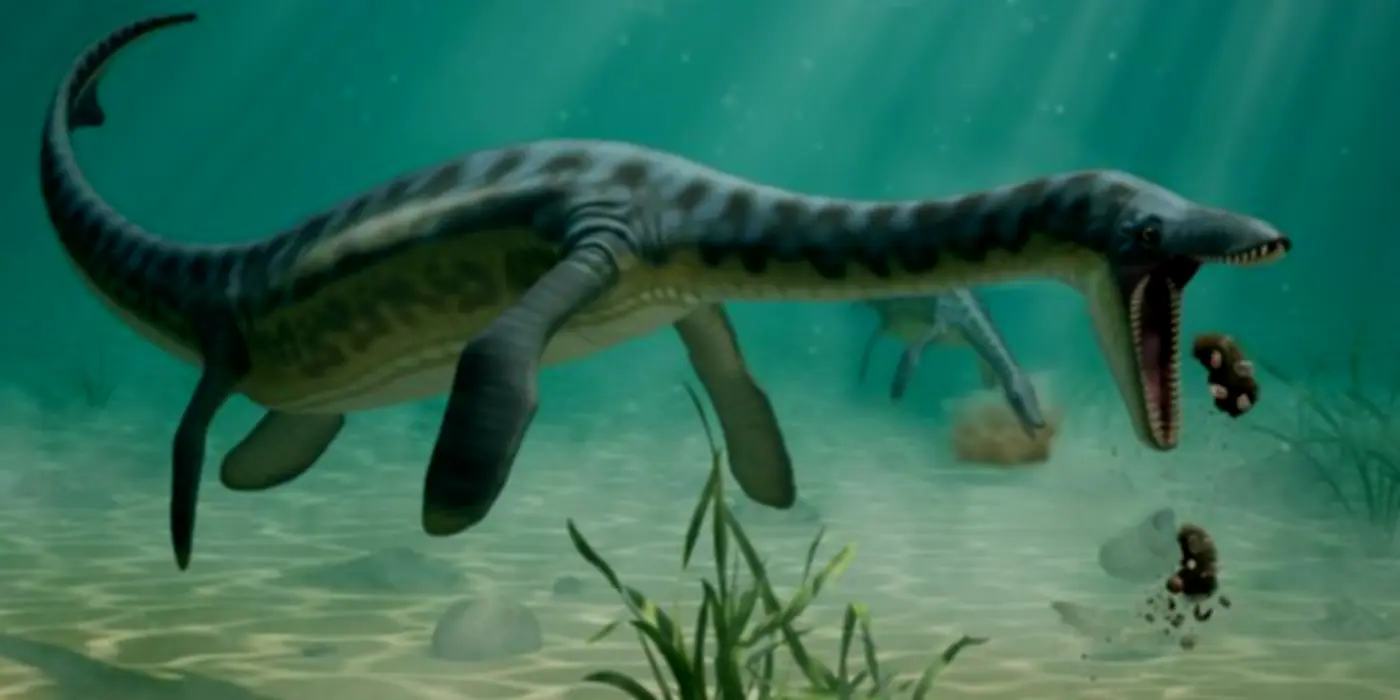
Jurassic monsters sometimes needed to vomit. When they did, they went to shore.
Jurassic monsters sometimes needed to vomit. When they did, they went to shore.


Does Coke in a glass bottle taste better? Perhaps. A chemical combination can certainly interact different with glass than it does with plastic. If the can for your cream soda changes its design, you make like it less, detracting from the overall experience, but that doesn't mean it tastes different.
When it comes to taste, containers make a difference in actual flavor. Not so with sight, though a good design may entail a more positive reception. A study in the April issue of the Journal of Consumer Research says that 'touch' also falls into the important category when it comes to flavor.

It may be only St. Patrick's Day but it's never too early to think about July 4th fireworks. Plus, 'green' has two meanings today.
Most kids love fireworks. They make pretty colors and loud noises - but they're not terribily friendly toward the environment. A group of researchers is working on that.
“No other application in the field of chemistry has such a positive association for the general population as fireworks,” says Thomas Klapötke from the University of Munich. “However, pyrotechnical applications are significant polluters of the environment.”
Green is more than just a color
Fungi don't have sexes, they have mating types, but a new study in PLoS says there are similarities between the parts of DNA that determine the sex of plants and animals and the parts of DNA that determine mating types in certain fungi.
It makes fungi interesting as new model organisms in studies of the evolutionary development of sex chromosomes.
In the plant and animal kingdoms there are individuals of different sexes, that is, bearers of either many tiny sex cells (males) or a few large ones (females). In the third eukaryote kingdom (organisms with DNA gathered in the cell nucleus), the fungi kingdom, there are no sexes but rather a simpler and more primitive system of different so-called mating types. These are distinguished by different variants of a few specific genes.
Stegography is an ancient technique of hiding data within data. Unlike encryption, it isn't obviously encrypted. Today it is used to take advantage of unused bits of data in images or audio/video files to transmit secrets.
The basic concept of understanding the hidden data in files can also be used in understanding computer networks and biology, says Weixiong Zhang, Ph.D., Washington University associate professor of computer science. He and his co-authors writing in Physical Review E say they have created an algorithm to automatically discover communities and their subtle structures in various networks, including biological ones. They used it to identify the community structure of a network of co-expressed genes involved in bacterial sepsis.
Crop scientists have cloned a gene that controls the shape of tomatoes, a discovery that could help unravel the mystery behind the huge morphological differences among edible fruits and vegetables, as well as provide new insight into mechanisms of plant development.
The gene, dubbed SUN, is only the second ever found to play a significant role in the elongated shape of various tomato varieties, said Esther van der Knaap, lead researcher in the study and assistant professor of horticulture and crop science at Ohio State University’s Ohio Agricultural Research and Development Center (OARDC) in Wooster.
On September 27, 2004, the front part of a baby mammoth’s body was found in Olchan mine in the Oimyakon Region of Yakutia. Specialists of the Museum of Mammoth of the Institute of Applied Ecology of the North, Academy of Sciences of Sakha Republic (Yakutia), have been thoroughly studying the finding and they have published the first results.
The remains were only the head, part of the proboscis, the neck area and part of the breast of the baby mammoth’s body. The body was mostly cut off behind the withers and shoulder area. The skin on the head was torn on the forehead and cinciput, the skull was damaged and the proboscis was torn off. The baby mammoth’s skin was well preserved - smooth, greyish-brown and even the tawny hair had fallen out and frozen into the ice near the body.
Tuberculosis kills two million people per year and so remains a very dangerous disease, though less so in America.
Researchers worldwide have been working to produce efficient tuberculosis vaccines but no one has created something that can ensure complete protection from the disease. The efficacy of one of the most widespread vaccines – BCG – varies from 80% to as little as 0%.
Specialists of the State Research Center for Virology and Biotechnology “Vector” have tested an experimental preparation for tuberculosis vaccinal prevention. The preparation is nontoxic and does not provoke an immune response in mice. Because it has not received all required verifications and approvals it cannot be called a vaccine yet.

Overexpressing a protein involved in the uptake of fat in muscle of mice can improve their tolerance to cold temperatures, researchers find in a new study that showcases the over-looked role muscle may play in the cold response.
When temperatures drop, mammals respond by generating heat (thermogenesis), through mechanisms like shivering and breaking down ‘brown fat’ (high energy fat cells that are especially prominent in newborns and hibernating animals).
Considering that muscle accounts for over one-third of body mass and muscle activity regulates fat metabolism, Dalan Jensen and colleagues found that increasing the muscle’s ability to use fat for energy had a profound impact on its contribution to thermogenesis.
A study of male attitudes to health and how they use health services challenges the usual stereotype that men are uninterested in their health. The results will surprise those people who envisage the Australian pub-going male as brusque and disinterested in all things medical.
Rather than procrastinating, men may delay going to the doctor so that they can watch a health problem to see if it will fix itself. Indeed, a picture emerges of men as personal health detectives, monitoring rather than ignoring symptoms, and visiting the doctor only if a problem fails to resolve itself.
Regeneration, the replacement of damaged or lost body parts, is a shared trait among some animal species – as any youngster who has cut an earthworm in half can attest to. But the repair of damaged tissue and organs in higher animals is also one of the primary goals of current stem cell research.
The common aquarium pet, zebrafish, is an excellent genetic model system, capable of regenerating its spinal cord, retina, heart and fins. A group of researchers writing in Genes & Development focused on fin regeneration, as it entails the coordination of a large number of different cells types to recreate the functional organ.
Their study reveals that microRNA depletion is a necessary step in tissue regeneration – a discovery with interesting implications for their use in regenerative medicine.

Bile acid derivatives can turn on the vitamin D receptor (VDR) without causing excess calcium buildup, researchers report, a finding that could lead to vitamin D therapies for conditions beyond just bone and skin disorders.
While calcium balance may be the most well-known role of vitamin D, this molecule –through VDR binding– regulates many functions including immunity and cell growth and thus has diverse therapeutic potential. However, while vitamin D-based drugs are effective against some cancers and microbial infections, the risk of excess blood calcium has limited their clinical use.
Recently, mathematician Daniel J. Madden and retired physicist Lee W. Jacobi found solutions to a puzzle that has been around for centuries - an infinite number of solutions for a puzzle known as 'Euler’s Equation of degree four.'
The equation is part of a branch of mathematics called number theory. Number theory deals with the properties of numbers and the way they relate to each other. It is filled with problems that can be likened to numerical puzzles.
“It’s like a puzzle: can you find four fourth powers that add up to another fourth power" Trying to answer that question is difficult because it is highly unlikely that someone would sit down and accidentally stumble upon something like that,” said Madden, an associate professor of mathematics at The University of Arizona in Tucson.