When fur seals and marine crocodiles need to vomit up indigestible items they got with food, they leave their usual swimming grounds and swim into river deltas to let it spew.
It turns out that plesiosaurs did that million of years ago also.
Those ancient sea monsters stuck their heads down to the seafloor to collect shellfish. It is believed they could not crush the shells so their stomachs did what owls do - compact the detritus to be vomited as pellets.
A new study analyzed what have been identified the fossilized plesiosaur vomit pellets found in river deltas 50 kilometres off the Norwegian coast. Those shellfish couldn't have been living there, they needed the high salt of the sea to survive and a river delta has too much transiting freshwater. The regurgitalite analysis of fossilized vomit, some the size of a mango, infers that plesiosaurs ate at seat and went to short to vomit up the remains.
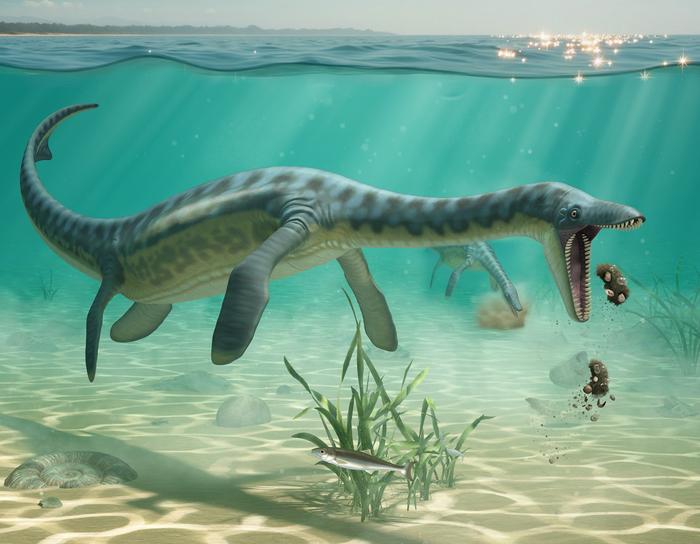
Image: Lente Artemieff and unidentified LLM
There may have been a multifactorial reasons they ventured so far from the sea. They may not have wanted to vomit where they eat, they may have wanted to sleep, the way marine crocodiles, but plesiosaurs are massive, 25 feet long, so they probably remained submerged due to size.
The new data are thanks to the energy company Equinor ASA(1), which has a scientist on retainer to study things like this. Paleontologist Dr. Dirk Knaust has spent decades analyzing drill core samples taken from their North Sea wells. This study was due to development of a subsea storage site for CO2 on the Horda Platform off the shore of Norway, which includes the Krossfjord, Fensfjord, Heather and Sognefjord formations of the Troll Field area. Vomit wasn't the only discovery. They also found a bone and coprolites- fossilized dung. That was not from a plesiosaur, it was most likely from an ichthyosaur, which look somewhat like dolphins. And it was most likely eaten by something else.
The work revealed identified bivalve and serpulid shells left by drilling worms, crinoids, and belemnites left behind by squid-like cephalopods). So what left the bone and feces? It probably wasn't an alligator or Jurassic shark, they ate fish and that wasn't present. Given the size, the most likely answer was a plesiosaur.
Citation: Knaust D. The fate of supposed plesiosaur vomit from Jurassic delta deposits offshore Norway. Geological Magazine. 2026;163:e43. doi:10.1017/S0016756826100806
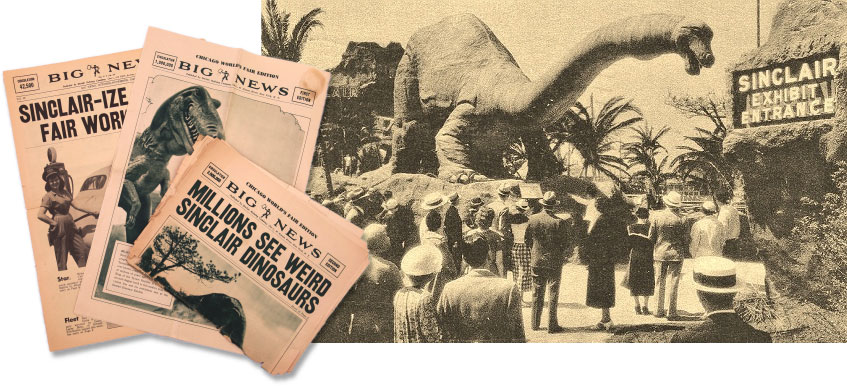
(1) Energy companies have a long history of being interested in paleontology. The founder of Sinclair Oil funded numerous digs and loved dinosaurs so much he made one their corporate mascot - which environmentalists took to believe meant oil came from dinosaurs, so they coined the fallacious term "fossil fuels."