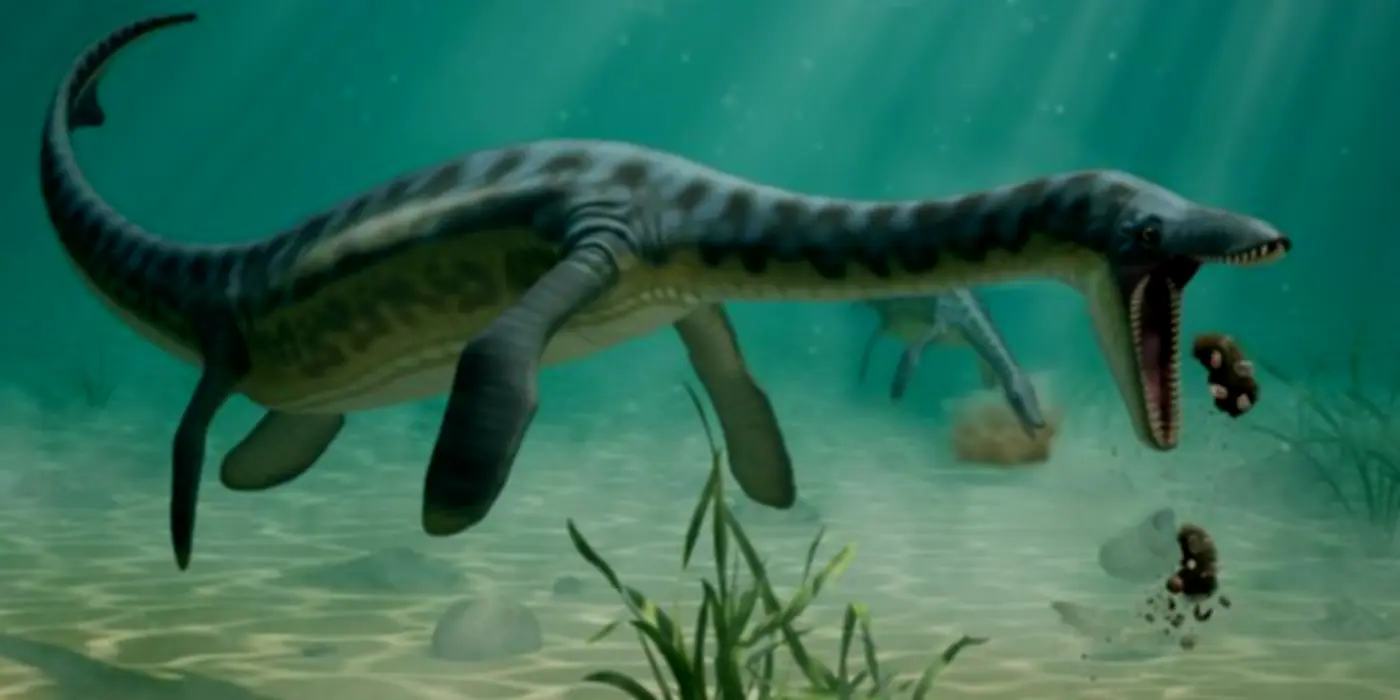
Jurassic Puke: Plesiosaurs Knew Not To Vomit Where They Eat
Jurassic monsters sometimes needed to vomit. When they did, they went to shore.
Jurassic monsters sometimes needed to vomit. When they did, they went to shore.


Adult stem cells may provide an explanation for the cause of a Hutchinson-Gilford Progeria Syndrome (HGPS), a rare disease that causes premature aging in children, according to researchers at the National Cancer Institute. These findings, the first to indicate a biological basis for the clinical features of HGPS, also known as progeria, may also provide new insights into the biological mechanisms of normal aging.
“Studies like this of the biology of HGPS hold the potential to benefit children suffering this terrible illness and enlighten us as to the medical changes we all experience as we grow older.” said NCI Director John E. Niederhuber, M.D. “As our population ages, we have an increasing need for greater understanding of the biology of aging and age-related illness, such as cancer.”
An international team has achieved, by means of a controlled chemical process, that atoms of gold, silver and copper - intrinsically non-magnetic (not attracted to a magnet) - become magnetic.
According to the research, the magnetism appears reduce the dimensions of the material to nanometric dimensions and surround it with previously selected organic molecules. The magnetism of these nanoparticles is a permanent one (like iron) which, even at ambient temperature, is quite significant.
This amazing behavior has been obtained not just with gold (a phenomenon which had already been put forward as experimentally possible) but, in this research, nanoparticles of silver and copper (the atoms of which are intrinsically non-magnetic) with a size of 2 nm (0.000002 mm) have also been shown to be magnetic at ambient temperature.
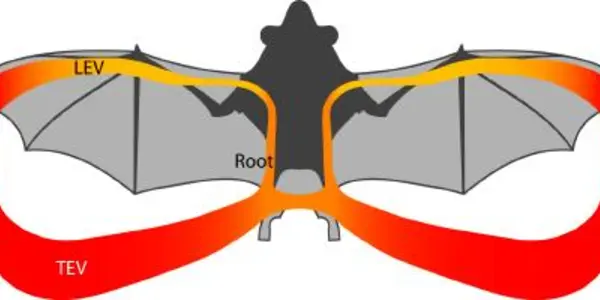
Sometimes scientists won't understand it even after they see it, but at least they'll believe it despite its improbability. Such is the case with bats, the bumblebee and the hummingbird, which according to classic wing theory should not be able to fly. Yet they seem to have forgotten to read that textbook.
In 1995, bumblebee flight got its answer. This week, the aerodynamics of a hovering bat species has been revealed. Its flight was studied in the wind tunnel laboratory of Lund University.
The wind tunnel at Lund University is specially crafted for research on bird flight. Birds fly “at the spot” against a headwind, allowing detailed investigation of wing movements using high speed video cameras.
Narcolepsy is a sleep disorder that causes people to fall asleep uncontrollably during the day. It also includes features of dreaming that occur while awake. Other common symptoms include sleep paralysis, hallucinations and cataplexy. About one out of every 2,000 people is known to have narcolepsy. It affects the same number of men and women.
The majority of patients with narcolepsy/cataplexy experience a number of symptoms of eating disorders, with an irresistible craving for food and binge eating as the most prominent features, according to a study published in the March 1 issue of the journal SLEEP.
Low-fat diets are more effective in preserving and promoting a healthy cardiovascular system than low-carbohydrate, Atkins’-like diets, according to a new study by researchers at the Medical College of Wisconsin in Milwaukee.
Public awareness of the 'obesity epidemic' has resulted in various dietary weight loss strategies. In America, it is estimated that 45 percent of women and 30 percent of men diet to lose weight.
“The nutrient-specific effects of these diets on cardiovascular health are largely unknown,” says David D. Gutterman, M.D.
“Low-carbohydrate diets are significantly higher in total grams of fat, protein, dietary cholesterol and saturated fats than are low-fat diets. While a low-carbohydrate diet may result in weight loss and improvement in blood pressure, similar to a low-fat diet, the higher fat content is ultimately more detrimental to heart health than is the low-fat diet suggested by the American Heart Association,” points out Shane Phillips, M.D.
The U.S. Army has awarded General Dynamics Robotic Systems an indefinite delivery/indefinite quantity contract with a total potential value of $40 million for production of the robotic Mobile Detection and Assessment and Response System (MDARS).
General Dynamics Robotic Systems will manufacture the semi-autonomous security vehicles and provide spare parts, training and technical services for a five-year period. The work will be done at its Westminster, Md., production facility.
How do scientists store nothing? It may sound like the beginning of a bad joke, but the answer is causing a stir in the realm of quantum physics after two research teams, including one from the University of Calgary, have independently proven it’s possible to store a special kind of vacuum in a puff of gas and then retrieve it a split second later.
In our everyday life, light is completely gone when we turn it off. In the world of quantum physics, which governs microscopic particles, even the light that is turned off exhibits some noise. This noise brings about uncertainty that can cause trouble when trying to make extremely precise measurements.
Kidney stones are very common – and painful – in men. About 3 in 20 men (1 in 20 women) in developed countries develop them at some stage. Mice, however, rarely suffer though the precise reasons are unknown. Jeffrey S. Clark and colleagues, writing in The Journal of Physiology, have come up with some answers.
Kidney stones are crystalline deposits of various chemicals that should normally be excreted in the urine, particularly oxalate. Common in food, it is usually disposed of by the gut into the faeces by exchanging it for chloride. If there is little chloride available, in a low-salt diet for example, oxalate may be retained by the intestine to eventually be excreted by the kidneys, where the stones may form.
Mice, unlike men, do not spontaneously develop kidney stones, making it difficult to set up an animal model of this common disease. Now, some reasons for this difference between mice and men may have emerged.

Today the ATLAS collaboration at CERN celebrates the lowering of its last large detector element. The ATLAS detector is the world’s largest general-purpose particle detector, measuring 46 metres long, 25 metres high and 25 metres wide; it weighs 7000 tonnes and consists of 100 million sensors that measure particles produced in proton-proton collisions in CERN’s Large Hadron Collider(LHC).
The first piece of ATLAS was installed in 2003 and since then many detector elements have journeyed down the 100 metre shaft into the ATLAS underground cavern. This last piece completes this gigantic puzzle.
“This is an exciting day for us,” said Marzio Nessi, ATLAS technical coordinator.

Naval warships are all-powerful vessels but they are also easy to spot.
Concerns about being detected have led the military to develop new stealth technologies that allow ships to be virtually invisible to the human eye, to dodge roaming radars, put heat-seeking missiles off the scent, disguise their own sound vibrations and even reduce the way they distort the Earth’s magnetic field, as senior lecture in remote sensing and sensors technology at Britannia Royal Navy College, Chris Lavers, explains in March’s Physics World.
Wars throughout the twentieth century prompted advances in stealth technologies. Some of the earliest but most significant strides towards invisibility involved covering ships with flamboyant cubist patterns – a technique known as “dazzle painting”.

Windmills and desalination installations are already commercially available. The windmills produce electricity from wind power, the electricity is stored and subsequently used to drive the high-pressure pump for the reverse osmosis installation.
It's not very efficient. The storage of electricity is expensive and energy is also lost during conversion. But Delft University of Technology (TU Delft) thinks the traditional windmill driving a pump directly can be more efficient and cheaper.
In the TU Delft installation, the high-pressure pump is driven directly by wind power. Water storage can be used to overcome calm periods. Plus, storing water is cheaper than storing electricity.
Museum archaeologists, conservation scientists, archivists and university researchers gathered at a one-day workshop at the Science and Technology Facilities Council (STFC) Daresbury Laboratory to discuss preservation of art and artefacts as well as immovable objects such as buildings and ships.
From how STFC is currently using its world leading light source facilities to help preserve the historic timbers of the Mary Rose, to why a bronze-age wooden shovel has survived so perfectly for over 4000 years in unfavourable soil conditions - delegates took part in discussions with STFC scientists involved to discover how cutting edge techniques can take heritage research into new and productive directions.