News Articles

News Account

News Account

News Releases From All Over The World, Right To You
RSS Feed
Gay Youth In Massachusetts Have Higher Rates Of Eating Disorders

Gay Youth In Massachusetts Have Higher Rates Of Eating Disorders

Gay youths are more likely to purge or take laxatives, use diet pills, or fast to lose weight than their straight peers, according to new research from the University of British Columbia which analyzed data from surveys of youths ages 12 to 18 that were administered every two years at public high schools in Massachusetts between 1999 and 2013. Students were asked about their sexual orientation, whether they used diet pills, refrained from eating for 24 hours or more, or vomited or took laxatives to lose or keep from gaining weight in the last month. 

Why Americans Waste So Much Food

Why Americans Waste So Much Food

COLUMBUS, Ohio -- Even though American consumers throw away about 80 billion pounds of food a year, only about half are aware that food waste is a problem. Even more, researchers have identified that most people perceive benefits to throwing food away, some of which have limited basis in fact.
A study published today in PLOS ONE is just the second peer-reviewed large-scale consumer survey about food waste and is the first in the U.S. to identify patterns regarding how Americans form attitudes on food waste.

Artificial Muscle For Soft Robotics: Low Voltage, High Hopes

Artificial Muscle For Soft Robotics: Low Voltage, High Hopes

Soft robots do a lot of things well but they're not exactly known for their speed. The artificial muscles that move soft robots, called actuators, tend to rely on hydraulics or pneumatics, which are slow to respond and difficult to store.
Dielectric elastomers, soft materials that have good insulating properties, could offer an alternative to pneumatic actuators but they currently require complex and inefficient circuitry to deliver high voltage as well as rigid components to maintain their form -- both of which defeat the purpose of a soft robot.

Football Concussion Update: Player-on-player Hits Cause More Serious Head Impacts

Football Concussion Update: Player-on-player Hits Cause More Serious Head Impacts

In football, player-vs.-player hits will likely cause more severe head impacts than other impacts, according to a new study by a University of Georgia researcher.
The research also points to potential rule changes to further protect players.
The study, which is published in the most recent issue of the journal Pediatrics, analyzed nearly 7,000 head impacts during 13 games in a high school football team's season and post-season. Julianne Schmidt, assistant professor in the UGA College of Education and author of the article, said the analysis of game videos found players sustained more serious head impacts when hitting another player than players who hit their heads on another object, such as the ground.

Does Social Status Affect Generosity?

Does Social Status Affect Generosity?

EAST LANSING, Mich. -- High-ranking people don't always turn out to be selfish jerks. It all depends on whether they feel worthy of their prominent social position, new research indicates.
A series of six scientific studies led by Michigan State University scholar Nicholas Hays found that people with high social status who didn't believe they earned that status were much more generous than high-status people who felt they deserved the respect and admiration of others.
Prominent people who don't feel their status is fair and equitable become more generous with others to alleviate that sense of inequity, he explained.

Stop The Rogue ADAM Gene And You Stop Asthma

Stop The Rogue ADAM Gene And You Stop Asthma

Scientists at the University of Southampton have discovered a potential and novel way of preventing asthma at the origin of the disease, a finding that could challenge the current understanding of the condition.
The research, published in The Journal of Clinical Investigation (JCI) Insight, analysed the impact of the gene ADAM33, which is associated with the development of asthma.
ADAM33 makes an enzyme, which is attached to cells in the airway muscles. When the enzyme loses its anchor to the cell surface, it is prone to going rogue around the lung causing poorer lung function in people who have asthma.

Gaining A Better Understanding Of The Way We Taste

Gaining A Better Understanding Of The Way We Taste

For the first time Japanese researchers discovered that the extracellular domain of taste receptor proteins undergoes a change in structure by binding together taste substances. This structure change is thought to transmit the extracellular binding of taste substances to taste cells. The findings will contribute to our basic understanding of taste mechanisms and the development of a new taste evaluation system that makes use of the screening and detection of taste receptor structure changes.

LUX Dark Matter Experiment Ends With No WIMPs Found

LUX Dark Matter Experiment Ends With No WIMPs Found

The Large Underground Xenon (LUX) dark matter experiment, which operates beneath a mile of rock at the Sanford Underground Research Facility in the Black Hills of South Dakota, has completed its search for the missing matter of the universe yielding no trace of a dark matter particle. 
LUX's extreme sensitivity makes the team confident that if dark matter particles had interacted with the LUX's xenon target, the detector would almost certainly have seen them. In a 'what you don't find is important also' sense, these new limits on dark matter detection will allow scientists to eliminate many potential models for dark matter particles. 

People Estimate Their Own Abilities Based On Others' Performance

People Estimate Their Own Abilities Based On Others' Performance

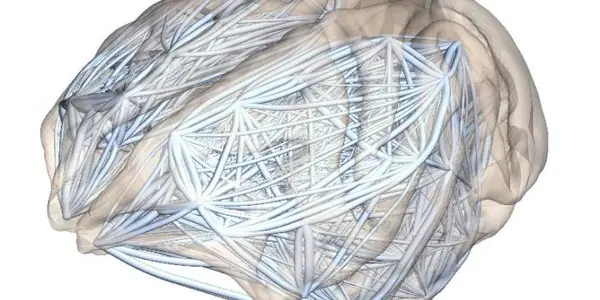
Ratings of our own abilities are strongly influenced by the performance of others, according to a study published July 20 in Neuron. Interacting with high performers makes us feel more capable in cooperative team settings, but less competent in competitive situations. Moreover, the degree of "self-other-mergence" is associated with activity in a brain region previously implicated in theory of mind--the ability to understand the mental states of oneself and others.

Three Alzheimer's Genetic Risk Factors Linked To Immune Cell Dysfunction

Three Alzheimer's Genetic Risk Factors Linked To Immune Cell Dysfunction

People with a variant copy of the TREM2 gene have an increased risk of developing Alzheimer's disease, but researchers are only beginning to understand why.
A Genentech study has uncovered details of how a type of immune cell helps the brain get rid of the tiny amyloid-beta aggregates that can clump together to form the plaques characteristic of Alzheimer's. The researchers, reporting July 20 in Neuron, found that TREM2 mutations can derail the immune cell's plaque-clearing activity, as can two other genes already known to increase a person's risk for Alzheimer's: APOE and APOJ (known as clusterin).
"I think we're only scratching the surface of what TREM2 does," said Morgan Sheng, a senior author of the paper and Vice-President of Neuroscience at Genentech.

Reversing Ants Navigate Successfully Despite Going Backwards

Reversing Ants Navigate Successfully Despite Going Backwards

Scampering across the salt pans of Tunisia on their spindly legs, desert ants (Cataglyphis fortis) have a single-minded mission: locate food and get it back to the nest. Normally, individual raiders bear a tasty morsel in their mandibles and navigate home along the most direct return route, regardless of how tortuous the outbound journey was. However, their determination is often tested to the extreme when the robust animals stumble upon a particularly large piece of food - such as a dead spider or locust. Undaunted, the scavenger simply drags the feast backwards: 'They are really awesome', chuckles Matthias Wittlinger from the University of Ulm, Germany. However, how do the insects navigate while reversing? 'All the cues are from the other direction', says Wittlinger.

Fighting Life-threatening Bacteria Without Antibiotics

Fighting Life-threatening Bacteria Without Antibiotics

Patients suffering from liver cirrhosis often die of life-threatening bacterial infections. In these patients the immune cells are unable to eliminate the bacterial infections. Scientist at the University of Bonn and TU Munich have now discovered that type I IFN released by immune cells due to increased migration of gut bacteria into the cirrhotic liver incapacitate the immune system. Based on their findings, such life-threatening infections can be contained by strengthening the immune response alone -- without antibiotics. The results have now appeared in the journal Gut.