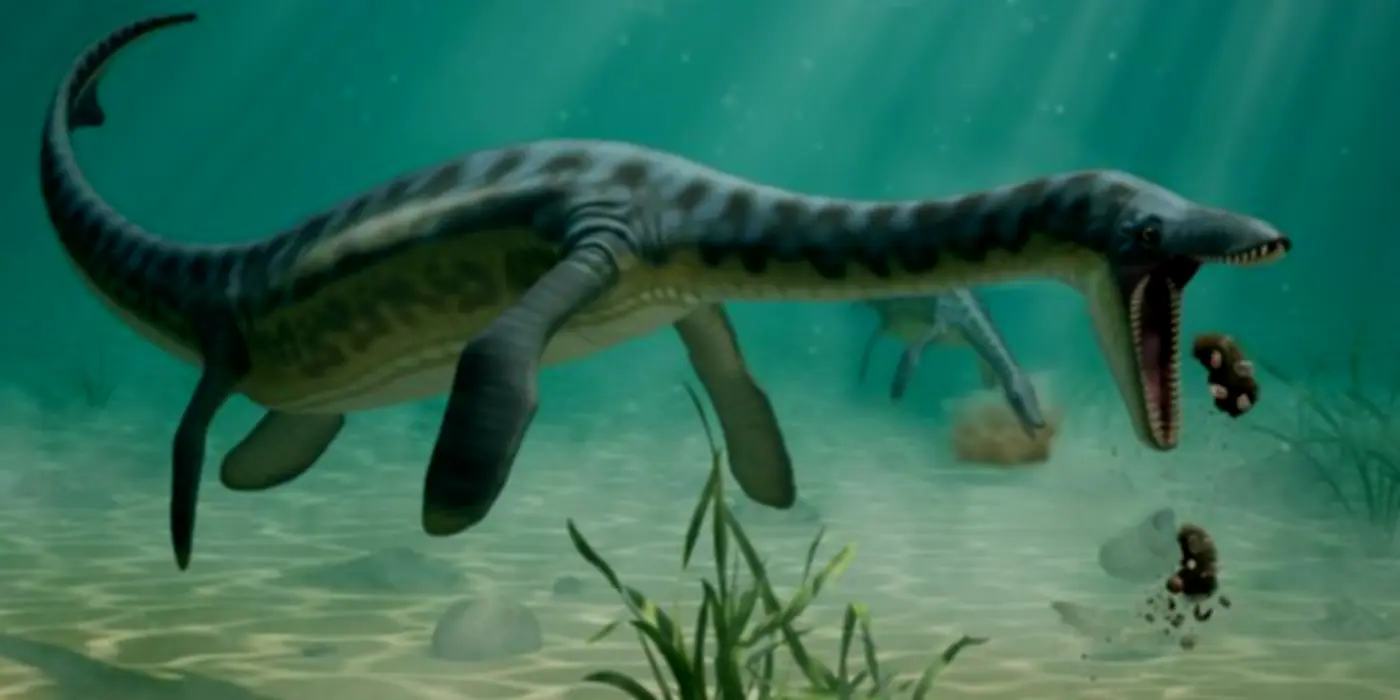
Jurassic Puke: Plesiosaurs Knew Not To Vomit Where They Eat
Jurassic monsters sometimes needed to vomit. When they did, they went to shore.
Jurassic monsters sometimes needed to vomit. When they did, they went to shore.


NASA's Hubble Space Telescope has probed the bright core of Comet 17P/Holmes, which, to the delight of sky watchers, mysteriously brightened by nearly a millionfold in a 24-hour period beginning Oct. 23, 2007.
Comet 17P/Holmes is a periodic comet in our solar system.
On November 4, 2007, Comet 17P/Holmes was 1.62 Astronomical Units from the Earth, and 2.48 Astronomical Units from the Sun. Constellation: Perseus
Astronomers used Hubble's powerful resolution to study Comet Holmes' core for clues about how the comet brightened. The orbiting observatory's Wide Field Planetary Camera 2 (WFPC2) monitored the comet for several days, snapping images on Oct. 29, Oct. 31, and Nov. 4.

Loess sediments and their soils cover around one-tenth of the earth. In Europe, loess is a powdery product of glaciations during the Ice Age. During those cold periods, this very fine, light material was swept from bare regions on the edges of the glaciers and deposited in regions with denser vegetation.
Loess consists largely of quartz grains and lime. The very fine grains ensure good aeration, water storage and mineral levels. This means that soils derived from loess are very fertile, like the black earth of the Börde plains, but are also particularly susceptible to erosion. It is therefore important to know where exactly these fertile soils so worthy of protection are to be found.

The November 2007 Special Issue of Frontiers in Ecology and the Environment focuses on paleoecology, which uses fossilized remains and soil and sediment cores to reconstruct past ecosystems.
Some scientists argue that the pre-Columbian Amazon was pristine, with indigenous people living in harmony with nature. Others suggest that the Amazon is a “manufactured” landscape, altered by and disturbed by human activities even before the arrival of Europeans. In “Amazonian exploitation revisited: ecological asymmetry and the policy pendulum,” Mark Bush (Florida Institute of Technology) and Miles Silman (Wake Forest University) discuss this debate.
Bush and Silman present paleodata from fossil pollen and charcoal in soil cores that support both perspectives.
The CO2 emissions of 50,000 power plants worldwide, the globe’s most concentrated source of greenhouse gases, have been compiled into a massive new database, called CARMA — Carbon Monitoring for Action.
The on-line database, compiled by the Center for Global Development (CGD), an independent policy and research organization that focuses on how the actions of the rich world shape the lives of poor people in developing countries, lays out exactly where the CO2 emitters are and how much of the greenhouse gas they are casting into the atmosphere.
The observation that males evolve more quickly than females has been around since 19th century biologist Charles Darwin noted the majesty of a peacock’s tail feather in comparison with the plainness of the peahen’s.
No matter the species, males apparently ramp up flashier features and more melodious warbles in an eternal competition to win the best mates, a concept known as sexual selection.
Why males are in evolutionary overdrive even though they have essentially the same genes as females has been a mystery, but an explanation by University of Florida Genetics Institute researchers in the Proceedings of the National Academy of Sciences this week may shed light on the subject.
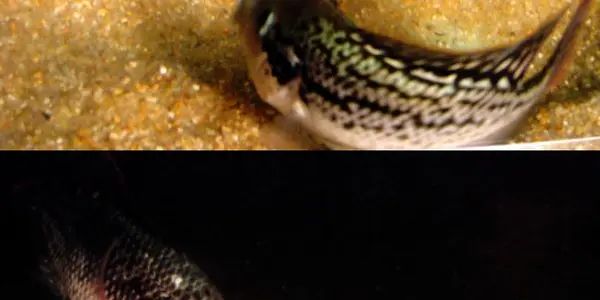
A gene has been found in male cichlid fish that evolved to lure female fish so that male cichlids can deposit sperm in the females mouths. A study in BMC Biology reveals that the gene is associated with egg-like markings on the fins of cichlid fishes and uncovers the evolutionary history of these markings, which are central to the success of the fishes' exotic oral mating behavior.
Walter Salzburger, Ingo Braasch and Axel Meyer reared 19 cichlid species at Konstanz University in Germany and identified a gene involved in producing yellow pigment cells in oval spots on the fishes' fins.
Cichild fish are lovers AND fighters.
Our brain is very good at picking up speech even in a noisy room, an adaptation essential for holding a conversation at a cocktail party, and now we are beginning to understand the neural interactions that underlie this ability.
An international research team reports in BMC Biology how investigations using neuroimaging have revealed that the brain's left hemisphere helps discern the signal from the noise.
In our daily lives, we are exposed to many different sounds from multiple sources at the same time, from traffic noise to background chatter. These noisy signals interact and compete with each other when they are being processed by the brain, a process called simultaneous masking.
The cells which thicken the womb wall during a woman's menstrual cycle contain a newly discovered type of stem cell, and could be used in the treatment of damaged and/or old tissue, according to research published in the Journal of Translational Medicine.
Dr Xiaolong Meng of the Bio-Communications Research Institute in Wichita, Kansas, led the research team consisting of scientists from the University of Alberta, University of Western Ontario and Medistem Laboratories (mdsm.ob). The team identified a new type of stem cell that can be reproducibly isolated from menstrual blood collected from healthy female subjects.
Researchers are closer to understanding why humans differ so greatly from chimpanzees in the way they look, behave, think, and fight off disease, despite having genes that are nearly 99% identical.
Innovative research from the University of Toronto’s Centre for Cellular and Biomolecular Research has uncovered potential new explanations for these glaring differences. In comparing brain and heart tissue from humans and chimpanzees, U of T Professor Benjamin Blencowe and his team, including graduate student researcher John Calarco, have discovered significant differences in the way genetic material is spliced to create proteins.
In a petition filed today with the U.S. Food and Drug Administration, an international coalition of scientists and doctors, including the Physicians Committee for Responsible Medicine, Association of Veterinarians for Animal Rights and In Defense of Animals, is seeking to compel the FDA to mandate the use of human-centered rather than animal testing methods when those alternatives exist.
Petition signatories include a plaintiff in a Vioxx lawsuit who refuses to accept the recently proposed settlement with Merck because she is concerned that misleading animal drug testing will continue to put consumers at risk. After taking Vioxx to cope with pain from a shoulder injury, Nancy Tufford was diagnosed with congestive heart failure.

Rocky terrestrial planets, perhaps like Earth, Mars or Venus, appear to be forming or to have recently formed around a star in the Pleiades ("seven sisters") star cluster, the result of "monster collisions" of planets or planetary embryos.
Astronomers using the Gemini Observatory in Hawaii and the Spitzer Space Telescope report their findings in an upcoming issue of the Astrophysical Journal, the premier journal in astronomy.
In Bad For Carbon Offsets - Not All Trees Are The Same At Reducing Global Warming, scientists noted that planting new trees as an emotional panacea for greenhouse gas emissions - that means you, Burning Man Festival - didn't really do much good.
Now the single largest assessment of the biodiversity conservation value of primary, secondary and plantation forests ever conducted in the humid tropics adds new weight to the debate.
Working in the north-eastern Brazilian Amazon an international team of scientists funded by the UK Government’s Dar