Carbon Nanotube Has EMI And Hides Heat
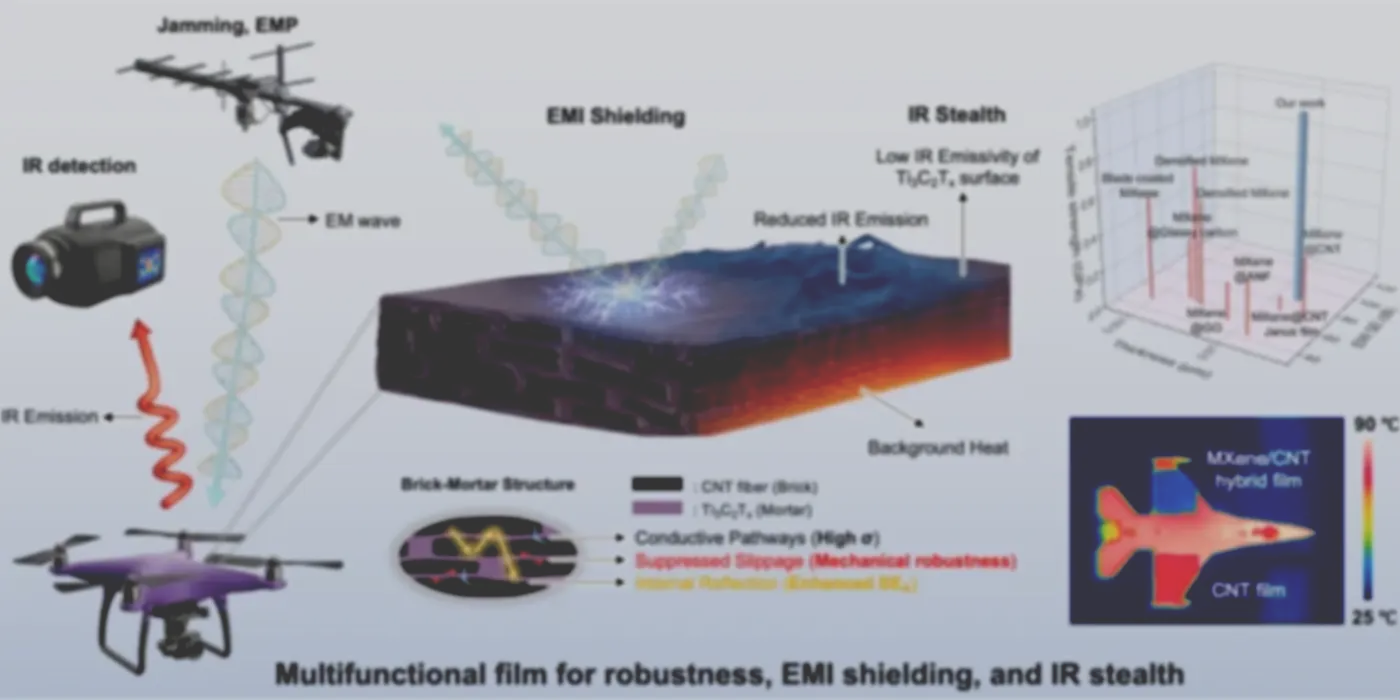
Researchers have developed a composite film that combines electromagnetic interference shielding, infrared stealth, and high mechanical strength using carbon nanotube fibers and MXene.
Researchers have developed a composite film that combines electromagnetic interference shielding, infrared stealth, and high mechanical strength using carbon nanotube fibers and MXene.


Scientists at the U.S. Department of Energy's Brookhaven National Laboratory have developed a method for correlating the results of microscopic imaging techniques in a way that could lead to improved understanding, diagnosis, and possibly treatment of a variety of disease conditions, including Alzheimer's disease. The Laboratory has filed a U.S. provisional patent application for the invention.
The invention is essentially a micron-scale metallic marking grid upon which scientists place their samples - biological tissues or inorganic samples such as minerals - prior to imaging with different methods.

Dental x-rays could be a thing of the past thanks to a new knowledge transfer partnership between the University of Abertay Dundee and pioneering research firm IDMoS.
A team of scientists from the university’s SIMBIOS (Scottish Informatics and Mathematics Biology and Statistics) Centre will use sophisticated CAT (Computerised Axial Tomography) scanning equipment to verify that the company’s newly developed equipment for detecting dental cavities works.
Chair of the Environmental Sciences School, Professor Iain Young said: “IDMoS have developed a non-invasive method of checking teeth for cavities.
Women under the age of forty with breast cancer who are given drugs in addition to lumpectomies or radiotherapy, known as adjuvant chemotherapy, may not be benefiting from these drugs. This is especially true if their tumors respond to changing levels of hormones such as estrogen, according to research published in the online journal, Breast Cancer Research.
"Developing breast cancer at a young age is very worrying in terms of survival," explained lead researcher Dr J van der Hage. "But some young women may be undergoing not only unpleasant but also unnecessary chemotherapy, which can be avoided."
An extraordinary advance in human origins research reveals evidence of the emergence of the upright human body plan over 15 million years earlier than most experts have believed. More dramatically, the study confirms preliminary evidence that many early hominoid apes were most likely upright bipedal walkers sharing the basic body form of modern humans.

The voyage of NASA’s Pluto-bound New Horizons spacecraft through the Jupiter system earlier this year provided a bird’s-eye view of a dynamic planet that has changed since the last close-up looks by NASA spacecraft.
New Horizons passed Jupiter on Feb. 28, riding the planet’s gravity to boost its speed and shave three years off its trip to Pluto.
An estimated 6.6 million people in Europe suffer from schizophrenia:(1) a serious mental illness characterized by disturbances in the thoughts, perceptions, emotions and behavior of a person.
A large majority of families who care for someone with schizophrenia are confident that many people with the disease can lead independent, fulfilling lives with the ability to have a part-time job when having optimal control over their symptoms.
These results announced today on World Mental Health Day, are findings from a European survey of over 320 families and carers of people with schizophrenia conducted between July and September 2007 by EUFAMI (European Federation of Associations of Families of People with Mental Illness).
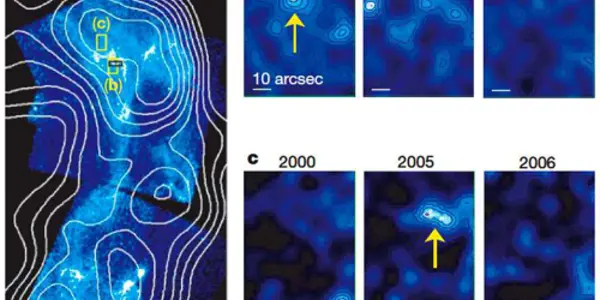
Recent observations from NASA and Japanese X-ray observatories have helped clarify one of the long-standing mysteries in astronomy -- the origin of cosmic rays.
Outer space is a vast shooting gallery of cosmic rays. Discovered in 1912, cosmic rays are not actually rays at all; they are subatomic particles and ions (such as protons and electrons) that zip through space in all directions at near-light speed, with energies tens of thousands of times greater than particles produced in Earth’s largest particle accelerators.
A research team combining high-energy physicists from the University of California, Santa Cruz, and neuroscientists from the Salk Institute in La Jolla, Calif., has discovered a type of retinal cell that may help monkeys, apes, and humans see motion.
The cell type has very similar properties to so-called Y retinal ganglion cells, which were first described in cats in 1966. Upon the Y-cell's discovery, scientists began a decades-long search for its counterpart in primates.
Researchers conducting a clinical trial state that the drug topiramate may be effective in curbing alcohol dependence.
“Topiramate has emerged as a promising treatment for people with alcohol dependence,” says the lead author, Professor Bankole Johnson, D.Sc., M.D., Ph.D., M.Phil., FRCPsych., who is chairman of the University of Virginia Department of Psychiatry and Neurobehavioral Sciences. “Our finding in this national study was that topiramate is a safe and highly efficacious medicine that can be paired with a 15-minute brief intervention by health practitioners who are not addiction specialists.
A new study reveals that even married men who are considered aloof spouses and provide minimal parenting have much lower testosterone levels than single, unmarried men.
In the October issue of Current Anthropology, Peter B. Gray (University of Nevada, Las Vegas), Peter T. Ellison (Harvard University), and Benjamin C. Campbell (Boston University) investigated the links between male testosterone levels and marital status among modern-day pastoralists in northern Kenya – of whom less than 1.5 percent consider their wives a source of emotional support.
The Ariaal males serve as herd boys until they reach puberty, at which point they are initiated, become warriors, and accumulate livestock.
A group of scientists, led by mathematicians, has taken on the challenge of building a common model of immune responses. Their work will radically improve our understanding of the human immune system by allowing all the scientific disciplines working on it to have a common reference point and language.
The mathematicians will investigate how the different cellular components of the immune system work together and devise a theoretical and computational model that can be used by immunologists, mathematicians, computer scientists, physicists and engineers.
The model promises to help a multi-disciplinary research community work together to bring about medical advances for patients.
A diet low in fat could reduce the risk of ovarian cancer in healthy postmenopausal women, according to new results from the Women’s Health Initiative (WHI) Dietary Modification Trial.
Researchers found that after four years, women who decreased the amount of dietary fat they consumed were 40 percent less likely to develop ovarian cancer than women who followed normal dietary patterns. As expected, no effect was found during the first four years because preventive benefits on cancer often take many years to develop. Ovarian cancer affects about 1 in 60 U.S.