Carbon Nanotube Has EMI And Hides Heat
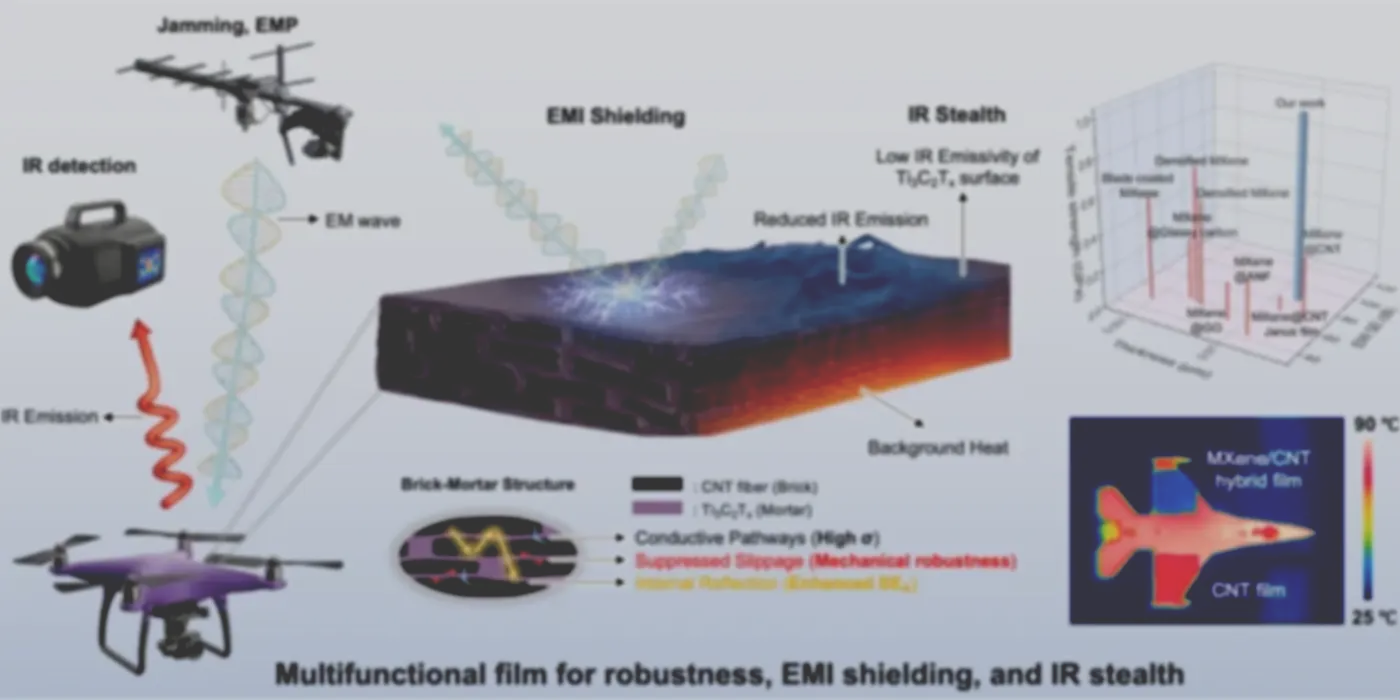
Researchers have developed a composite film that combines electromagnetic interference shielding, infrared stealth, and high mechanical strength using carbon nanotube fibers and MXene.
Researchers have developed a composite film that combines electromagnetic interference shielding, infrared stealth, and high mechanical strength using carbon nanotube fibers and MXene.


In the September issue of the journal Stem Cells, researchers from the Georgia Institute of Technology and Emory University write that moderate physical movement of embryonic stem cells in fluid environments, similar to shaking that occurs in the womb, improves their development and suggests that different types of movement could some day be used to control what type of cell they become.
“Embryonic stem cells develop under unique conditions in the womb, and no one has ever been able to study the effect that movement has on that development process,” said Todd McDevitt, assistant professor in the Wallace H. Coulter Department of Biomedical Engineering at Georgia Tech and Emory University and head of the project.
Researchers at UT Southwestern Medical Center are reporting in the September issue of the American Heart Journal that women with a family history of heart disease are less likely than men to change habits such as smoking and infrequent physical activity.
They also are more likely to engage in lifestyle choices that increase their risk of heart disease than are women who did not report a history of heart disease.
“A family history of heart disease is as important an indicator of future cardiovascular health in women as it is in men – perhaps more important,” said Dr. Amit Khera, assistant professor of internal medicine and senior author of the study.
A new study says that salt-saturated brine moving through floating sea ice follows “universal transport properties” and that this new understanding can help anticipate the effects of global warming on the polar oceans and the microbial communities existing there.
According to this new model, similar porous materials – including ice on other worlds, such as Jupiter’s icy ocean-covered moon Europa – should follow the same rules.
“It means that almost the exact same formulas describing how water flows through sedimentary rocks in the Earth's crust apply to brine flow in sea ice, even though the microstructural details of the rocks are quite different from sea ice,” says University of Utah math Professor Ken Golden.
The AIDS Healthcare Foundation (AHF) today called on Gilead Sciences and Merck to immediately register and distribute the three-in-one, once daily lifesaving HIV treatment, Atripla, in developing countries.
When Atripla first received approval from the Food and Drug Administration (FDA) in July of 2006, advocates like AHF applauded the production of a single, once-a-day drug as a landmark step in treating HIV. However, since its approval, little progress has been made in expanding the availability of the treatment in the developing world, where only 28% of those in need of treatment were able to access it as of December 2006.
"This treatment is a standard therapy in the United States.

Breasts move far more than ordinary bras are designed to cope with and they also bounce more during exercise – up to 21 cm rather than the maximum 16 cm bounce measured in past studies, according to new research.
Ordinary bras can stop the bouncing but the new study by University of Portsmouth scientist Dr Joanna Scurr shows that breasts also move side-to-side and in and out and estimates are that more than 50 percent of women experience breast pain when exercising, regardless of cup size.
Dr Scurr’s study also found that breasts move as much during slow jogging as they do at maximum sprint speed.
An important finding has been made by McMaster researchers about Fragile X Syndrome (FXS), a sex-linked genetic disorder that affects approximately one in 4,000 males and one in 6,000 females.
FXS is the most common genetic disorder associated with mental impairment. The affected gene (FMR1) leads to inactivation of the FMR1 gene product, known as the fragile X mental retardation protein (FMRP).
Brain development in the absence of this protein leads to cognitive effects, learning and memory problems, attention deficit, hyperactivity and autistic behaviors. Many children go undiagnosed with Fragile X.
Melbourne, Florida -- Symetrics Industries, LLC announced today an award from the U.S. Army for approximately 300 Improved Data Modems (IDM) for installation on Army aircraft. The contract value will be between US$7 and US$8 million, once final negotiations are completed. The IDM-304 is the Army version of the Improved Data Modems that Symetrics has been delivering to the U.S. Air Force for over 14 years.
Symetrics President and CEO, Mitch Garner stated, "We are absolutely thrilled with this order because it demonstrates the Army's confidence in our ability to execute a long-term, high volume production effort. The IDM-304 is the cornerstone of the Army's airborne element of the Tactical Internet, and Symetrics is proud to be able to provide this critical equipment."
Nearly 30 years after Nobel laureate Linus Pauling famously and controversially suggested that vitamin C supplements can prevent cancer, a team of Johns Hopkins scientists have shown that in mice at least, vitamin C - and potentially other antioxidants - can indeed inhibit the growth of some tumors ¯ just not in the manner suggested by years of investigation.
The conventional wisdom of how antioxidants such as vitamin C help prevent cancer growth is that they grab up volatile oxygen free radical molecules and prevent the damage they are known to do to our delicate DNA.
Scientists at Johns Hopkins have developed a mouse model for schizophrenia in which a mutated gene linked to schizophrenia can be turned on or off at will.
The researchers developed the transgenic mouse by inserting the gene for mutant Disrupted-In-Schizophrenia-1 (DISC-1) into a normal mouse, along with a promoter that enables the gene to be switched on or off. Mutant DISC-1 was previously identified in a Scottish family with a strong history of schizophrenia and related mental disorders.
The study was performed in the laboratory of Mikhail Pletnikov, M.D., Ph.D., in the Department of Psychiatry and Behavioral Sciences.
Infants and children receiving artificial heart-valve replacements face several repeat operations as they grow, since the replacements become too small and must be traded for bigger ones.
Researchers at Children's Hospital Boston have now developed a solution: living, growing valves created in the lab from a patient's own cells.
Pulmonary valves, which provide one-way blood flow from the heart's right ventricle into the pulmonary artery, are often malformed in congenital heart disease, putting an extra burden on the heart.
Enzymes are proteins that act as catalysts in everything from single-celled organisms to humans. They promote chemical reactions in cells and are used widely in industry for everything from making beer and cheese to producing paper and biofuel.
They are also important for making 'natural' drugs, therapeutic agents based on the blueprints of chemicals produced in nature by plants and microorganisms. Such natural sugar-bearing chemicals are the basis for some of medicine's most potent antibiotics and anticancer drugs as exemplified by the antibiotic erythromycin and the anticancer drug doxorubicin.
Important chemical features of such drugs are natural sugars, molecules that often determine a chemical compound's biological effects.
If you look at a price and you see larger numbers on the far right, it makes a difference in how you perceive the discount compared to small numbers on the right even if the actual differences are the same, according to a new study from the Journal of Consumer Research.
So a price of $188 from an original price of $199 appears to be a better deal than a $222 price discounted to $211, even though they are both $11 cheaper.
However, if the left-most digit is small, people perceive they are getting a larger discount when the right digits are “small” -- less than 5 -- rather than when they are “large,” greater than 5.