Carbon Nanotube Has EMI And Hides Heat
Researchers have developed a composite film that combines electromagnetic interference shielding, infrared stealth, and high mechanical strength using carbon nanotube fibers and MXene.
Researchers have developed a composite film that combines electromagnetic interference shielding, infrared stealth, and high mechanical strength using carbon nanotube fibers and MXene.


New insights into the role of estrogen receptor in mammary gland development may help scientists better understand the molecular origin of breast cancer, according to new research from the University of Cincinnati.
About a decade ago, U.S. scientists at the National Institutes of Health (NIH) developed a standard estrogen receptor (ER) gene knock-out mouse model to study the estrogen receptor’s role in human diseases.
“Unfortunately, because these mice lacked mammary glands as a consequence of genetic manipulation, using this model to study the relationship between the estrogen receptor and breast cancer proved ineffective,” explains Sohaib Khan, PhD, professor of cell and cancer biology.
A study by researchers at the University of Southampton has shown evidence of increased levels of hyperactivity in young children consuming mixtures of some artificial food colors and the preservative sodium benzoate.
The possibility of food colors and preservatives affecting children's behavior has long been an unresolved question for parents. This significant new research by a team from the University of Southampton's Schools of Psychology and Medicine provides a clear demonstration that changes in behavior can be detected in three-year-old and eight-year-old children.
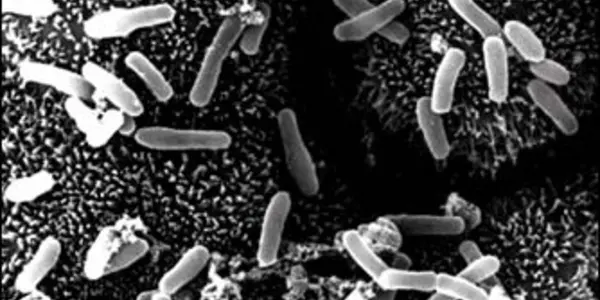
A common hospital superbug called Clostridium has a protective coat of armor that can self assemble when put into a test tube on its own, which may have important commercial uses in nanotechnology, according to scientists.
Like many other micro-organisms, Clostridium difficile produces a lattice coat made of proteins to surround its cell wall and protect it like a suit of armour. The complete protein coat is then attached to the underlying cell wall with chemical bonds.
“We have discovered that these protein coats have a remarkable ability to self-assemble when they are taken off the bacteria and put into a test tube.
How we come to express the genes of one parent over the other is now better understood through studying the platypus and marsupial wallaby – and it doesn’t seem to have originated in association with sex chromosomes.
New research published in BMC Evolutionary Biology has shed light on the evolution of genomic imprinting, in which specific genes on chromosomes that have been inherited from one parent are expressed in an organism, while the same genes on the chromosome inherited from the other parent are repressed.
Imprinting arises from some kind of ‘epigenetic memory’ – modifications to the DNA from one parent, such as the way the chromosomal material is packaged, that do not allow particular genes to be expressed. The reasons why imprinting evolved are not understood.
Bacteria that thrive in oxygen starved environments have been used successfully to target cancer tumors, delivering gene therapy based anti-cancer treatments, according to scientists.
For about half of cancer sufferers traditional treatments such as radiotherapy and chemotherapy are ineffective, so alternative techniques are being developed to target their tumors.
“To target a tumour with gene therapy you need three things. You need to be able to distinguish the tumour from its surrounding healthy tissue. You need to identify a therapeutic gene which will treat the problem. And you need some way of delivering the gene to the tumour”, says Dr Jan Theys of Maastricht University, the Netherlands.
So vital is the p53 tumor suppressor gene in controlling cancer that its dysfunction is linked to more than half of human cancers. At the same time, the gene’s capacity for shutting down cell growth, even causing cells to commit suicide if necessary, is so absolute that it must be tightly regulated to maintain the optimal balance between protecting against cancer and permitting normal growth.
Now, a study by scientists at The Wistar Institute reveals new levels of subtlety in the body’s management of this all-important tumor suppressor gene and the protein it produces.

With the help of genetically engineered mice whose livers turned into glowing light bulbs, researchers at the Salk Institute for Biological Studies have illuminated the underpinnings of an insidious and growing health concern— type II diabetes.
In the study published in the September 5 advanced online edition of Nature, the researchers report that a protein called TORC2 serves as a key biochemical control point linking feeding, insulin, and elevated blood sugar production in the liver.
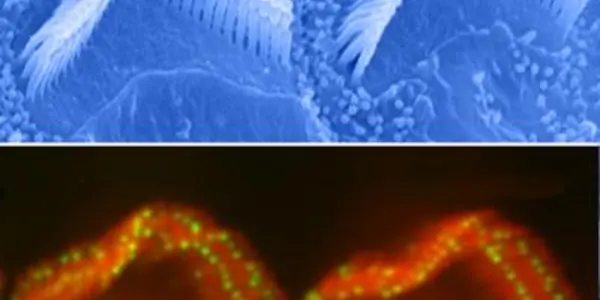
According to new research, two key proteins join together at the precise location where energy of motion is turned into electrical impulses. These proteins, cadherin 23 and protocadherin 15, are part of a complex of proteins called “tip links” that are on hair cells in the inner ear. The tip link is believed to have a central function in the conversion of physical cues into electrochemical signals.
“Mutations in [the genes] cadherin 23 and protocadherin 15 can cause deafness as well as Usher syndrome, the leading cause of deaf-blindness in humans,” says Professor Ulrich Mueller, of the Scripps Research Department of Cell Biology and Institute for Childhood and Neglected Diseases.
A new research study at Northwestern University is investigating innovative ways to rehabilitate people with lousy health habits.
Bonnie Spring, a professor of preventive medicine at Northwestern's Feinberg School of Medicine, says the way to improve eating habits is to make change as easy as possible. Her method is based on the Behavioral Economics Theory used by Nobel Prize winner Daniel Kahneman.
The study uses high-tech tools, including a specially programmed Palm Pilot to monitor eating and exercise, virtual visits with a personal coach and an accelerometer which straps around the waist to record the intensity of their movements. Participants are assigned to eat more veggies and fruits or cut down on saturated fat and are encouraged to exercise.
Cholera is an infectious disease caused by a bacterium, the bacillus Vibrio cholerae. In 2004 there were 101,383 cases - 95,000 in Africa - resulting in 2,345 deaths, according to the World Health Organization. Increases in the frequency of torrential rain, floods and periods of drought, said by some to result from global climate change, has contributed to the spread of cholera.
In studies aiming to understand better the emergence and persistence of cholera in Africa, IRD and CNRS researchers showed the strong correlation that exists between outbreaks and the different parameters linked to climate changes in West Africa.

A recent simulation has shown that thin layers of ice could persist on specially treated diamond coatings at temperatures well above body temperature, which could make ice-coated-diamond films an ideal coating for artificial heart valves, joint replacements, and wear-resistant prosthetics.
Physicists Alexander D. Wissner-Gross and Efthimios Kaxiras of Harvard modeled water ice on top of a diamond surface coated with sodium ions. They found that ice layers should persist on the treated diamond up to temperatures of 108 degrees Fahrenheit (42 Celsius), and in some circumstances could remain frozen beyond the boiling point of water.
It's hardly surprising that clinically depressed people act differently than healthy people. Quantifying the difference, however, can be difficult. Now a collaboration of physicists and psychiatrists in Japan has found a way to clearly and objectively measure depression.
The researchers outfitted both healthy control subjects and depressed patients with accelerometers to continuously measure their motions over 5-day periods. Although activity levels in all of the subjects followed power-law patterns (a type of distribution that often turns up in physics studies of natural systems) the activity levels of depressed patients were clearly distinguished from healthy subjects by a number known as the scaling parameter.