Carbon Nanotube Has EMI And Hides Heat
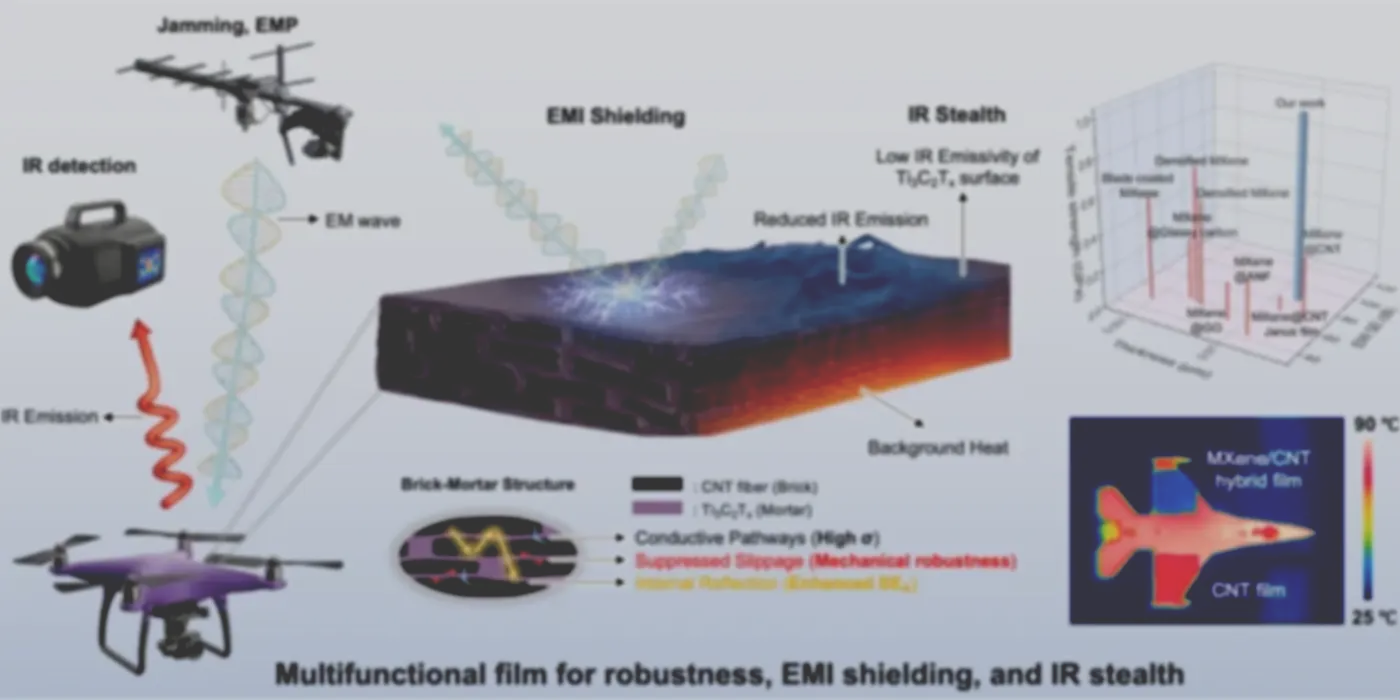
Researchers have developed a composite film that combines electromagnetic interference shielding, infrared stealth, and high mechanical strength using carbon nanotube fibers and MXene.
Researchers have developed a composite film that combines electromagnetic interference shielding, infrared stealth, and high mechanical strength using carbon nanotube fibers and MXene.


There are major differences in the risk profile and characteristics of female patients treated for acute heart failure. Female patients are underrepresented in management trials on Heart Failure. According to data from the Euro Heart Survey on acute Heart Failure 2004-2005 in Europe, however, medical treatment has improved.
Differencies in gender profile in acute heart failure
Female patients ( m 75 years) are on average 6 years older than male subjects. They represent about 40 – 50% of all acute heart failure hospitalizations. Smoking as risk factor is present only in 15.7% of females compared to 60% in male subjects. Therefore COPD was reported in only 15% of females versus 22% of male subjects.
Using a new “genome-scanning” method, a team of scientists has identified the first robust link between genes and stature in humans. A single letter change in a gene called HMGA2 enables people who carry it to gain as much as a centimeter in height. The work provides insights into how genes hardwire growth in humans and suggests that finding additional height-related genes may be feasible.
It became clear nearly a century ago that many genes likely influence how tall a person grows, though little progress, if any, has followed in defining the myriad genes. Now an international research team brings light to this age-old question by pinpointing a genetic variant associated with human height — the first consistent genetic link to be reported.

Voyage to the bottom of the sea, or simply look along the bottom of a clear stream and you may spy lobsters or crayfish waving their antennae. Look closer, and you will see them feeling around with their legs and flicking their antennules – the small, paired sets of miniature feelers at the top of their heads between the long antennae.
Both are used for sensing the environment. The long antennae are used for getting a physical feel of an area, such as the contours of a crevice. The smaller antennules are there to both help the creature smell for food or mates or dangerous predators and also to sense motion in the water that also could indicate the presence of food, a fling or danger.
How do adult stem cells protect themselves from accumulating genetic mutations that can lead to cancer?
For more than three decades, many scientists have argued that the "immortal strand hypothesis" - which states that adult stem cells segregate their DNA in a non-random manner during cell division -- explains it. And several recent reports have presented evidence backing the idea.
But now University of Michigan stem cell researcher Sean Morrison and his colleagues say they have dealt a mortal blow to the immortal strand, at least as far as blood-forming stem cells are concerned.
A University of Leicester research team is working on a new technique for growing nanoparticles which could have extraordinary implications in electronics, medicine, the measurement of atmospheric air and the cleansing of car exhausts.
Dr Andrew Ellis and Dr Shengfu Yang, both of the University’s Department of Chemistry, have discovered a niche way of making nanoparticles that cannot be formed in any other way.
Working with Professor Chris Binns and Dr Klaus von Haeften in the Department of Physics and Astronomy, they are developing a technique involving the use of helium nanodroplets.

For the first time, scientists have extracted human DNA from ancient artifacts. The work potentially opens up a new universe of sources for ancient genetic material, which is used to map human migrations in prehistoric times.
Before this, archaeologists could only get ancient DNA from relics of the human body itself, including prehistoric teeth, bones, fossilized feces, or — rarely — preserved flesh. Such sources of DNA are hard to find, poorly preserved, or unavailable because of cultural and legal barriers.
By contrast, the genetic material used in the Harvard study came from two types of artifacts — 800 to 2,400 years old — that are found by the hundreds at archaeological sites in the American Southwest.
A new study authored by Tore Nielsen, PhD, of the Sleep Research Centre at the Hôpital du Sacré-Cœur de Montréal in Montréal, Québec, Canada, found that expectant mothers had their dream content impact impacted and it wasn't always good.
Maternal responsibility and concern led to anxiety in the mother that often spilled over into wakefulness. These kinds of dreams were also accompanied by complex behaviors in new moms such as motor activity, speaking and expressing emotion.
Combining radiation therapy with a drug that helps destroy blood vessels nourishing malignant tumors has been shown in mice to be significantly more effective in treating lung cancer than either approach alone, researchers at UT Southwestern Medical Center have found.
The study, involving human lung-cancer cells implanted in mice, appears in the Sept. 1 issue of Clinical Cancer Research.
In the study, Dr. Philip Thorpe, professor of pharmacology at UT Southwestern, and his colleagues found that radiation generates a chemical reaction in the membranes of endothelial cells, which line the blood vessels that feed tumors. The reaction causes membrane components called anionic phospholipids to flip inside out, exposing them. In normal blood vessels, they face the interior of the cell.
Studying the DNA of 889 people, gene hunters at the Mayo Clinic and H. Lee Moffitt Cancer Centers have identified a region on chromosome 5p that is significantly associated with dense breast tissue, a known risk factor for breast cancer. The findings, published in the September 1 issue of Cancer Research, a publication of the American Association for Cancer Research, suggest that genes which influence breast density could serve as a predictive marker for disease and provide a biological target for agents that may reduce breast cancer risk by reducing breast density.

Scientists are researching new ways of harnessing the sun’s rays which could eventually make it cheaper for people to use solar energy to power their homes.
The experts at Durham University are developing light-absorbing materials for use in the production of thin-layer solar photovoltaic (PV) cells which are used to convert light energy into electricity.
The four-year project involves experiments on a range of different materials that would be less expensive and more sustainable to use in the manufacturing of solar panels.

By mapping a specialized sensory organ that the malaria mosquito uses to zero in on its human prey, an international team of researchers has taken an important step toward developing new and improved repellants and attractants that can be used to reduce the threat of malaria, generally considered the most prevalent life-threatening disease in the world.
The sensory organ is the maxillary palp. It is one of three structures extending from the mosquito’s head that together provide it with its sense of smell and taste.

A team of scientists led by young Croatian evolutionary geneticist Tomislav Domazet-Lošo from Ruder Boškovic Institute (RBI) in Zagreb, Croatia, developed a novel methodological approach in evolutionary studies.
Using the method they named 'genomic phylostratigraphy', its authors shed new and unexpected light on some of the long standing macroevolutionary issues, which have been puzzling evolutionary biologists since Darwin.
The only direct method of research in evolutionary history involves analyzing the fossil remains of once living organisms, excavated in various localities throughout of the world. However, that approach often cannot provide the full evolutionary pathway of some species, as it requires uncovering of many fossils from various stages of its evolutionary history.