Carbon Nanotube Has EMI And Hides Heat
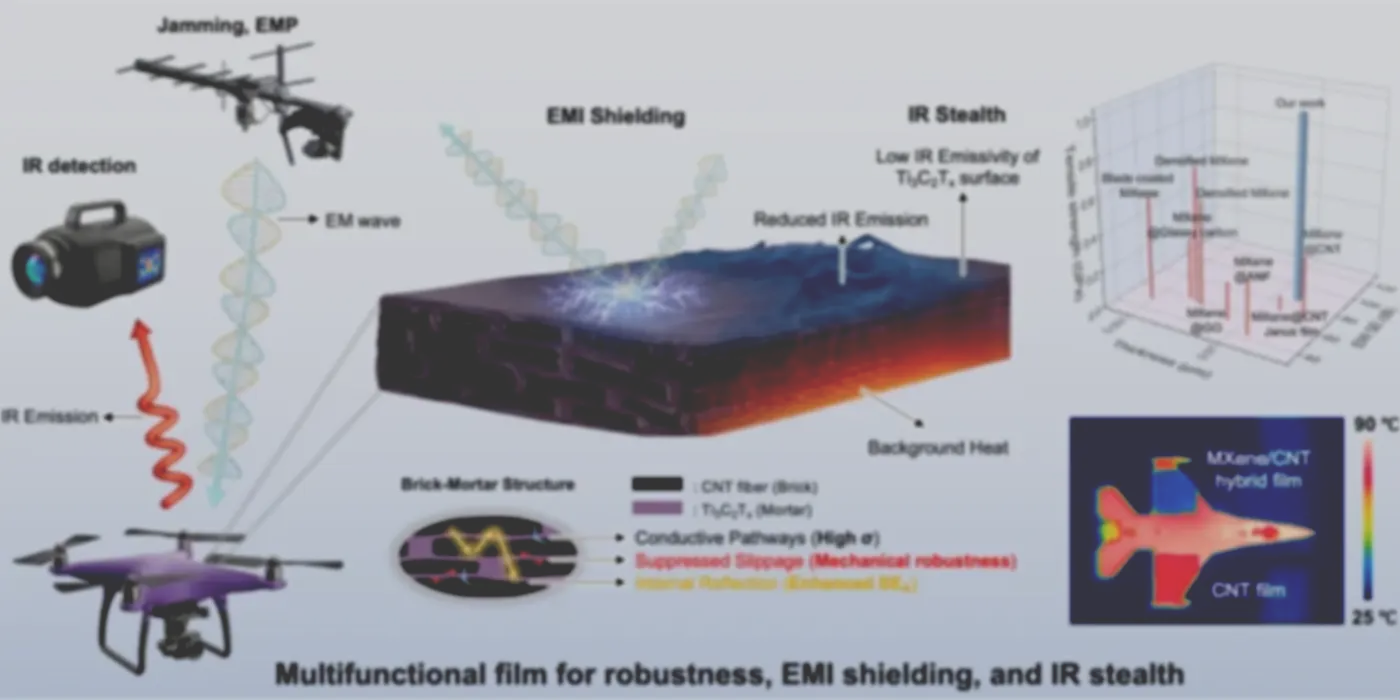
Researchers have developed a composite film that combines electromagnetic interference shielding, infrared stealth, and high mechanical strength using carbon nanotube fibers and MXene.
Researchers have developed a composite film that combines electromagnetic interference shielding, infrared stealth, and high mechanical strength using carbon nanotube fibers and MXene.


25 million people are living with schizophrenia in low and middle income countries and over two-thirds of them are not receiving any treatment.
Dr Vikram Patel discusses the crucial role that community health workers can play. Dr Saaed Farooq argues that the huge burden of untreated schizophrenia could be tackled by providing free antipsychotic medications and supervising patients while they take their treatment (akin to the way in which patients with TB are supervised when they take their antituberculous medications). Dr R Thara discusses the crucial importance of tackling the stigma of schizophrenia by offering proven therapies.
In the first large-scale epidemiological study evaluating elevator-related injuries in children throughout the United States, researchers report that children up to two years of age had the greatest percentage (28.6%) of elevator-related injuries.
“What really surprised us was the number of infants with head injuries in our study. As the elevator doors closed mothers may not realize the vulnerability of babies in strollers or in their arms,” said Joseph O’Neil, M.D., M.P.H., assistant professor of clinical pediatrics at the Indiana University School of Medicine and lead author of the study.
A University College London researcher says stereotypes can be a good thing for autistic kids. Autistic children are unable to understand individuals and why they do things but are better with understanding groups. Stereotyping was able to help them learn, for example, if a woman were used as an example of someone who likes to bake/
Professor Uta Frith of the UCL Institute of Cognitive Neuroscience said: “One of the main problems experienced by autistic children is that they are unable to understand why others are doing certain things: what motivates them or what they are thinking and feeling. Most of us have this ability, known as ‘Theory of Mind’.
The discovery of small perforated sea shells, in the Cave of Pigeons in Taforalt, eastern Morocco, has shown that the use of bead adornments in North Africa is older than thought. Dating from 82 000 years ago, the beads are thought to be the oldest in the world.
As adornments, together with art, burial and the use of pigments, are considered to be among the most conclusive signs of the acquisition of symbolic thought and of modern cognitive abilities, this study is leading researchers to question their ideas about the origins of modern humans.
An all-electric aircraft will be more efficient, produce fewer greenhouse emissions and be quieter but current technology cannot be used because an electric motor using conventional magnets can weigh up to five times as much as conventional jet engine and not be as fuel efficient.
Superconducting motors are the answer to greenhouse emissions from plane flights, according Philippe Masson and Cesar Luongo from Florida State University, Gerald Brown at NASA and Danielle Soban at Georgia Institute of Technology. They explain that because superconductors lose no energy through electrical resistance, they could be very efficient components for a new type of aircraft propulsion.

Genes account for only 2.5 percent of DNA in the human genetic blueprint, yet diseases can result not only from mutant genes but from mutations of other DNA that controls genes.
Looking at fossils of long-dead creatures, it's easy to understand how anthropologists determine the way an animal looked. But how do they determine how one moved?
Alan Walker,Professor of Anthropology and Biology at Penn State University, and a team of researchers studied 91 separate primate species, including all taxonomic families. The study also included 119 additional species, most of which are mammals ranging in size from mouse to elephant, that habitually move in diverse ways in varied environments.
Their goal was to document the relationship of the dimensions of the semicircular canals to locomotion. These structures are filled with a fluid, which moves within the canals when the animal moves.
A gene responsible for the single most common cause of hearing loss among white adults, otosclerosis, has been identified for the first time. Ms Melissa Thys, from the Department of Medical Genetics, University of Antwerp, Belgium, said that this finding may be a step towards new treatments for otosclerosis, which affects approximately 1 in 250 people.
Otosclerosis is a multifactorial disease, caused by an interaction of genetic and environmental factors. The outcome is a progressive hearing loss as the growing bone in the middle ear interrupts the sound waves passing to the inner ear. While the causative factors remain unknown, now one of the genetic components has been identified, Ms Thys told the conference.
The long-running controversy about the origins of the Etruscan people appears to be very close to being settled once and for all.
Professor Alberto Piazza, from the University of Turin, Italy, will say that there is overwhelming evidence that the Etruscans, whose brilliant civilisation flourished 3000 years ago in what is now Tuscany, were settlers from old Anatolia (now in southern Turkey).
Etruscan culture was very advanced and quite different from other known Italian cultures that flourished at the same time, and highly influential in the development of Roman civilisation. Its origins have been debated by archaeologists, historians and linguists since time immemorial.
Climate models are reliable tools that help researchers better understand the observed record of ocean warming and variability.
That's the finding of a group of Livermore scientists, who in collaboration with colleagues at Scripps Institution of Oceanography, had earlier established that climate models can replicate the ocean warming observed during the latter half of the 20th century, and that most of this recent warming is caused by human activities.
The observational record also shows substantial variability in ocean heat content on interannual-to-decadal time scales. The new research by Livermore scientists demonstrates that climate models represent this variability much more realistically than previously believed.
Many of the areas of the human genome previously thought to be deserts are in fact teeming with life.
Most known human genes in the genome map are still incompletely annotated, says Professor Alexandre Reymond, from the Centre for Integrative Genomics, University of Lausanne, Switzerland and the Department of Genetic Medicine, University of Geneva, Geneva, Switzerland.
“We found that the vast majority of the protein coding genes we studied utilised often in a tissue-specific manner previously unknown set of exons [the regions of DNA within a gene that are transcribed to messenger RNA] outside the current boundaries of the annotated genes ”, according to Professor Reymond.
Researchers at Rensselaer Polytechnic Institute and the University of Akron have created synthetic “gecko tape” with four times the sticking power of the real thing.
The researchers describe a process for making polymer surfaces covered with carbon nanotube hairs. The nanotubes imitate the thousands of microscopic hairs on a gecko’s footpad, which form weak bonds with whatever surface the creature touches, allowing it to “unstick” itself simply by shifting its foot.
For the first time, the team has developed a prototype flexible patch that can stick and unstick repeatedly with properties better than the natural gecko foot. They fashioned their material into an adhesive tape that can be used on a wide variety of surfaces, including Teflon.