Carbon Nanotube Has EMI And Hides Heat
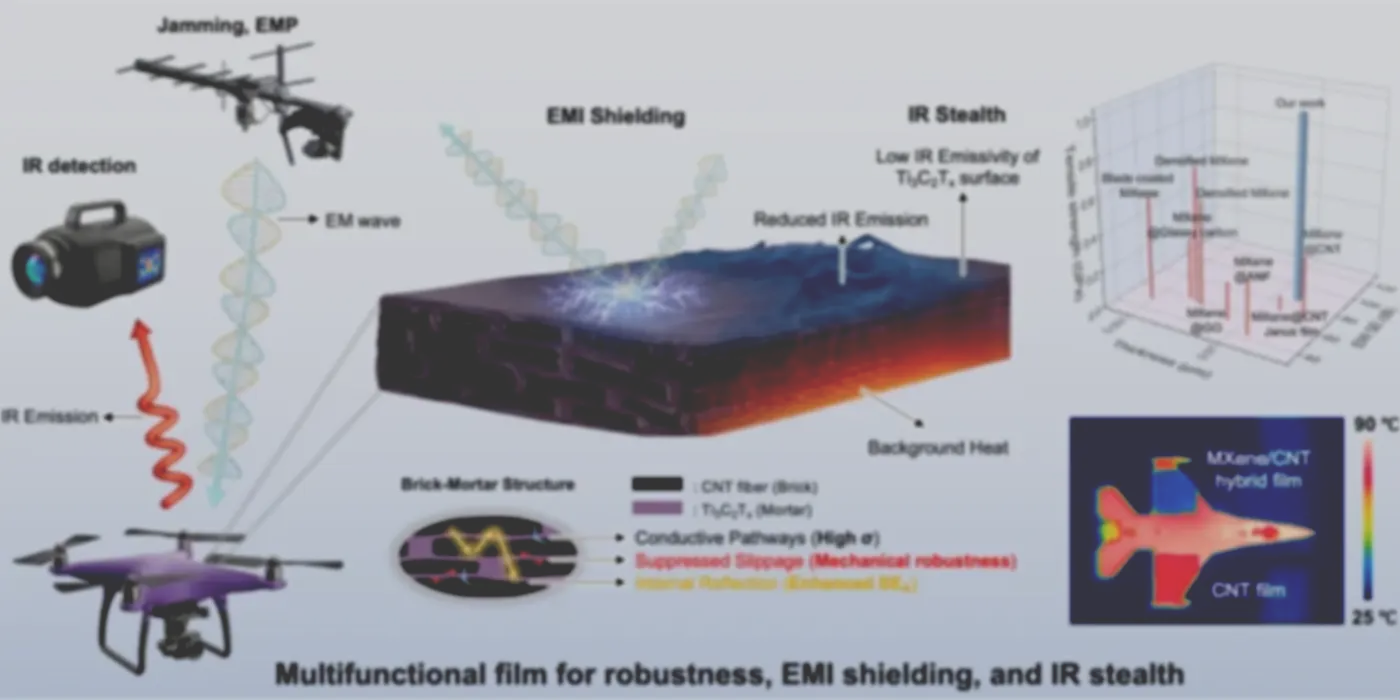
Researchers have developed a composite film that combines electromagnetic interference shielding, infrared stealth, and high mechanical strength using carbon nanotube fibers and MXene.
Researchers have developed a composite film that combines electromagnetic interference shielding, infrared stealth, and high mechanical strength using carbon nanotube fibers and MXene.


Researchers at the University of Edinburgh have shown that hormone therapy can extend life in ovarian cancer patients, giving women a new alternative to chemotherapy.
The study has proved for the first time that the targeted use of an anti-oestrogen drug could prolong the life of some patients by up to three years, and delay the use of chemotherapy in others.
Yes, you secretly like giving your money to the government. University of Oregon scientists have found that doing things like donating money to charity or even paying your taxes can give you the same sort of satisfaction you derive from feeding your own hunger pangs.
A cognitive psychologist and two economists gave 19 female participants $100 and then scanned their brains with functional magnetic resonance imaging (fMRI) as they watched their money go to the food bank through mandatory taxation, and as they made choices about whether to give more money voluntarily or keep it for themselves.

Subjecting mice to repeated emotional stress, the kind we experience in everyday life, may contribute to the accumulation of neurofibrillary tangles, one of the hallmarks of Alzheimer’s disease, report researchers at the Salk Institute for Biological Studies. While aging is still the greatest risk factor for Alzheimer’s disease, a number of studies have pointed to stress as a contributing factor.
Top left: In unstressed animals the hippocampus, which is involved in the formation of memories and learning, is free of phosphorylated tau.
It may sound counterintuitive to use a microbial protein to improve water quality but some bacteria are doing just that to protect themselves from potentially toxic nanoparticles in their own environments, and clean up crews of the future could potentially do the same thing on a larger scale.

NASA's Hubble Space Telescope has teamed up with the W.M. Keck Observatory to precisely measure the mass of Eris, the largest member of a new class of dwarf planets in our solar system. Eris is 1.27 times the mass of Pluto, formerly the largest member of the Kuiper Belt of icy objects beyond Neptune.
Some advice my dad gave me: "If your wife says she never dreams about sex with another man, she's lying. If she says she never dreams about sex with another woman, she's lying then too."
He may have been on to something. It turns out everyone, men and women alike, dream about sex.
In a detailed study that served to investigate the actual nature and content of sexual dreams across a large sample of dream reports from men and women, approximately eight percent of everyday dream reports from both genders contain some form of sexual-related activity.

Electrically charged gas in the magnetosphere of Saturn suggests volcanic activity on two of its moons. The direction of the ejected electrons points back towards Tethys and Dione. Previously it had been thought only only Enceladus was an active world.
CLICK ABOVE FOR FULL SIZE. Plumes of icy material extend above the southern polar region of Saturn's moon Enceladus, as imaged by the Cassini spacecraft in January 2005. The monochrome view is presented along with a colour-coded image on the right. The view in this image is perpendicular to the tiger stripe fractures that straddle the south pole.
"Innovative" science classes - new ways of teaching that are interactive, non-boring and therefore in defiance of every method that made America the home of great scientists for 150 years, are all the rage. The goal is to get more women in science, more minorities in science, more everyone in science.
It may not be working, and it may even make things worse, says a study the University of Colorado at Boulder. The researchers looked at interactive teaching methods, which can include online homework systems, help-room sessions, student discussions, and other methods that were not part of traditional science classes in the US.
The long supposed connection between mind and music has been further demonstrated by an international collaboration of physicists led by Simone Bianco and Paolo Grigolini at the Center for Nonlinear Science at the University of North Texas. A statistical analysis reveals a remarkable similarity between the distributions produced by music compositions and brain activity.
The consumption of sweetened soft drinks by children has more than doubled between 1965 and 1996 but few studies have been able to investigate the link between diet and the body’s energy balance control systems in early life. Now scientists at Aberdeen’s Rowett Research Institute have been able to model how the young body responds to overeating.
Biologists at the University of California, Riverside have identified the genes, and determined the DNA sequences, for two key proteins in the "dragline silk" of the black widow spider - an advance that may lead to a variety of new materials for industrial, medical and military uses.
Researchers at the University of Pennsylvania have created the first three-dimensional optical images of human breast cancer in patients based on tissue fluorescence.
Fluorescence diffuse optical tomography, or FDOT, relies on the presence of fluorophore molecules in tissue that re-radiate fluorescent light after illumination by excitation light of a different color.
The reconstructed images demonstrated significant tumor contrast compared to typical endogenous optical contrast in breast. Tumor-to-normal tissue contrast based on FDOT with the fluorophore Indocyanine Green, or ICG, was two-to-four-fold higher than contrast based on endogenous contrasts such as hemoglobin and scattering parameters obtained with traditional diffuse optical tomography, or DOT.