Carbon Nanotube Has EMI And Hides Heat
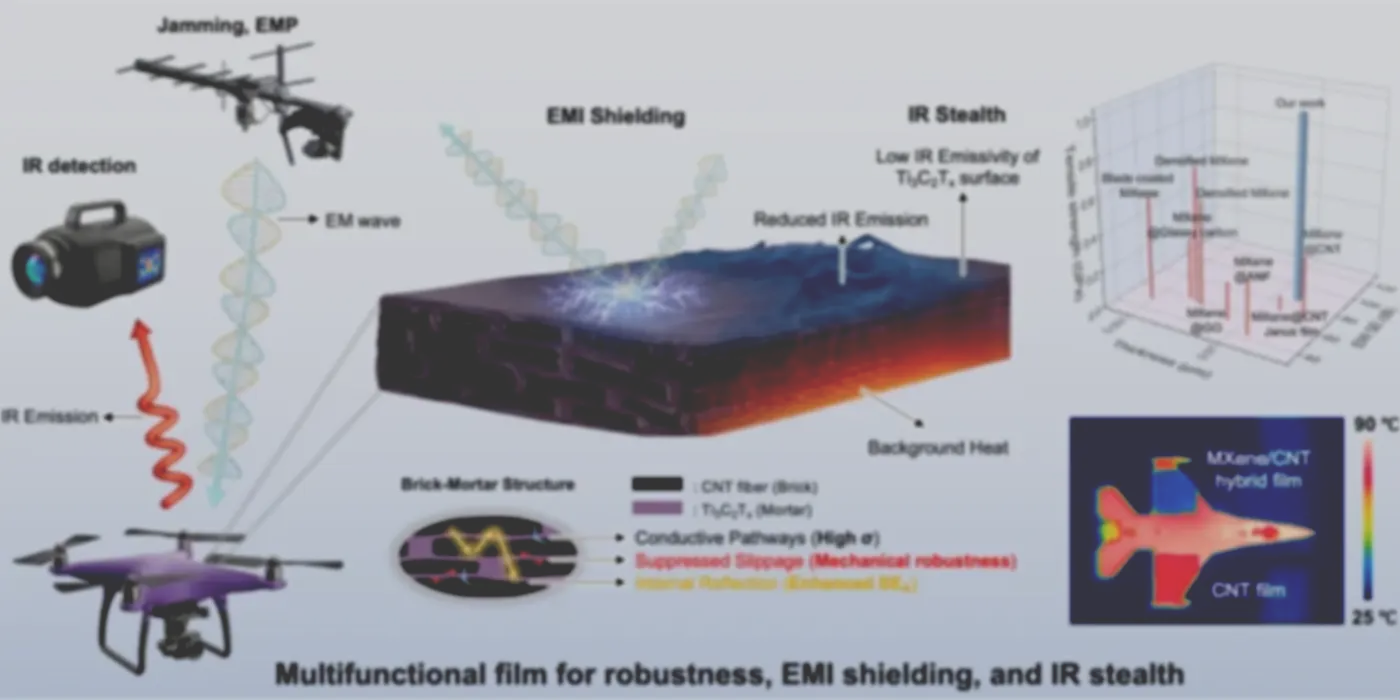
Researchers have developed a composite film that combines electromagnetic interference shielding, infrared stealth, and high mechanical strength using carbon nanotube fibers and MXene.
Researchers have developed a composite film that combines electromagnetic interference shielding, infrared stealth, and high mechanical strength using carbon nanotube fibers and MXene.


Using a robotic telescope at the ESO La Silla Observatory, astronomers have for the first time measured the velocity of the explosions known as gamma-ray bursts. The material is travelling at the extraordinary speed of more than 99.999% of the velocity of light, the maximum speed limit in the Universe.
"With the development of fast-slewing ground-based telescopes such as the 0.6-m REM telescope at ESO La Silla, we can now study in great detail the very first moments following these cosmic catastrophes," says Emilio Molinari, leader of the team that made the discovery.

Quantum entanglement is one of the many non-intuitive features of quantum mechanics. If two photons of light are allowed to properly interact with one another, they can become entangled. One can even directly create pairs of entangled photons using a non-linear process called SPDC (Spontaneous Parametric Down Conversion).
Those two entangled photons can then be separated but as soon as one of them interacts with a third particle, the other photon of the pair will change its quantum state instantaneously.

Some call it the eighth wonder of world. Others say it's the next Great Wall of China.
Upon completion in 2009, the Three Gorges Dam along China’s Yangtze River will be the world's largest hydroelectric power generator and one of the few man-made structures so enormous that it's actually visible to the naked eye from space.

The "snows" of Africa's Mount Kilimanjaro inspired the title of an iconic American short story, but now its dwindling icecap is being cited as proof for human-induced global warming.
However, two researchers writing in the July-August edition of American Scientist magazine say global warming has nothing to do with the decline of Kilimanjaro's ice, and using the mountain in northern Tanzania as a "poster child" for climate change is simply inaccurate.
CLICK ABOVE FOR FULL SIZE.

A remarkable new long-necked, gliding reptile discovered in 220 million-year old sediments of eastern north America has been discovered, scientists report. Mecistotrachelos apeoros (meaning "soaring, long-necked") is based on two fossils excavated at the Solite Quarry that straddles the Virginia-North Carolina state line.
CLICK ABOVE FOR FULL SIZE.Image of Mecistotrachelos apeoros. Restoration artwork courtesy of Karen Carr.
Primates with severe Parkinson’s disease were able to walk, move, and eat better, and had diminished tremors after being injected with human neural stem cells, a research team from Yale, Harvard, the University of Colorado, and the Burnham Institute report today.
These results are promising, but it will be years before it is known whether a similar procedure would have therapeutic value for humans, said the lead author, D. Eugene Redmond Jr., professor of psychiatry and neurosurgery at Yale.
Photo of a new dopamine neuron after injection. The red is a progeny of the human stem cell. Credit: Yale
Seen thundering across the landscape during an aerial survey, more than 1.3 million white-eared kob, tiang (African antelope), and mongalla gazelle are thriving in Southern Sudan, despite all odds. An estimated 8,000 elephants, concentrated mainly in the Sudd, the largest freshwater wetland in Africa, have also been observed.
Despite the war, some species of wildlife in Southern Sudan, last surveyed more than 25 years ago, have not only survived but have thrived east of the Nile River in numbers that rival those of the Serengeti.
Photo by P.Elkan ©2007 WCS/National Geographic Oryx, Boma National Park

A University of Warwick physicist has uncovered how female cells are able to choose randomly between their two X chromosomes and why that choice is always lucky.
Human males have both a X and a Y chromosome but females have two X chromosomes. This means that in an early stage in the development of a woman’s fertilised egg the cells need to silence one of those two X chromosomes. This process is crucial to survival and problems with the process are related to serious genetic diseases.
By precisely controlling billions of individual electrons every second, they hope to develop new computing systems and increase the security of digital communication.
Much like the conveyor belt in a production plant, NPL’s electron surf machine delivers electrons one by one in a reliable steady stream at a rate of more than a billion a second. Whilst small streams of electrons can already be produced, until now no one has found a way to deliver them in a controlled fashion at such a high rate.
A large study has found that black Medicare patients are less likely than white patients to receive blood vessel opening procedures such as angioplasty following a heart attack, whether they are admitted to hospitals that provide or do not provide these procedures, but also experience higher mortality rates at 1 year, according to a study in the June 13 issue of JAMA.
Sleep disorders are common, costly and treatable, but often remain undiagnosed and untreated. Unrecognized sleep disorders adversely affect personal health and may lead to chronic sleep loss, which, in turn, increases the risk of accidents and injuries.
These problems are exacerbated in shift workers such as police officers, who may experience chronic sleep loss due to their schedules. A sampling of police officers shows a high incidence of sleep disorders among the members of this profession, according to a research abstract presented at SLEEP 2007, the 21st Annual Meeting of the Associated Professional Sleep Societies (APSS).
he first and only over-the-counter product for weight loss approved by the Food and Drug Administration will be available Friday, June 15.
Orlistat, known by the brand name Alli, works by decreasing the amount of fat absorbed by the body. It is the OTC version of Xenical, a prescription weight loss pill. The good news: Orlistat has been tested and the prescription version has been used since 1999.