Carbon Nanotube Has EMI And Hides Heat
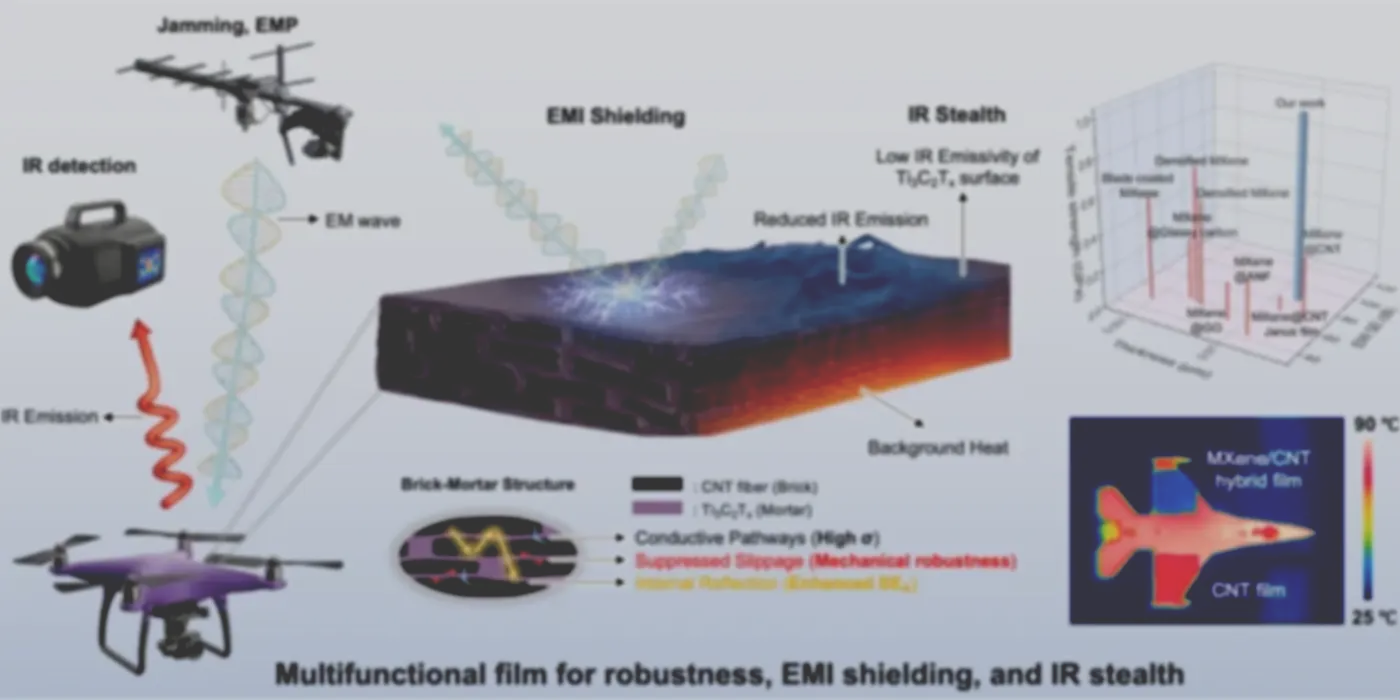
Researchers have developed a composite film that combines electromagnetic interference shielding, infrared stealth, and high mechanical strength using carbon nanotube fibers and MXene.
Researchers have developed a composite film that combines electromagnetic interference shielding, infrared stealth, and high mechanical strength using carbon nanotube fibers and MXene.


Using an ocean of data, sophisticated mathematical models and supercomputing resources, researchers at the Department of Energy’s Oak Ridge National Laboratory are putting climate models to the test with particular focus on weather extremes.
Ultimately, the new methodology developed by Auroop Ganguly and colleagues could help determine to what extent there is a connection between human activity and climate change.

A chemist at the Vienna University of Technology (TU Vienna) is looking for unusual structures in snake venom and plans to prove their medical effectiveness.
What in the 1950s led to the development of Captopril, a drug for the treatment of hypertension, is being continued in an interesting new chapter with the analysis of venom from South American pit vipers and tropical rattlesnakes.

Scientists at the University of Portsmouth are using the latest breakthroughs in artificial intelligence to develop the world's first thinking car wheel.
The 'smart' wheel is being developed under a £200K Department of Trade and Industry-funded Knowledge Transfer Partnership (KTP) project with Hampshire-based company PML Flightlink Ltd.
A University of Portsmouth Scientist works on the wheel. Credit: Russell Sach
The era in which standard serology tests divided populations into two basic blood groups, ABO and Rh, may soon be a thing of the past. Nearly a century after blood group analysis began, new technologies for genotyping of blood offer a far more accurate picture of blood groups, experts reported at the 12th Congress of the European Hematology Association.
Primates with severe Parkinson’s disease were able to walk, move, and eat better, and had diminished tremors after being injected with human neural stem cells, a research team from Yale, Harvard, the University of Colorado, and the Burnham Institute report today in Proceedings of the National Academy of Sciences.
These results are promising, but it will be years before it is known whether a similar procedure would have therapeutic value for humans, said the lead author, D. Eugene Redmond Jr., professor of psychiatry and neurosurgery at Yale.
While solar power and hybrid cars have become popular symbols of green technology, Stanford researchers are exploring another path for cutting emissions of carbon dioxide, the leading greenhouse gas that causes global warming.
Carbon capture and storage, also called carbon sequestration, traps carbon dioxide after it is produced and injects it underground. The gas never enters the atmosphere. The practice could transform heavy carbon spewers, such as coal power plants, into relatively clean machines with regard to global warming.
The vocal learning process in the zebra finch offers a model system to study the neural and behavioral mechanisms by which humans learn to produce sounds. Songbirds such as zebra finches have specialized areas of their brains devoted to communication. That is why they have been used as animal models to study speech disorders, such as stuttering. It is estimated that more than 3 million Americans stutter.

Want to play the ultimate version of The X-Men's "Wolverine" this Halloween? You'll need self-healing skin after those claws come out. Researchers at the University of Illinois are here to help. They have invented the next generation of self-healing materials, which mimics human skin by healing itself time after time. The new materials rely upon embedded, three-dimensional microvascular networks that emulate biological circulatory systems.
Now they just need to invent that Adamantium exo-skeleton. Copyright Marvel Comics Group

Rome's Mayor Walter Veltroni will officiate at the first public viewing of "Rome Reborn 1.0," a 10-year project based at the University of Virginia and begun at UCLA to use advanced technology to digitally rebuild ancient Rome.
“Rome Reborn 1.0" shows almost the entire city within the 13-mile-long Aurelian Walls as it appeared in A.D. 320. At that time Rome was the multicultural capital of the western world and had reached the peak of its development with an estimated population of one million.
Digital video of the Colosseum. Copyright University of Virgina 2007
An international research team has discovered a gene that, when mutated, causes one of the most common forms of inherited blindness in babies. Scientists at the University of Leeds, working in collaboration with experts from other centres around the world, identified the gene, which is essential to photoreceptors in the eye, the cells that "see" light.
A human cell contains an enormous 1.8 metres of DNA partitioned into 46 chromosomes. These have to be copied and distributed equally into two daughter cells at every division.
Condensation, the shortening of chromosomes, allows the cell to handle such huge amounts of genetic material during cell division and helps preventing fatal defects in chromosome separation. Now researchers from the European Molecular Biology Laboratory (EMBL) for the first time tracked chromosome condensation in mammalian cells over the entire course of cell division.
More time at the beach? It's hard to tell, but research in the British Journal of Dermatology says there is a correlation between skin cancer and income.
Skin cancer rates are up, based on their studies of trends in Northern Ireland. Analzying official cancer statistics for nearly 23,000 patients over a 12-year period, they reported a 20 percent increase in patients and a 62 percent increase in skin cancer samples processed by pathology laboratories.
Being wealthy didn't protect anyone. Women living in affluent areas were 29 percent more likely than people living in disadvantaged areas to suffer from basal cell carcinoma and nearly two and a half times more likely to suffer from malignant melanoma.
Men displayed a similar pattern.