You Feel Colder As You Age: The Science Reason Why
Older people report feeling colder, enough that it is clearly happening, but why has been a mystery. Until now.
Older people report feeling colder, enough that it is clearly happening, but why has been a mystery. Until now.


Have you ever been trying to solve a Sudoku puzzle and been gripped by a sinking feeling that maybe you were stuck with a lemon? That maybe the puzzle you are struggling with actually has no solution at all and, if you do find a solution, how can you be sure it's the only one? What if half an hour ago you had written 5 instead of 3---would you then have gone down a path to a completely different solution?
The authors of a new study use tools from the branch of mathematics called graph theory to systematically analyze Sudoku puzzles.

The Milky Way's total mass is about 100 billion solar masses - enormous to us but average among galaxies. It spirals around a black hole that is about three million solar masses, say cosmologists.
Imagine it meeting an identical twin. Were they to merge they would produce a galaxy that's even greater. Cosmologists think that's how galaxies grow; through a complex process of continuous mergers.
CLICK ABOVE FOR FULL SIZE. Composite black hole. Credit: Standford.
Much cooler than a flaming Optimus Prime, more practical than Big Guy and Rusty The Boy Robot - they're rescue robots, and they're here to help.
NIST engineers are organizing the fourth in a series of Response Robot Evaluation Exercises for urban search and rescue (US&R) responders to be held on June 18-22, 2007, at Texas A&M’s “Disaster City” training facility in College Station, Texas.
An urban search and rescue robot moves across a rubble pile in a recent NIST/DHS exercise. The next rescue robot exercise will be held on June 18-22, 2007, at Texas A&M's "Disaster City" training facility. Credit: NIST
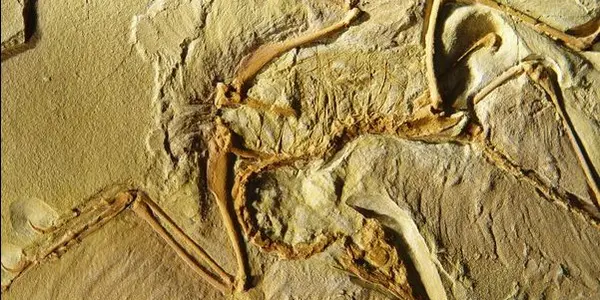
The peculiar pose of many fossilized dinosaurs, with wide-open mouth, head thrown back and recurved tail, likely results from the agonized death throes typical of brain damage and asphyxiation, according to two paleontologists.
A classic example of the posture, which has puzzled paleontologists for ages, is the 150 million-year-old Archaeopteryx, the first-known example of a feathered dinosaur and the proposed link between dinosaurs and present-day birds.
In the internet age, when 120,000,000 smart people on Digg can see an article about your technology, it takes some real courage to use the term "unbreakable", but the guys at NIST are doing just that.
They say they have built a prototype high-speed quantum key distribution (QKD) system that can perform a theoretically unbreakable “one-time pad” encryption, transmission and decryption of a video signal in real-time over a distance of at least 10 kilometers.
Detection stage of the NIST prototype quantum key distribution system: Photons are "up-converted" from 1310 to 710 nm by one of the two NIST-designed converters at right, then sent to one of two commercial silicon avalanche photo diode

Before life emerged on earth, either a primitive kind of metabolism or an RNA-like duplicating machinery must have set the stage – so experts believe. But what preceded these pre-life steps?
A pair of UCSF scientists has developed a model explaining how simple chemical and physical processes may have laid the foundation for life. Like all useful models, theirs can be tested, and they describe how this can be done. Their model is based on simple, well-known chemical and physical laws.
Key milk nutrients, calcium and vitamin D, may do more than just help keep your bones strong. Increasing intake of calcium and vitamin D could reduce the risk for cancer in women by at least 60 percent, according to a new study published in the American Journal of Clinical Nutrition. (1)
Johns Hopkins researchers have found a way to directly observe cell migration -- in real time and in living tissue. The scientists say their advance could lead to strategies for controlling both normal growth and the spread of cancer, processes that depend on the programmed, organized movement of cells across space.
PG-13 films have lots of “happy violence,” say UCLA researchers. Borrowing from the late communications theorist George Gerbner, happy violence is that which is “cool, swift, and painless.” PG-13 films don’t consider the consequences of violent acts, such as injury, death, and the shattered lives of the people involved.
Any why this matters, says Theresa Webb, a researcher in the department of epidemiology and the Southern California Injury Prevention Research Center at UCLA's School of Public Health, is simple: youth violence is a commonplace occurrence in American society. Homicide is the second leading cause of death among 15- to 24-year-olds overall.
By uncovering how one breast cancer drug protects the heart and another does not, Duke University Medical Center researchers believe they may have opened up a new way to screen drugs for possible heart-related side effects and to develop new drugs.
The Duke researches compared the actions of two breast cancer drugs in experiments involving human cells and rats. The drugs in question were the older drug trastuzumab, whose trade name is Herceptin, and the newer drug lapatinib, whose trade name is Tykerb.
Breast cancer survivors who eat a healthy diet and exercise moderately can reduce their risk of dying from breast cancer by half, regardless of their weight, suggests a new longitudinal study from the Moores Cancer Center at the University of California, San Diego (UCSD).
Previous studies have looked at the impact of diet or physical activity on breast cancer survival, with mixed results. This study is the first to look at a combination of both in breast cancer.

It's long been thought that humans hunted woolly mammoths to extinction. Anthropogenic global hunting, as it were. Or that a cataclysmic event did the trick.
It may be neither of those and just simple genetics.
DNA lifted from the bones, teeth, and tusks of the extinct mammoths revealed a “genetic signature” of a range expansion after the last interglacial period. After the mammoths’ migration, the population apparently leveled off, and one of two lineages died out.
They don't think these guys did it any more