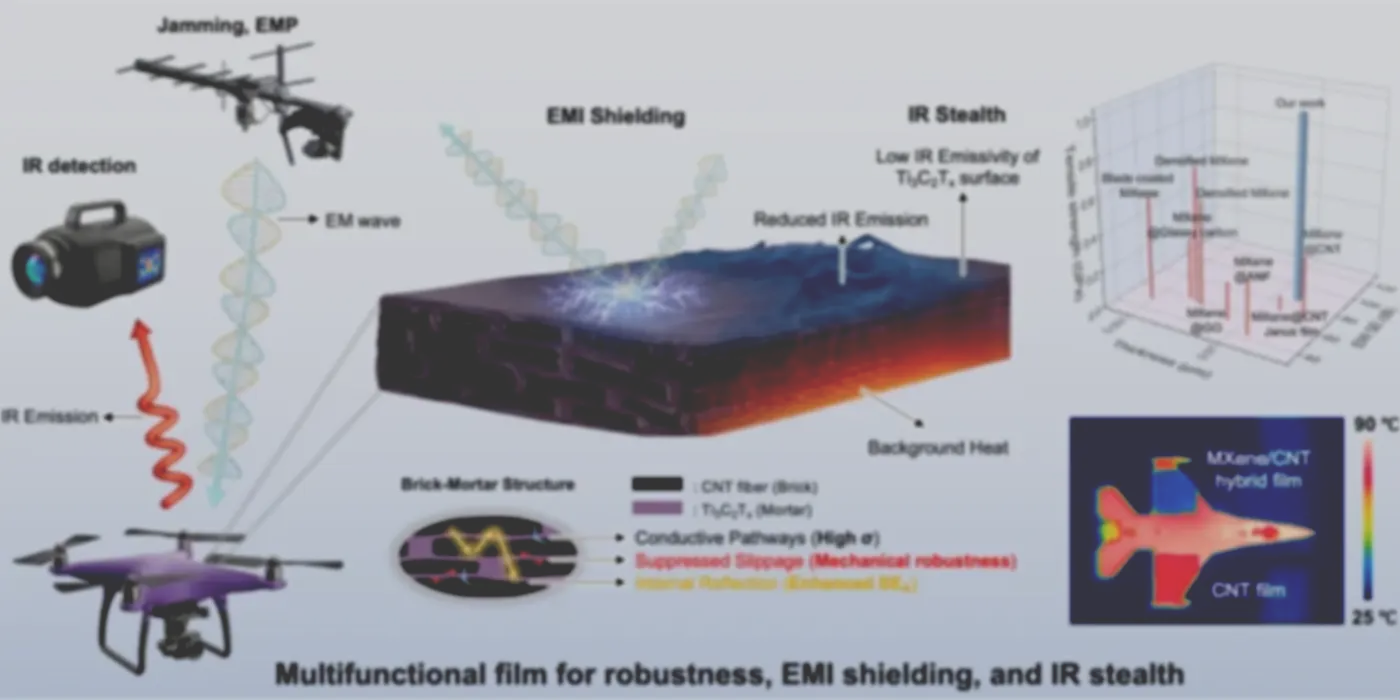
Carbon Nanotube Has EMI And Hides Heat
Researchers have developed a composite film that combines electromagnetic interference shielding, infrared stealth, and high mechanical strength using carbon nanotube fibers and MXene.
Researchers have developed a composite film that combines electromagnetic interference shielding, infrared stealth, and high mechanical strength using carbon nanotube fibers and MXene.

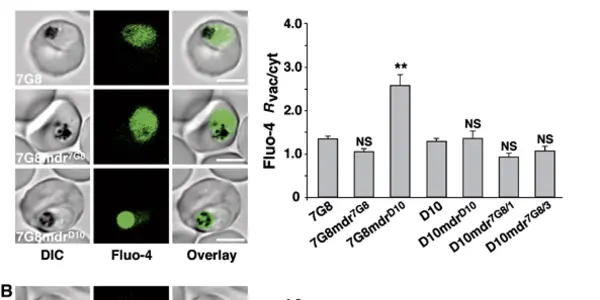
Researchers at Georgetown University Medical Center say they are moving closer to understanding why the most lethal form of human malaria has become resistant to drug treatment in the past three decades. They have been able to artificially construct, and then express in yeast, a protozoan gene that contributes to such resistance. And it was no small feat.
The gene they laboriously constructed over a two-year period is believed to be the largest synthetic one ever built, and it successfully produces large quantities of the encoded protein, whose function can now be easily studied.
European Molecular Biology Organization

A study comparing more genetic markers in the DNA of people with and without Alzheimer’s disease than ever before has enabled researchers to identify a common gene that appears to increase a person’s risk for developing Alzheimer’s disease.
The finding suggests that the gene — called GAB2 — modifies an individual’s risk when associated with other genes, including APOE4. The study results appear in the June 7 issue of the prestigious peer-reviewed journal, Neuron.
Talcum powder has been used for generations to soothe babies’ diaper rash and freshen women’s faces. But University of Florida researchers report the household product has an additional healing power: The ability to stunt cancer growth by cutting the flow of blood to metastatic lung tumors.
The study, published in the European Respiratory Journal in April, reveals that talc stimulates healthy cells to produce endostatin, a hormone considered the magic bullet for treating metastatic lung cancer. The UF researchers say talc is an exciting new therapeutic agent for a cancer largely considered incurable.
Nearly all of the 162 land-breeding frog species on Caribbean islands, including the coqui frogs of Puerto Rico, originated from a single frog species that rafted on a sea voyage from South America about 30-to-50-million years ago, according to DNA-sequence analyses led by a research group at Penn State.
Similarly, the scientists found that the Central American relatives of these Caribbean amphibians also arose from a single species that arrived by raft from South America.
A newly discovered interplay of cells in one of the brain's memory centers sheds light on how you recall your grocery list, where you laid your keys, and a host of important but fleeting daily tasks.
Scientists at Weill Cornell Medical College say their experiments with common goldfish are uncovering the secrets of a form of short-term recall known as "working memory."
Stem cell biology takes another exciting leap forward as scientists report that normal tissue cells can be reprogrammed to exhibit many of the properties that are characteristic of embryonic stem cells, including the ability to give rise to multiple cell types and contribute to the germline.
These findings provide strong support for the rationale that it may be possible to generate stem cells with nearly unlimited potential directly from a patient’s own cells, an idea that has significant implications for regenerative therapeutics.
Researchers at UCLA have successfully manipulated nanomaterials to create a new drug-delivery system that promises to solve the challenge of the poor water solubility of today’s most promising anticancer drugs and thereby increase their effectiveness.
The poor solubility of anticancer drugs is one of the major problems in cancer therapy because the drugs require the addition of solvents in order to be easily absorbed into cancer cells. Unfortunately, these solvents not only dilute the potency of the drugs but create toxicity as well.

According to years of research both in the test tube and, now, with real plants, a team of scientists reports that artificial chemicals in pesticides – through application or exposure to crops through runoff – disrupt natural nitrogen-fixing communications between crops and soil bacteria. The disruption results in lower yields or significantly delayed growth.
Alfalfa roots secrete chemical signals into soil to attract and recruit bacteria. These bacteria live in a plant's roots and provide a natural fertilizer source. Pictured is an alfalfa root with root hairs that have attracted rhizobia soil bacteria, which are engineered to appear in green fluorescence for easier visualization.
A University of Leicester researcher has proved that men are as interested in gossip as women-and that women are more interested in gossip about other women.
The postgraduate research project by Dr.
Scientists at the University of California, Santa Barbara have discovered significant clues to the evolutionary origins of the nervous system by studying the genome of a sea sponge, a member of a group considered to be among the most ancient of all animals.
Low levels of testosterone may increase the long-term risk of death in men over 50 years old, according to researchers with the Department of Family and Preventive Medicine at the University of California, San Diego School of Medicine.
"The new study is only the second report linking deficiency of this sex hormone with increased death from all causes, over time, and the first to do so in relatively healthy men who are living in the community," said Gail Laughlin, Ph.D., assistant professor and study author.
In 1976 a research cruise in the Gulf of Alaska recorded the sighting of "brown penguins."
How was it that birds that swim rather than fly and live almost exclusively in the Southern Hemisphere turned up deep in the Northern Hemisphere? Did they migrate more than 5,000 miles from Peru?
Humboldt penguins are native to the Southern Hemisphere, but North America was home to these Humboldts when they lived at Stanley Park in Vancouver, B.C. Credit: Dee Boersma