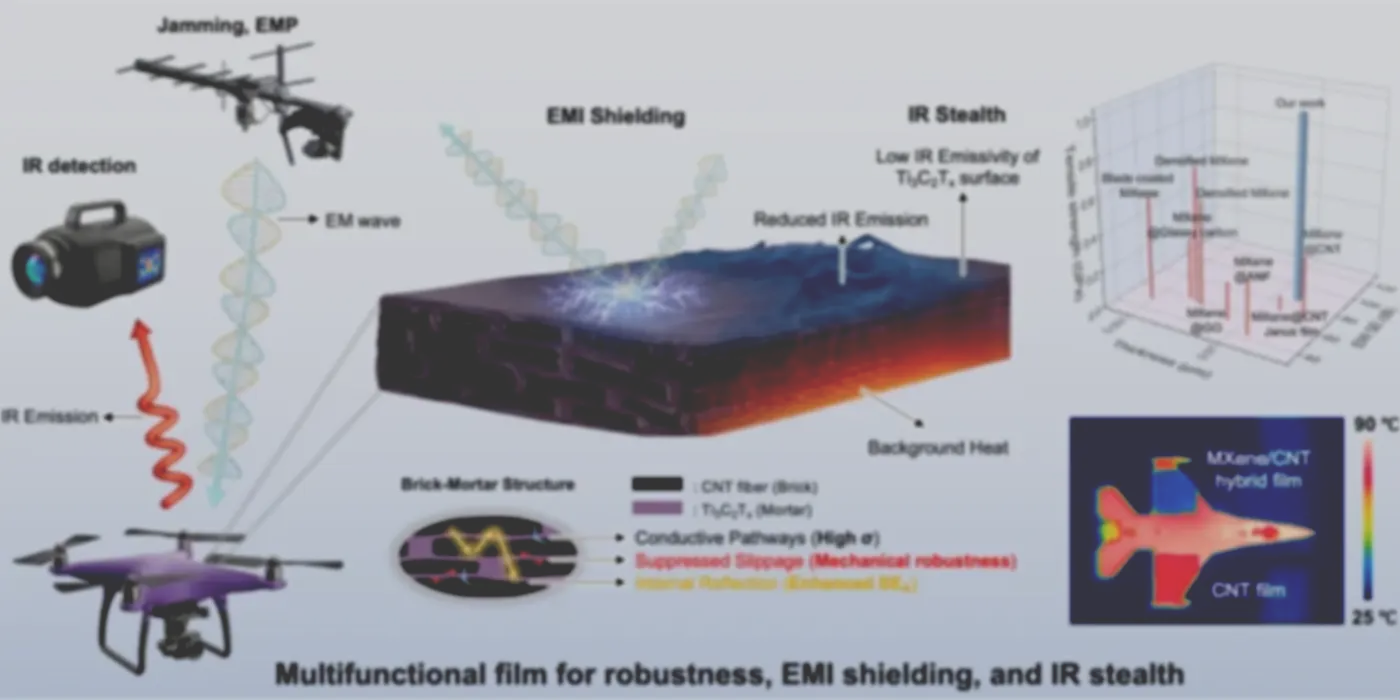
Carbon Nanotube Has EMI And Hides Heat
Researchers have developed a composite film that combines electromagnetic interference shielding, infrared stealth, and high mechanical strength using carbon nanotube fibers and MXene.
Researchers have developed a composite film that combines electromagnetic interference shielding, infrared stealth, and high mechanical strength using carbon nanotube fibers and MXene.


In head-to-head trials of two drugs, the one deemed better appears to depend largely on who is funding the study, according to an analysis of nearly 200 statin-drug comparisons carried out between 1999 and 2005.
UCSF researchers examined 192 published results of trials comparing one cholesterol-lowering statin drug to another, or to a non-statin drug.
Radical steps to engineer Earth’s climate by blocking sunlight could drastically cool the planet, but could just as easily worsen the situation if these projects fail or are suddenly halted, according to a new computer modeling study.
The experiments, described in the June 4 early online edition of The Proceedings of the National Academy of Sciences, look at what might happen if we attempt to slow climate change by “geoengineering” a solar filter instead of reducing carbon dioxide emissions. The researchers used a computer model to simulate a decrease in solar radiation across the entire planet, but assumed that that the current trend of increasing global carbon dioxide emissions would continue for the rest of this century.

Commonly used by around 10 million people in east Africa and countries in the Arabian peninsula, chewing khat for its stimulant properties has also become popular in the UK among immigrants of the Somali, Yemeni and Ethiopian communities. Whilst it is reported to have cultural functions, it is also increasingly reported to be associated with social and medical problems including anti-social behaviour, unemployment, psychoses, depression, and self-neglect.
Go to 3DChem to interact with a 3D model of the Khat structure

The Huygens Atmosphere Structure Instrument (HASI) scored a first in 2005 by measuring the electrical conductivity of Titan’s atmosphere. The results hint at a new way to investigate the subsurface layers of Titan and could provide insight into whether or not Titan has a subsurface ocean.
The Permittivity, Waves and Altimetry (PWA) sensor on Huygens detected an extremely low frequency (ELF) radio wave during the descent. It was oscillating very slowly for a radio wave, just 36 times a second, and increased slightly in frequency as the probe reached lower altitudes.
CLICK ABOVE FOR FULL SIZE.
Discarded crab and lobster shells may be the key to prolonging the life of microbial fuel cells that power sensors beneath the sea, according to a team of Penn State researchers.
To produce energy, microbial fuel cells need organic material for the microbes to consume. However, deep sea sediments can be surprisingly devoid of organic material because living things in the photic zone – the area where light penetrates the water – are continuously recycled and little falls to the ocean floor. An absence of organics limits the lifetime of marine microbial fuel cells.
The ability to learn from experience is of central importance to human existence. It allows us to acquire many of the skills we need to complete a wide variety of complicated, multi-step tasks in an efficient manner. It also creates habit – a critical, if often overlooked factor in the product and service choices consumers make. An important new study from the Journal of Consumer Research demonstrates how this “cognitive lock-in” can cause us to remain loyal to a product, even if objectively better alternatives exist.
“We find that consumers typically are not aware that this mechanism is a powerful determinant of the choices they make,” write Kyle B.
Scientists exploring the remote highlands of eastern Suriname discovered 24 species believed to be new to science, including an Atelopus frog with brilliant purple markings, four Eleutherodactylus frog species, six species of fish, 12 dung beetles and an ant species.
The scientists also found 27 species endemic to the Guayana Shield region comprising Suriname and neighboring Guyana, French Guiana and northern Brazil, including a rare armored catfish, Harttiella crassicauda, feared extinct because gold mining activities had contaminated a creek where it was last seen more than 50 years ago.

Technically advanced molecular imaging provides a 3-D way to significantly improve the diagnosis of heart disease, according to researchers.
"The exciting results of our study show that physicians can use our technologically advanced fusion of anatomic and physiological three-dimensional color displays to significantly improve the accuracy of diagnosing heart disease," said Cesar A. Santana, assistant professor of radiology at the Emory School of Medicine in Atlanta, Ga. "In addition, these computer fusion and rendering techniques could be used in the future with molecular imaging agents to detect and guide the treatment associated with coronary artery disease," he added.
credit: pmod technologies
What you buy says a lot about you, according to a new study from the June issue of the Journal of Consumer Research. Consider this goal: to spend more time with your family. If you seek out products that expand the amount of quality time you have to share – say, a football to throw around in the yard – you’re a “promotion-focused” consumer. Alternatively, if you are “prevention-focused,” you’ll seek out timesavers, like a new dishwasher, that don’t reduce the amount of time you have to spend with your family.
“We extend this line of research by identifying for the first time the cognitive process that appears to underlie these regulatory focus effects.
It’s totally understandable to feel ambivalent when presented with both positive and negative evidence. However, people often feel ambivalent even when all the news is good or bad, anticipating conflict before it arises. The first empirical demonstration of this reaction appears in new study from the June issue of the Journal of Consumer Research.
“Many people recognize that there are often two sides to every story and that nothing is perfect (or completely worthless),” explains Joseph R. Priester (University of Southern California), Richard E. Petty (Ohio State University) and Kiwan Park (Sungkyunkwan University, South Korea).
Why does foreign money often feel like play money to travelers" Just in time for summer vacation season, an important new study from the June issue of the Journal of Consumer Research examines why spending patterns abroad deviate so much from what we spend at home.
Klaus Wertenbroch (INSEAD, France), Dilip Soman (University of Toronto), and Amitava Chattopadhyay (INSEAD, Singapore) argue that problems arise from a fundamental mistake in how people perceive the value of currency, known as money illusion. The numerical value printed on a bill affects our perceptions of its real purchasing power, biasing consumer judgment during periods of inflation or when using foreign currencies.
Researchers tied the accumulation of the toxic brain protein beta-amyloid to Alzheimer's disease, according to a new study.
"Our findings show that beta-amyloid is associated with brain dysfunction—even in apparently normal elderly individuals—providing further evidence that it is likely related to the fundamental cause of Alzheimer's disease," said Christopher Rowe, director of the nuclear medicine department and Centre for PET at Austin Hospital in Melbourne, Victoria, Australia.