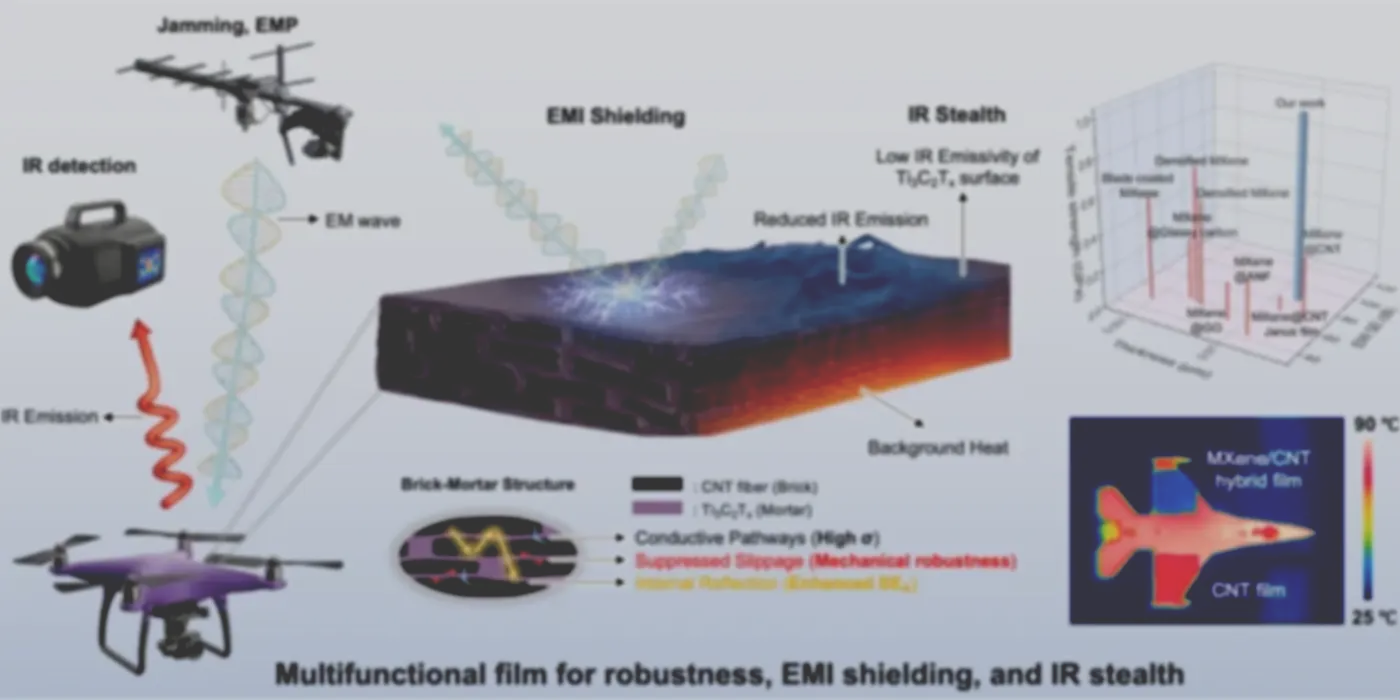
Carbon Nanotube Has EMI And Hides Heat
Researchers have developed a composite film that combines electromagnetic interference shielding, infrared stealth, and high mechanical strength using carbon nanotube fibers and MXene.
Researchers have developed a composite film that combines electromagnetic interference shielding, infrared stealth, and high mechanical strength using carbon nanotube fibers and MXene.


The doctoral thesis Potencial terapéutico de nuevos fármacos antitumorales. Estudio sobre líneas celulares epiteliales (Therapeutic Potential of New Antitumor Drugs. A Study on Epithelial Cell Lines) has allowed for the development of six new drugs to fight colon and breast cancer more effectively than other currently used drugs. The study was conducted at the Department of Human Anatomy and Embryology at the University of Granada by Octavio Caba Pérez, member of the research group "Avances en Biomedicina" (Progress in Biomedicine), under the direction of professors Antonia Aránega, Juan Antonio Marchal and Fernando Rodríguez.
Aspirin didn’t pan out. Neither did two other potential anti-aging agents. But a synthetic derivative of a pungent desert shrub is now a front- runner in ongoing animal experiments to find out if certain chemicals, known to inhibit inflammation, cancer and other destructive processes, can boost the odds of living longer.
University of Michigan scientist Richard A. Miller reports early results from a mouse study his lab and two others are conducting for the National Institute on Aging. The study, now in its fourth year, will test as many as two dozen possible anti-aging agents in animals in the next five years.
A team of scientists from the University of Rochester Medical Center show that a key inflammatory regulator, a known villain when it comes to parsing out damage after a stroke and other brain injuries, seems to do the opposite in Alzheimer’s disease, protecting the brain and helping get rid of clumps of material known as plaques that are a hallmark of the disease.
Based on clues provided by a study with transgenic mice, a research group at the National Human Genome Research Institute (NHGRI), part of the National Institutes of Health (NIH), has developed a strategy that will be tested as the first treatment for people with hereditary inclusion body myopathy (HIBM), a rare, degenerative muscle disease. In an unexpected finding, the research indicates that the approach also might benefit patients with certain kidney disorders.
The Sleeping Beauty tranposon (SB-Tn) system, a gene therapy technology that avoids the pitfalls of transferring genes with viruses, shows promise in laboratory experiments for correcting the gene defect responsible for sickle cell disease (SCD), scientists in Minnesota are reporting.
The wild tiger now occupies a mere 7 percent of its historic range, and the area known to be inhabited by tigers has declined by 41 percent over the past decade, according to an article published in the June 2007 issue of BioScience.
Growing trade in folk medicines made from tiger parts and tiger skins, along with habitat loss and fragmentation, is believed to be the chief reason for the losses. The assessment, by Eric Dinerstein of the World Wildlife Fund and 15 coauthors, describes the wild tiger's population trajectory as "catastrophic" and urges international cooperation to ensure the animal's continued existence in the wild.

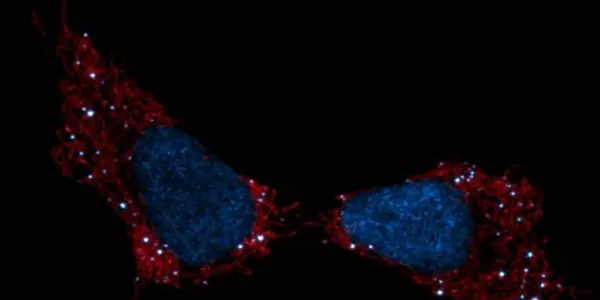
Scientists have captured on video the intracellular version of a postal delivery service. Reporting in the journal Biochemical and Biophysical Research Communications (BBRC), bioengineering researchers at UC San Diego published videos of a key message-carrying protein called paxillin moving abruptly from hubs of communication and transportation activity on the cell surface toward the nucleus. Paxillin was labeled with a red fluorescence marker to make it stand out in live cells.
These time-lapse images of a bovine aortic endothelial cell reveal the motion toward the cell's nucleus of a message-carrying protein called paxillin (orange) in tandem with actin filaments (green).
The science has long been clear that smoking causes cancer, but new research shows that children could inherit genetic damage from a father who smokes.
Canadian researchers have demonstrated in mice that smoking can cause changes in the DNA sequence of sperm cells, alterations that could potentially be inherited by offspring.
“When we began the Human Genome Project, we anticipated it would take 15 years to sequence the 3 billion base pairs and identify all the genes,” said Dr. Richard Gibbs, director of the Human Genome Sequencing Center. “We completed it in 13 years in 2003 – coinciding with the 50th anniversary of the publication of the work of Watson and Dr. Francis Crick that described the double helix.
"Today, we give James Watson a DVD containing his personal genome – a project completed in only two months. It demonstrates how far the sequencing technology has come in a short time.”
A new report in the journal Cell confirms the existence of some apparently uncommitted stem cells amongst cells responsible for generating the bulging biceps of body builders and the rippling abs of fitness buffs. The findings could lead to new muscle-regenerating therapies—including cell transplantation regimens and stem cell-replenishing drugs—for people with various muscle-wasting diseases, including muscular dystrophies. Ultimately, such treatments might also help keep people strong as they age, according to the researchers.
A new vaccine aimed at preventing cervical cancer is nearly 100 percent effective against the two types of the human papillomavirus (HPV) responsible for most cases of cervical cancerÑstrains 16 and 18.
In the current and largest study to date, researchers combined and analyzed the data from four randomized trials that involved 20,583 women ages 15 to 26 from more than two dozen countries across Europe, North America, Latin America and Asia. Participants were randomly assigned to receive the HPV vaccine or placebo and followed for an average of three years.
Broccoli, eggplant, cabbage and capsicum grown with compost made from recycled garden offcuts have produced equivalent yields to those cultivated by conventional farm practice, but without the subsequent build up of phosphorus.
NSW Department of Primary Industries (DPI) scientists have found very high levels of phosphorus and low levels of organic carbon in vegetable growing soils, during a major research project designed to help Sydney Basin vegetable growers significantly improve soil quality and productivity.