Carbon Nanotube Has EMI And Hides Heat
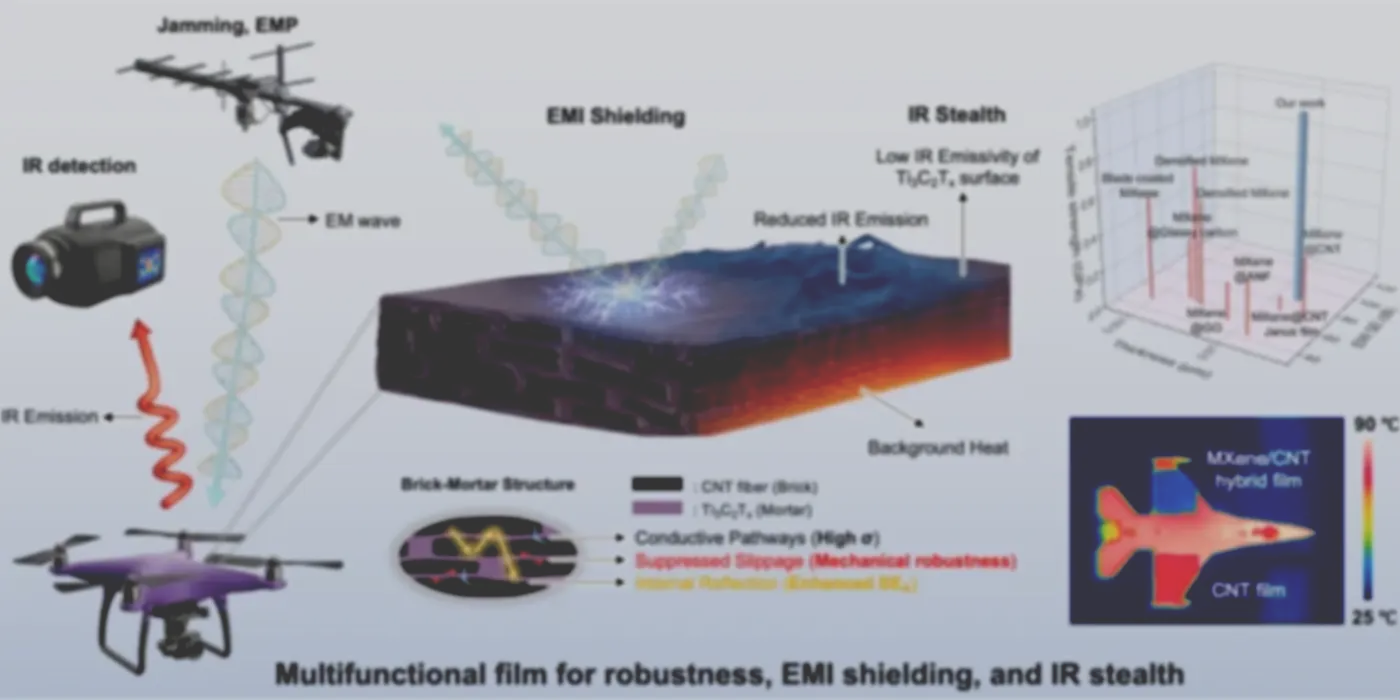
Researchers have developed a composite film that combines electromagnetic interference shielding, infrared stealth, and high mechanical strength using carbon nanotube fibers and MXene.
Researchers have developed a composite film that combines electromagnetic interference shielding, infrared stealth, and high mechanical strength using carbon nanotube fibers and MXene.


Young, single women in urban China are aware of contraceptive methods but some may be too shy to ask for them, research published in the online open access journal BMC Health Services Research reveals. Young women want more information, but need private and anonymous family planning because of judgemental attitudes surrounding premarital sex and particularly premarital pregnancy.

In 2006, Greenland experienced more days of melting snow and at higher altitudes than average over the past 18 years, according to a new NASA-funded project using satellite observations.
Daily satellite observations have shown snow melting on Greenland’s ice sheet over an increased number of days. The resulting data help scientists understand better the speed of glacier flow, how much water will pour from the ice sheet into the surrounding ocean and how much of the sun’s radiation will reflect back into the atmosphere.
CLICK IMAGE TO ENLARGE.
Two merging black holes can generate gravitational waves so powerful that the merged hole shoots out of its host galaxy at a speed of up to 2,500 miles per second, according to a new simulation.
This research, led by Manuela Campanelli at the Rochester Institute of Technology, demonstrates for the first time that the violent recoil that follows a merger is capable of ejecting the supermassive black holes known to lie at the heart of most light-emitting galaxies. These black holes may be cruising through the universe, virtually undetectable unless they should crash into something and gain matter.
A new experiment has shown that it's possible to store multiple rudimentary memories in an artificial culture of live neurons. The ability to record information in a manmade network of neurons is a step toward a cyborg-like integration of living material into memory chips. The advance also may help neurologists to understand how our brains learn and store information.
A project which is using robots to help children with developmental or cognitive impairments to interact more effectively has just started at the University of Hertfordshire.
Professor Kerstin Dautenhahn, Dr. Ben Robins and Dr. Ester Ferrari at the University’s School of Computer Science are partners in the European Sixth Framework funded, €3.22 million Interactive Robotic Social Mediators as Companions (IROMEC) project which is investigating the use of robotic toys to enable children with disabilities to develop social skills.
KASPAR is a child-sized humanoid robot developed by the Adaptive Systems Research Group at the University of Hertfordshire.
A natural compound found in blueberries, tea, grapes, and cocoa enhances memory in mice, according to newly published research. This effect increased further when mice also exercised regularly.
"This finding is an important advance because it identifies a single natural chemical with memory-enhancing effects, suggesting that it may be possible to optimize brain function by combining exercise and dietary supplementation," says Mark Mattson, PhD, at the National Institute on Aging.
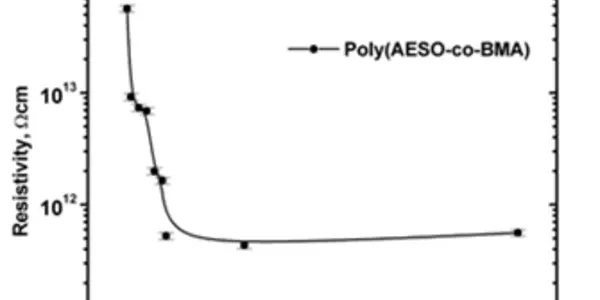
Polymer matrix composites with carbon black can be used as filler material and can beneficially modify the electrical and mechanical properties of the used matrixes. The polymer components of these composites are traditionally made using oleo-polymers; however, an alternative is to use natural and renewable sources as soybean oil, linseed oil, sunflower oil, etc.
Polymers derived from those natural oils can be tailored for engineering and aeronautical applications by reinforcing them with natural and synthetic fibers and clays.
Sound waves escaping the sun's interior create fountains of hot gas that shape and power a thin region of the sun's atmosphere which appears as a ruby red "ring of fire" around the moon during a total solar eclipse, according to new research.
This region, called the chromosphere because of its color, is largely responsible for the deep ultraviolet radiation that bathes the Earth, producing the atmosphere's ozone layer.
CLICK ABOVE FOR FULL SIZE.

mages of disembodied heads are widespread in the art of Nasca, a culture based on the southern coast of Peru from AD 1 to AD 750. But despite this evidence and large numbers of trophy heads in the region’s archaeological record, only eight headless bodies have been recovered with evidence of decapitation, explains Christina A. Conlee (Texas State University).
Conlee’s analysis of a newly excavated headless body from the site of La Tiza provides important new data on decapitation and its relationship to ancient ideas of death and regeneration.
Nasca carved Spondylus fragment, length 4.5 cm. National Museum Collection.
Tears protect and lubricate the cornea and conjunctiva of the eye and help provide a clear medium through which we see. When human tears break up too quickly, eyes feel gritty, hot and scratchy -- even eyesight can become blurry. For many people the solution has been to use artificial tears, but they're expensive and they don't last as long the real thing.
Associate Professor Millar, from the School of Natural Sciences, says the interaction between the liquid tear and air holds the key to slowing the 'break-up time' of tears.
A fascinating new paper from the June issue of Current Anthropology explores ancient multiple graves and raises the possibility that hunter gatherers in what is now Europe may have practiced ritual human sacrifice.
This practice – well-known in large, stratified societies – supports data emerging from different lines of research that the level of social complexity reached in the distant past by groups of hunter gatherers was well beyond that of many more recent small bands of modern foragers.
A recent paper highlights experimental research in evolution and artificial selection, providing insight into how organisms adapt to changing environmental conditions and fluctuations.
In this month's Physiological and Biochemical Zoology, Bradley S. Hughes, Alistair J. Cullum, and Albert F. Bennett (University of California, Irvine) explore the effect on E. coli of fluctuating acidity, an especially important environmental factor for the bacteria.