Carbon Nanotube Has EMI And Hides Heat
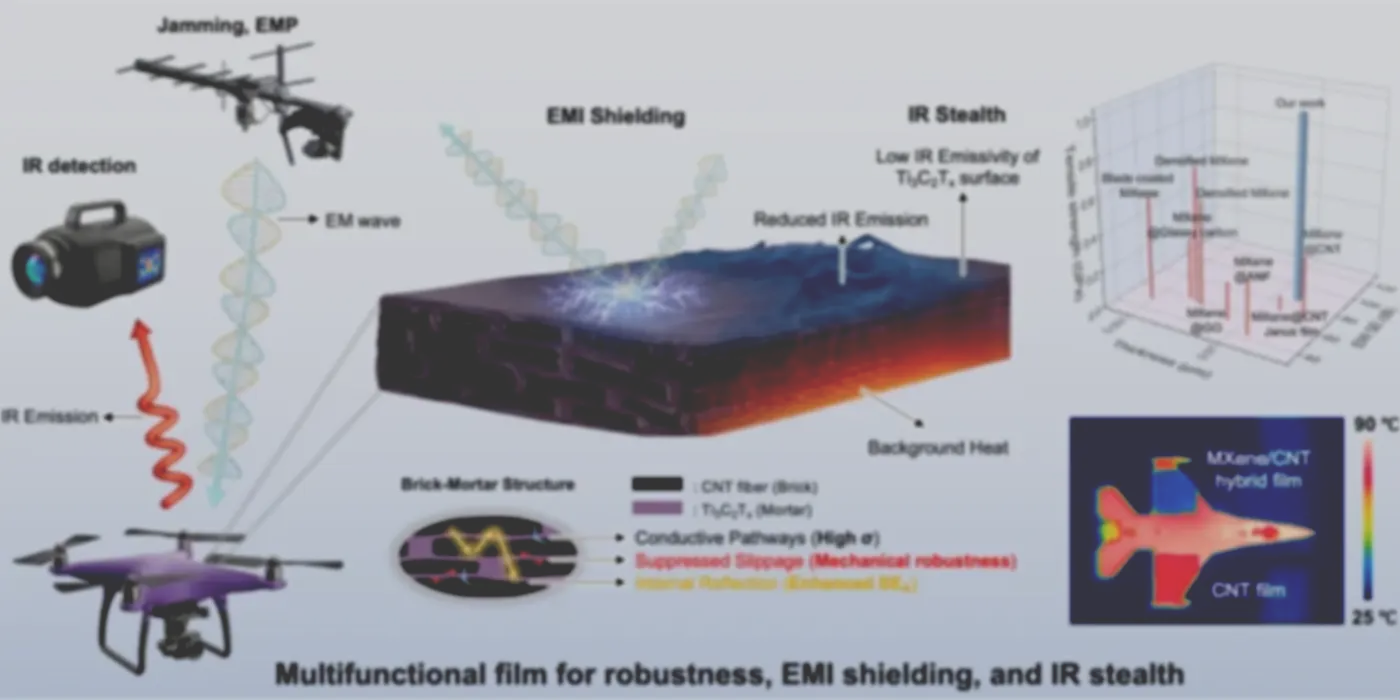
Researchers have developed a composite film that combines electromagnetic interference shielding, infrared stealth, and high mechanical strength using carbon nanotube fibers and MXene.
Researchers have developed a composite film that combines electromagnetic interference shielding, infrared stealth, and high mechanical strength using carbon nanotube fibers and MXene.


The sharpest image ever taken of the large "grand design" spiral galaxy M81 is being released today at the American Astronomical Society Meeting in Honolulu, Hawaii. A spiral-shaped system of stars, dust, and gas clouds, the galaxy's arms wind all the way down into the nucleus.
Click above for full size

Scientists in New Zealand have discovered that some cows have genes that give them the ability to produce skimmed milk naturally. They say they can use this information to breed herds of milkers producing only skimmed milk.
Even better, they said they can breed herds producing milk with the unique characteristics required to make a butter that is spreadable straight from the fridge.
They have already identified a cow, Marge, with the genes required to do this and say a commercial herd is likely by 2011. The milk is very low in saturated fats and so should be high in polyunsaturates and monounsaturated fats.
A newly discovered dwarf galaxy in the Local Group has been found to have formed in a region of space far from our own and is falling into our system for the first time in its history, according to new data obtained at the W. M. Keck Observatory. An international team of astronomers report that the dwarf galaxy, Andromeda XII, marks the best piece of evidence for small galaxies which are just now arriving in our Local Group. The finding provides an important test for simulations of galaxy formation.
If you're inactive as a child, you are basically 'storing up' illnesses for when you are an adult, University of Leicester study says.
Professor Kamlesh Khunti, Professor Melanie Davies and Dr Margaret Stone surveyed over 3500 pupils from five inner city secondary schools in Leicester. They identified low levels of physical activity in both South Asian and white children. For example only half the children walked to school although south Asian children were less likely to walk to school compared to white children. Furthermore, half the pupils spent 4 hours or more a day watching television or videos or playing computer games.
HIV treatment can be delivered even in settings of armed conflict, and humanitarian health agencies should not wait until a conflict is over before launching HIV care programs, say a team from Médecins Sans Frontières (MSF) in this week’s PLoS Medicine.
Heather Culbert and colleagues report their results of three years’ experience of providing HIV care, including antiretroviral therapy (ART), to a conflict-affected population in the Democratic Republic of the Congo (DRC). The reported treatment outcomes were similar to those in HIV projects in non-conflict settings.
An international team of scientists, including researchers from the National Institute of Allergy and Infectious Diseases (NIAID), part of the National Institutes of Health, report using antibodies derived from immune cells from recent human survivors of H5N1 avian influenza to successfully treat H5N1-infected mice as well as protect them from an otherwise lethal dose of the virus.
Women who consume higher amounts of calcium and vitamin D may have a lower risk of developing premenopausal breast cancer.
Data from animal studies have linked calcium and vitamin D to breast cancer prevention, according to background information in the article. However, epidemiologic studies on humans have been less conclusive.
Researchers at Ohio University have found that after primates evolved the ability to see red, they began to develop red and orange skin and hair.
Humans, apes and Old World monkeys, such as macaques and leaf monkeys, all have trichromatic vision, which allow them to distinguish between blue, green and red colors. Primatologists have disagreed about whether this type of color vision initially evolved to help early primates forage for ripe fruit and young, red leaves among green foliage or evolved to help them select mates.
Mice genetically engineered to lack a single enzyme in their brains are more adept at learning than their normal cousins, and are quicker to figure out that their environment has changed, a team led by researchers at UT Southwestern Medical Center has found.
A CME (Coronal Mass Ejection) is a solar body slam to our high-tech civilization. CMEs begin when the sun launches a billion tons of electrically conducting gas (plasma) into space at millions of miles per hour. A CME cloud is laced with magnetic fields, and CMEs directed our way smash into Earth's magnetic field. If the CME magnetic fields have the correct orientation, they dump energy into Earth's magnetic field, causing magnetic storms. These storms can cause widespread blackouts by overloading power line equipment with extra electric current. But wait; there's more.
Substituting soy nuts for other protein sources in a healthy diet appears to lower blood pressure in postmenopausal women, and also may reduce cholesterol levels in women with high blood pressure.
The American Heart Association estimates that high blood pressure (hypertension) affects approximately 50 million Americans and 1 billion individuals worldwide. The most common-and deadly-result is coronary heart disease, according to background information in the article. Women with high blood pressure have four times the risk of heart disease as women with normal blood pressure.
People whose blood shows signs of inflammation are more likely to later develop Alzheimer's disease than people with no signs of inflammation, according to a new study.
The study, which is part of the larger Framingham Heart Study, involved 691 healthy people with an average age of 79. Blood tests determined whether the participants had signs of inflammation. Then the participants were followed for an average of seven years. During that time, 44 of the participants developed Alzheimer's disease.