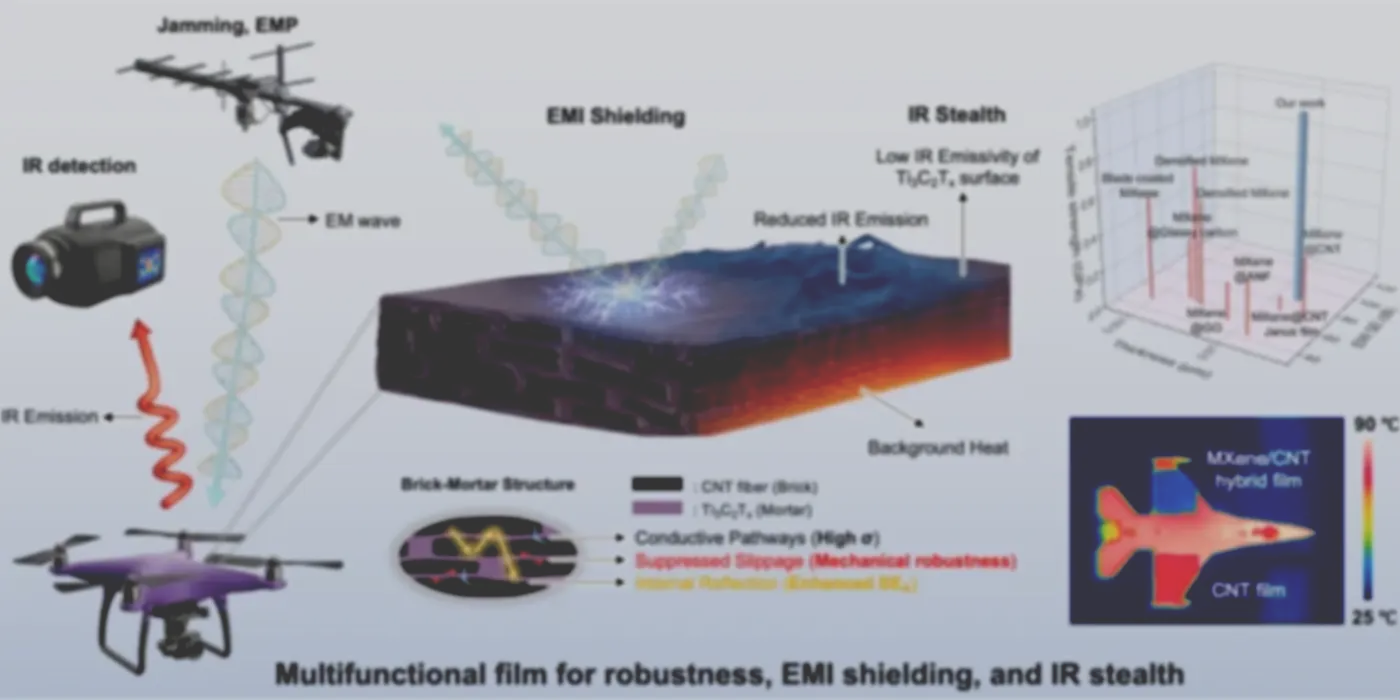
Carbon Nanotube Has EMI And Hides Heat
Researchers have developed a composite film that combines electromagnetic interference shielding, infrared stealth, and high mechanical strength using carbon nanotube fibers and MXene.
Researchers have developed a composite film that combines electromagnetic interference shielding, infrared stealth, and high mechanical strength using carbon nanotube fibers and MXene.


Field trials could be underestimating the potential for cross-pollination between GM and conventional crops, according to new research by the University of Exeter. The research team recommends a new method for predicting the potential for cross-pollination, which takes account of wind speed and direction.
The research, published in the journal Ecological Applications, used records of wind speed and direction from weather stations across Europe to predict the movement of pollen in the air. The findings show huge variation in the amount of cross-pollination between GM and non-GM crops of maize, oilseed rape, rice and sugar beet.
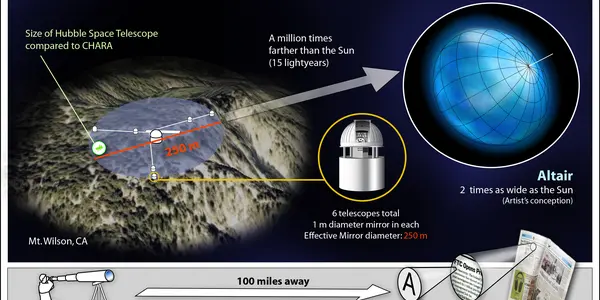
University of Michigan astronomers combined light from four widely separated telescopes to produce the first picture showing surface details on a sun-like star beyond our solar system.
The image of the rapidly rotating, hot star Altair is the most detailed stellar picture ever made using an innovative light-combining technique called optical interferometry, said U-M astronomer John Monnier.
Credit: Zina Deretsky (National Science Foundation)
Beyond this technical milestone, the Altair observations provide surprising new insights that will force theorists to revise ideas about the behavior of rapid rotators like Altair.
"This powerful new tool allows us to zoom in on a star that's a milli
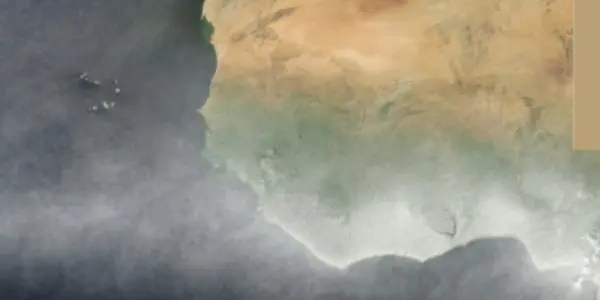
Monsoons, the life-giving, torrential rains of Asia and Africa, have an ancient, unsuspected connection to previous Ice Age climate cycles, according to scientists at the University of California, Santa Barbara, and at Kiel University in Germany.
Analyzing a 120-foot sediment core from the Gulf of Guinea in equatorial West Africa recovered by a German research expedition, UC Santa Barbara postdoctoral scholar Syee Weldeab and paleoclimatologist David Lea have revealed 155,000 years of continuous monsoon history. “It is the longest, most detailed record of West African monsoons that has ever been reconstructed,” said Lea. The find captured several Ice Age climate cycles.

While promiscuity in the animal kingdom is generally a male thing, researchers for the Wildlife Conservation Society and the Zoological Society of London (ZSL) have found that, in cheetah society, it’s the female with the wandering eye, as reported in a paper in the latest issue of Proceedings of the Royal Society B.
According to the study, researchers found that about 43 percent of cheetah litters with more than one cub were fathered by more than one male, revealing a mating system that deviates from those used by other carnivores, most of which consist of single or sibling males monopolizing many females.
A new cheetah study by the Wildlife Conservation Society and the Zoological Socie
Scientists at Consiglio Nazionale delle Ricerche in Italy have discovered particles of cocaine and marijuana in the air around Rome, they revealed today.
Rome's atmosphere contained 0.1 nanograms per cubic meter of cocaine at its height during their analysis. Not a substantial impact but still a cause for concern. This was in addition to benzopyrene C20H12 and other types of emissions.
Women are much more interested in a man’s personality and looks than the size of his penis, but men can experience real anxiety even if they are average sized, according to a research review published in the June issue of the urology journal BJU International.
Dr Kevan Wylie from the Porterbrook Clinic and Royal Hallamshire Hospital, Sheffield, UK, reports that while men often have a better body image, genital image and sexual confidence if they have a large penis, women don’t necessarily feel that bigger is better.
The Tropical Eastern Pacific, a discrete biogeographic region that has an extremely high rate of endemism among its marine organisms, continues to yield a wealth of never-before-described marine animals to visiting scientists at the Smithsonian Tropical Research Institute in Panama. Alicia Hermosillo, researcher at the Universidad de Guadalajara in Mexico, and Angel Valdes, assistant curator of Malacology at the Natural History Museum of Los Angeles County, describe five newly discovered species of nudibranchs, two of which Hermosillo collected in Panama.
Cuthona behrensi, one of five new species of aeolid nudibranchs discovered in the Eastern Pacific.
It happens in school, at work, physically, verbally, even by email and text — now researchers at The University of Nottingham say there’s no escape in the virtual world.
Researchers are examining the worrying appearance of bullying in the virtual world. Citizens (avatars) of Second Life say targets are likely to be individuals who are new to the virtual world.
Using ESO's VLTI on Cerro Paranal and the VLBA facility operated by NRAO, an international team of astronomers has made what is arguably the most detailed study of the environment of a pulsating red giant star. They performed, for the first time, a series of coordinated observations of three separate layers within the star's tenuous outer envelope: the molecular shell, the dust shell, and the maser shell, leading to significant progress in our understanding of the mechanism of how, before dying, evolved stars lose mass and return it to the interstellar medium.
Sketch of a pulsating red giant of the Mira type overlaid to the inner Solar System.

An international team of astronomers with the Trans-atlantic Exoplanet Survey today announce the discovery of their third planet, TrES-3. The new planet was identified by astronomers looking for transiting planets - that is, planets that pass in front of their home star - using a network of small automated telescopes in Arizona, California, and the Canary Islands. TrES-3 was discovered in the constellation Hercules about 10 degrees west of Vega, the brightest star in the summer skies.
A computer-generated simulation of TrES-3 crossing (transiting) the disk of its host star. TrES-3 transits farther from the disk center than any other known transiting planet.

The large molecular gas cloud in the constellation of Taurus is the nearest star formation region and a star formation test environment for expert theorists and observers alike. The XMM-Newton project has provided by far the most sensitive and comprehensive X-ray survey of this region, for the first time systematically detecting almost all young stars embedded in the cloud as X-ray sources, including many objects with the lowest mass, the so-called brown dwarfs, and stars still in the process of growing, the so-called protostars.
Rats paralyzed due to loss of blood flow to the spine returned to near normal ambulatory function six weeks after receiving grafts of human spinal stem cells (hSSCs), researchers from the University of California, San Diego (UCSD) School of Medicine report.
“We demonstrated that when damage has occurred due to a loss of blood flow to the spine’s neural cells, by grafting human neural stem cells directly into the spinal cord we can achieve a progressive recovery of motor function,” said Martin Marsala, M.D., UC San Diego professor of anesthesiology.