Carbon Nanotube Has EMI And Hides Heat
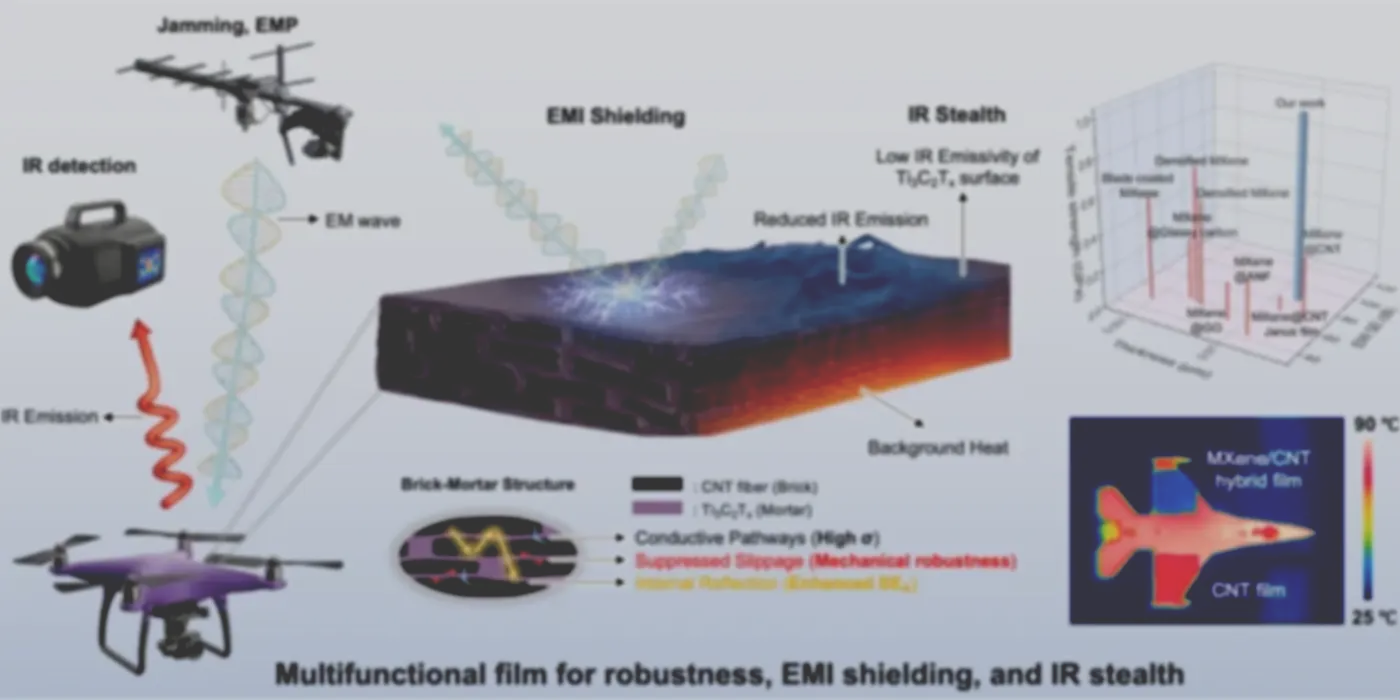
Researchers have developed a composite film that combines electromagnetic interference shielding, infrared stealth, and high mechanical strength using carbon nanotube fibers and MXene.
Researchers have developed a composite film that combines electromagnetic interference shielding, infrared stealth, and high mechanical strength using carbon nanotube fibers and MXene.


The discovery of how some abnormal cells can avoid a biochemical program of self-destruction by increasing their energy level and repairing the damage, is giving investigators at St. Jude Children's Research Hospital insights into a key strategy cancer cells use to survive and thrive.
The finding offers an explanation of how abnormal cells that have cheated death once by disabling the main suicide pathway called apoptosis can also foil a backup self-destruct program, which allows them to survive and become cancerous.

The basic Keller explant is a rectangle of dorsal mesendoderm and ectoderm from an early-gastrula-stage Xenopus laevis embryo. It is ~60° to 90° wide, extending from the bottle cells to the animal pole. This protocol describes how to dissect, assemble, and cultivate Keller explants. The purpose of Keller explants was initially to allow observation of gastrulation movements, particularly convergent extension, in culture. This is difficult to do when explants curl up, but in Keller sandwiches, the explants are cultured flat, either as a single sheet (open-face explant) or more frequently as two sheets sandwiched together with their inner surfaces apposed (closed sandwich).
People who suffer from anxiety tend to interpret ambiguous situations, situations that could potentially be dangerous but not necessarily so, as threatening. Researchers from the Mouse Biology Unit of the European Molecular Biology Laboratory (EMBL) in Italy have now uncovered the neural basis for such anxiety behaviour in mice. They state that a receptor for the messenger serotonin and a neural circuit involving a brain region called the hippocampus play crucial roles in mediating fear responses in ambiguous situations.
Rats with erectile dysfunction, or ED, that were injected with a gene therapy vector containing either of two nerve growth factors were able to regain normal function after four weeks, according to a study conducted by University of Pittsburgh School of Medicine researchers.
A unique examination of one treatment center’s use of magnetic resonance imaging (MRI) in new breast cancer patients has found MRI to be superior to mammography in finding additional tumors in a breast in which cancer has already been diagnosed, and in detecting new tumors in a patient’s supposedly healthy breast.
In the first scientific study of its kind, shark cartilage extract, AE-941 or Neovastat, has shown no benefit as a therapeutic agent when combined with chemotherapy and radiation for patients with advanced non-small cell lung cancer, according to researchers at The University of Texas M. D. Anderson Cancer Center.
Lung cancer is the leading cancer killer in both men and women; according to the American Cancer Society, more than 213,380 will be diagnosed in 2007 and more than 160,390 will die from the disease. Non-small cell is the most common type of the disease, accounting for about 80 percent of all lung cancers, says Charles Lu, M.D., associate professor in M. D. Anderson's Department of Thoracic/Head and Neck Medical Oncology.
Malignant melanoma is one of the deadliest forms of skin cancer. Nearly 60,000 new cases of melanoma are expected in 2007, and 8,100 deaths are expected to occur.
Higher levels of a protein called S-100 in patients with melanoma may correlate with a higher risk of having the disease return, say researchers at the University of Pittsburgh Cancer Institute.
A drug described by some people as a “genius pill” for enhancing cognitive function provided relief to a small group of Rochester breast cancer survivors who were coping with a side effect known as “chemo-brain,” according to a University of Rochester Medical Center study.
Sixty-eight women, who had completed treatment for breast cancer, participated in an eight-week clinical trial testing the effects of modafinil (Provigil). All women took the drug for the first four weeks. During the next month half of the women continued to receive the drug while the other half took an identical looking placebo pill.
Researchers have identified novel genetic mutations that are linked to hereditary diffuse gastric cancer, with these mutations being due to both independent mutational events and common ancestry, according to a study in the June 6 issue of JAMA.

What did dinosaurs hear? Probably a lot of low frequency sounds, like the heavy footsteps of another dinosaur, if University of Maryland professor Robert Dooling and his colleagues are right. What they likely couldn't hear were the high pitched sounds that birds make.
This diagram illustrates the relationship among archosaurs, which includes dinosaurs, crocodiles and birds. The drawings are of the inner ear structure of the different species. The numbers to the left are the time scale in million years. Today's birds are the closest living relatives of the extinct dinosaurs. Credit: University of Maryland
An architect pursuing a Ph.D. at the Technion-Israel Institute of Technology and his colleague have devised a low-tech way to collect dew from the air and turn it into fresh water. Their invention recently won an international competition seeking to make clean, safe water available to millions around the world.
WatAir, shown here in an artistic rendering, could produce an unlimited supply of fresh water even in remote and polluted places.
Last year, a groundbreaking international project found that a group of Japanese patients with advanced non-small cell lung cancer survived longer —and had a higher rate of side effects — than U.S. patients with the same diagnosis,.when both groups were given two well-known drugs for the disease.