Carbon Nanotube Has EMI And Hides Heat
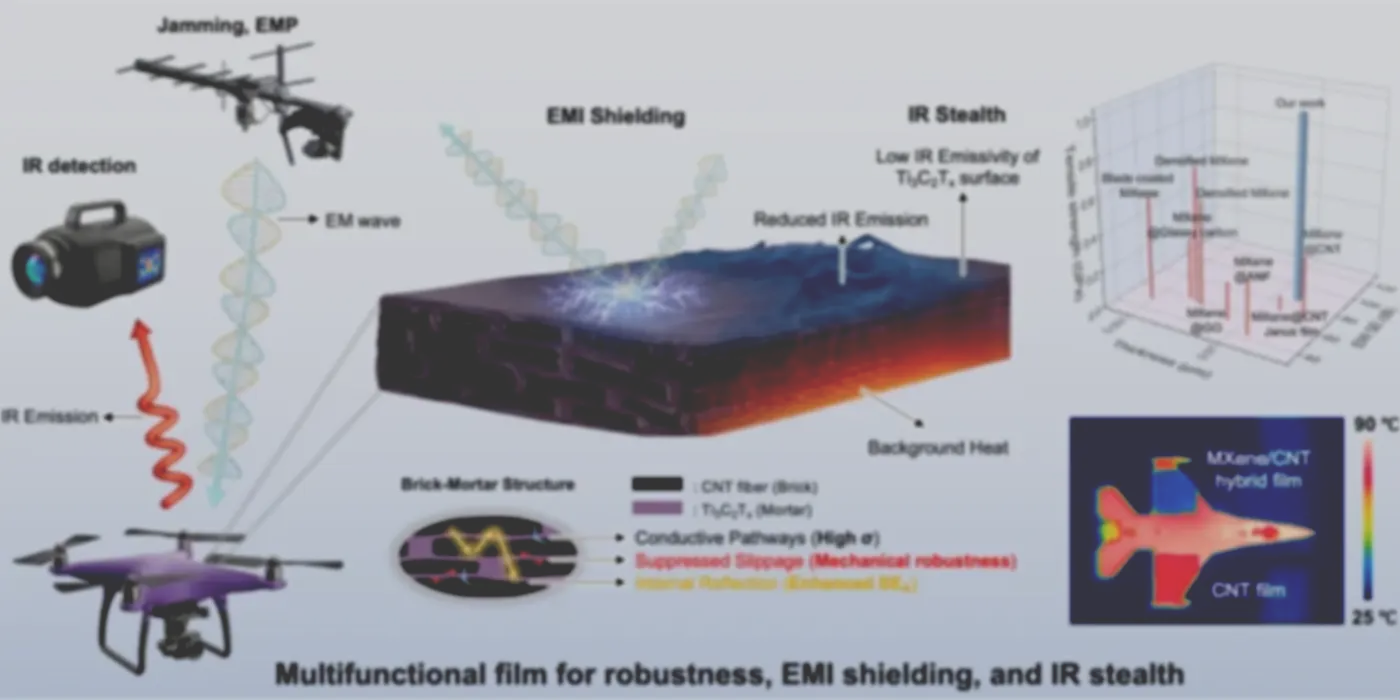
Researchers have developed a composite film that combines electromagnetic interference shielding, infrared stealth, and high mechanical strength using carbon nanotube fibers and MXene.
Researchers have developed a composite film that combines electromagnetic interference shielding, infrared stealth, and high mechanical strength using carbon nanotube fibers and MXene.


It is highly unlikely that older women generate new eggs, report researchers at the University of South Florida in collaboration with a center in China.
The USF study counters the controversial findings of reproductive endocrinologist Jonathan Tilly, PhD, and his team of Harvard scientists. Tilly's work, published in 2004 in Nature with a follow-up study a year later in Cell, challenged the biological dogma that mammals, including women, are born with a limited lifetime supply of eggs.
XDx, a molecular diagnostics company, today announced its AlloMap® molecular expression test will be the subject of presentations and discussions at the American Transplant Congress 2007.
The test, currently used to detect the absence of heart transplant rejection instead of routine invasive heart muscle biopsies, has now been shown to correlate with oxygen saturation levels, cardiac filling pressures, and the electrical properties of the transplanted heart.
Also, data from the Lung Allograft Rejection Gene expression Observation (LARGO) study presented at the ATC sessions demonstrate that a non-invasive blood test can detect cytomegalovirus-induced immune responses in lung transplant patients.

Researchers at the University of California, San Diego (UCSD) School of Medicine have developed new technology which, combined with proteomics – the large-scale study of the structure and function of proteins and their functions – has allowed them to map an extensive network of the signaling proteins that control cell movement.
Their work, providing the first comprehensive profile of cell movement, could lead to a better understanding of cell migration in cancer metastasis and inflammatory disease.
Confocal photomicrograph of a migrating cell expressing a green fluorescent protein (GFP)-tagged, acting binding protein that localizes to the leading front of the cell (right side).
Researchers at the Department of Energy's Argonne National Laboratory have developed a new approach to increasing the capacity and stability of rechargeable lithium-ion batteries.
The technology is based on a new material for the positive electrode that is comprised of a unique nano-crystalline, layered-composite structure.
A new study showed that a certain form of neuropsin, a protein that plays a role in learning and memory, is expressed only in the central nervous systems of humans and that it originated less than five million years ago.
The human and chimpanzee genomes vary by just 1.2 percent, yet there is a considerable difference in the mental and linguistic capabilities between the two species.
The likelihood of developing bipolar disorder depends in part on the combined, small effects of variations in many different genes in the brain, none of which is powerful enough to cause the disease by itself, a new study shows.
However, targeting the enzyme produced by one of these genes could lead to development of new, more effective medications. The research was conducted by scientists at the National Institutes of Health's National Institute of Mental Health (NIMH), with others from the Universities of Heidelberg and Bonn and a number of U.S. facilities collaborating in a major project called the NIMH Genetics Initiative.
The study is the first to scan virtually all of the variations in human genes to find those associated with bipolar disorder.
The drug trastuzumab (Herceptin) is used to treat HER2-positive breast cancer (a type of breast cancer that overexpresses the HER2 gene and accounts for about 25% of all breast cancers). Trastuzumab therapy improves the chances of survival; however, it has deleterious side effects and is expensive. Thus, it is important to accurately determine the patient’s HER2 status.
The challenge is to develop a testing strategy that is both accurate and economical. A false-negative test result can mean a woman will not receive a life-prolonging drug, and a false-positive result can lead to unnecessary, expensive drug treatment.
Pacific Northwest National Laboratory geologists have put out a call for teeth tusks, femurs and any and all other parts of extinct mammoths left by massive Ice Age floods in southeastern Washington.
Flood zone: The area of eastern Washington sculpted by the mammoth-killing Ice Age floods. Credit: U.S. Geological Survey
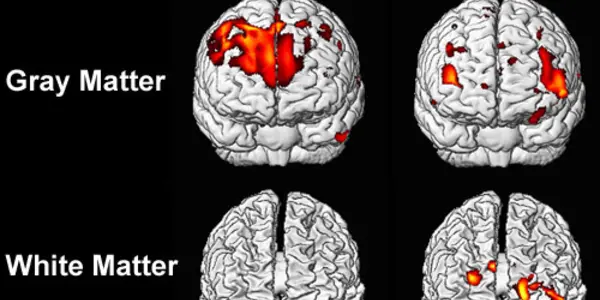
New evidence on sex differences in people’s brains and behaviors emerges with the publication of results from the British Broadcasting Corporation’s (BBC) Sex ID Internet Survey. Survey questions and tests focused on participants’ sex-linked cognitive abilities, personality traits, interests, sexual attitudes and behavior, as well as physical traits. The Archives of Sexual Behavior¹ has devoted a special section in its April 2007 issue to research papers based on the BBC data.
Frontal views of the brains of men and women. Credit: UCI
Diabetes researchers, investigating how the body supplies itself with insulin, discovered to their surprise that adult stem cells, which they expected to play a crucial role in the process, were nowhere to be found. Many researchers had proposed that adult stem cells develop into insulin-producing cells, called beta cells, in the pancreas.
Instead, the beta cells themselves divide, although slowly, to replenish their own population.
In animal tissue, insulin-producing beta cells glow red and green with dyes that indicate mulitple rounds of cell division. Credit: Children's Hospital of Philadelphia
Researchers at the University of Illinois have developed a simple and economical technique for imaging and mapping fruit fly chromosomes. This new approach will enable them to construct the first accurate map of the chromosomes and tease out the secrets hidden in their stripes.
Developers of the new approach use a technology called Computer Vision to analyze hundreds of crisp images of the same chromosomes. This will allow the production of a much more precise map of the chromosome bands. Credit: Photo courtesy of Dmitri Novikov
Don't feel bad if you want to be part of the "in" crowd. It may be hardwired in our brain cells.
Even newborn brain cells reach out to mature brain cells that are already well connected within the established circuitry, report scientists at the Salk Institute for Biological Studies in the online edition of Nature Neuroscience.
Top: Newborn neurons send out tiny dendritic protrusions (shown in green) that seek out pre-synaptic areas -- the sending terminals of nerve cells (shown in purple) -- that are already well-connected within the established circuitry (shown in red).