Carbon Nanotube Has EMI And Hides Heat
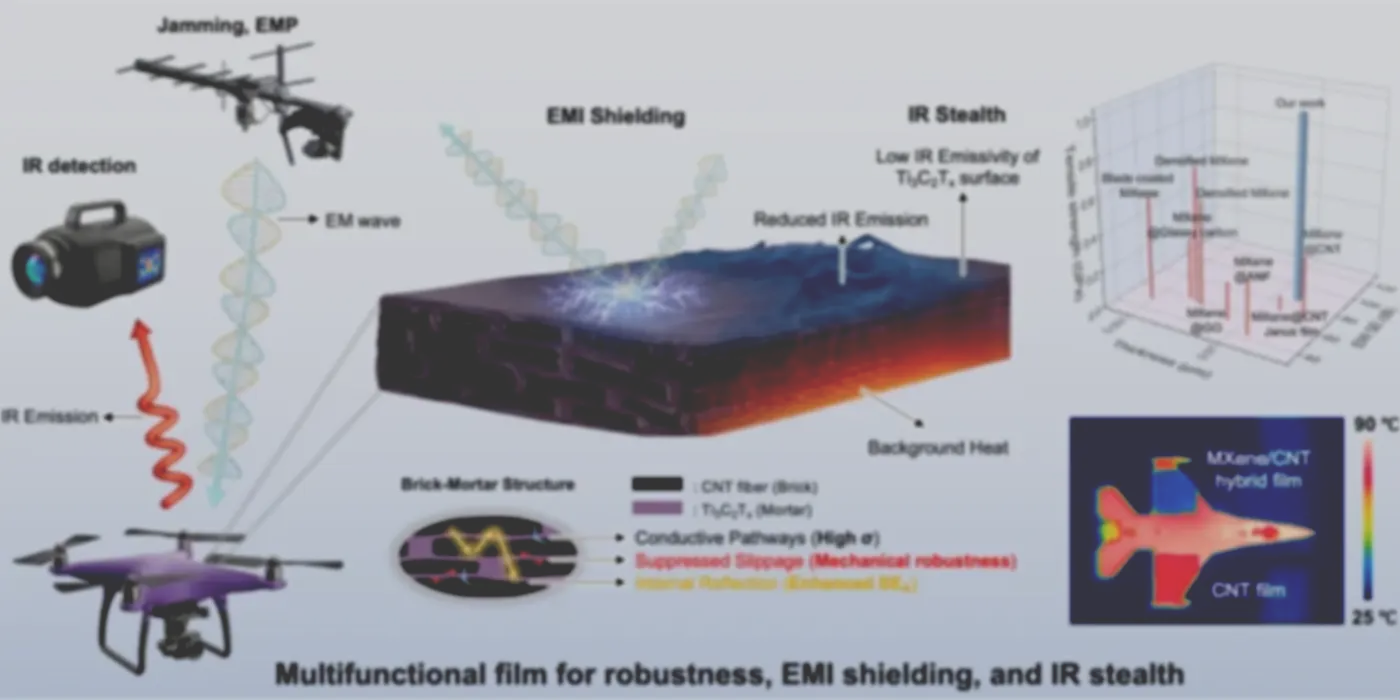
Researchers have developed a composite film that combines electromagnetic interference shielding, infrared stealth, and high mechanical strength using carbon nanotube fibers and MXene.
Researchers have developed a composite film that combines electromagnetic interference shielding, infrared stealth, and high mechanical strength using carbon nanotube fibers and MXene.


Dr. Yijun Qi (National Institute of Biological Sciences, China), reports his discovery of microRNAs in the unicellular green alga, Chlamydomonas reinhardtii. This is the first finding of microRNAs in a unicellular organism.
Tart cherries may be good for more than just making pie, according to new data from an animal study conducted by University of Michigan Health System researchers and presented today at a major scientific meeting.
New studies in the laboratory of Dr. Darwin J. Prockop, Director of Tulane University’s Center for Gene Therapy, are shedding light on the previously mysterious mechanism through which even relatively small amounts of stem/progenitor cells taken from a patient’s own bone marrow enhance repair of damaged tissues.

University of Portsmouth scientists have developed a powerful new tool that 'freezes' the memory of crime scenes in the minds of witnesses.
The tool - a self-administered interview applied by witnesses at crime scenes - combats natural memory decay by using the latest research in cognitive psychology techniques. It 'freezes' images and details of crime scenes and perpetrators in the minds of witnesses, particularly small and seemingly insignificant details that provide major leads for detectives that turn out to be crucial in solving cases.
Some plants need a partner to reproduce. Pollen from one plant pollinates the stigma of another, and a seed is formed. But other plants can self-pollinate, a handy survival mechanism for a lonely plant.
The ability to self-pollinate turns up in cultivated tomatoes and canola, among other important crops, and sometimes it can be a nuisance for plant breeders and seed producers who want to develop highly desirable hybrid varieties and produce hybrid seed on a commercial scale. To get hybrid seed, they plant two different varieties in the same field to allow them to cross-pollinate.
A new study shows that aspirin therapy for coronary artery disease is four times more likely to be ineffective in women compared to men with the same medical history.
Historically, studies have shown that aspirin therapy is less effective in women than in men, but it has remained unclear how much less effective and whether this affects patient outcomes, said Michael Dorsch, clinical pharmacist and adjunct clinical instructor at the University of Michigan College of Pharmacy.
For the first time, scientists have used a laboratory mouse model to mimic the development of human alcohol-induced breast cancer.
Alcohol (EtOH) consumption -- even moderate -- is a well-established risk factor for breast cancer in women. A recent study showed that 60 percent of female breast cancers worldwide were attributable to alcohol consumption. Nevertheless, the mechanisms of alcohol-induced breast cancer are poorly understood.
A new study, led by Felix Aigner, M.D., has identified a protein known as Lipocalin-2 (Lcn-2) as potentially responsible for regulating the body's inflammatory response during heart transplants.
One of the major complications involved with many transplantations is the damage done to the transplanted heart during and immediately following surgery, known as ischemia and reperfusion (IR). In particular, inflammatory cells infiltrate the donated heart, which then releases enzymes and other proteins that attack the transplanted tissue, and can seriously impair the viability of replacement organs and jeopardize the health of the patient.
Researchers at Johns Hopkins have discovered that the same ingredient used in dandruff shampoos to fight the burning, itching and flaking on your head also can calm overexcited nerve cells inside your head, making it a potential treatment for seizures. Results of the study can be found online in Nature Chemical Biology.
In 1928, Alexander Fleming opened the door to treating bacterial infections when he stumbled upon the first known antibiotic in a Penicillium mold growing in a discarded experiment.
Nearly eight decades later, chemist Helen Blackwell and her research team at the University of Wisconsin-Madison have devised a more deliberate method to tackle a newer bacterial conundrum - resistance to commonly used antibiotics. Early tests of their tool, called a "small-molecule macroarray," have already identified four promising new compounds with preliminary antibacterial activity comparable to that of some of the most potent antibiotics currently available.
The mouth is a tough environment, which is why dentists do not give lifetime guarantees. Despite their best efforts, a filling may eventually crack under the stress of biting, chewing and teeth grinding, or secondary decay may develop where the filling binds to the tooth. Fully 70 percent of all dental procedures involve replacements to existing repairs, at a cost of $5 billion per year in the United States alone.
In a breakthrough that could make the production of cellulosic ethanol less expensive, Cornell researchers have discovered a class of plant enzymes that potentially could allow plant materials used to make ethanol to be broken down more efficiently than is possible using current technologies.
There is a growing recognition that corn ethanol is unlikely to provide a long-term solution, or one that is environmentally sustainable, and so scientists are turning to cellulose as an alternative.
This schematic diagram shows the newly discovered class of plant enzymes with a cellulose-binding module (shown in blue), sticking to a plant cell wall.