Carbon Nanotube Has EMI And Hides Heat
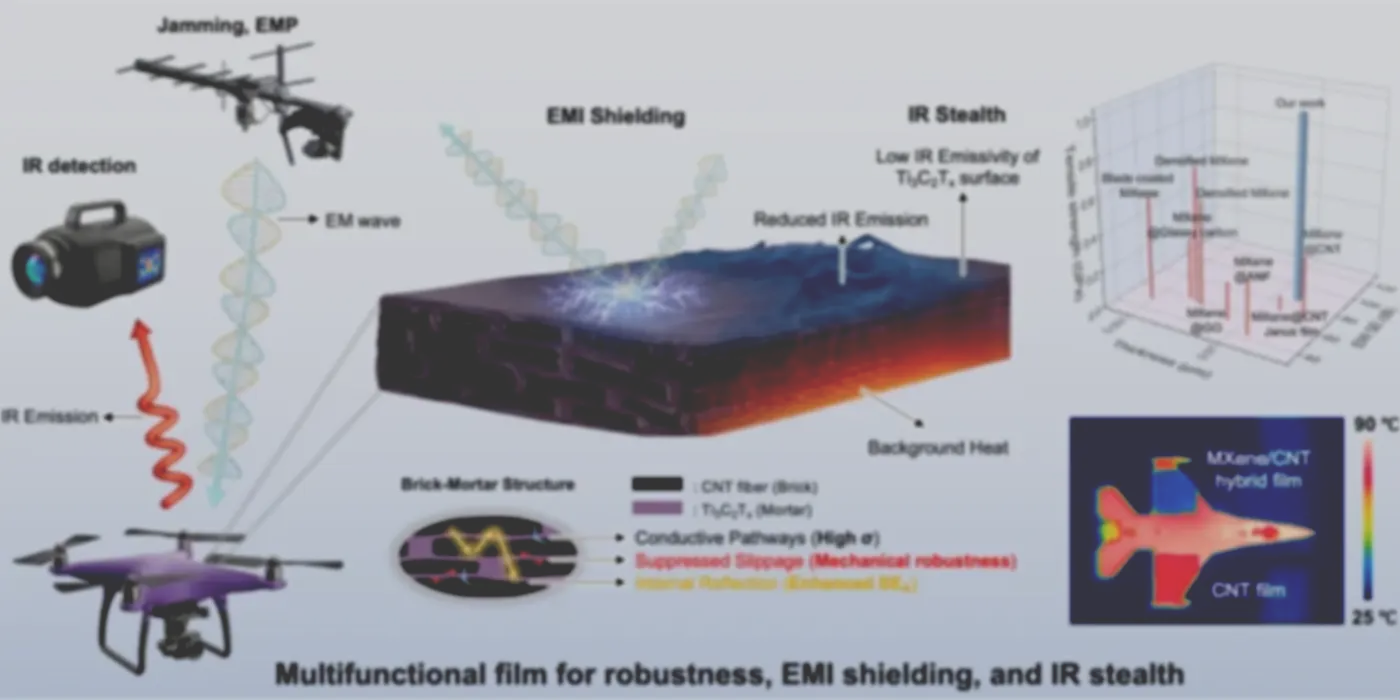
Researchers have developed a composite film that combines electromagnetic interference shielding, infrared stealth, and high mechanical strength using carbon nanotube fibers and MXene.
Researchers have developed a composite film that combines electromagnetic interference shielding, infrared stealth, and high mechanical strength using carbon nanotube fibers and MXene.


A rigorous, long-term study of quality of life in patients who underwent one of the three most common treatments for prostate cancer found that each affected men's lives in different ways. The findings provide invaluable information for men with prostate cancer who are facing vital treatment decisions.
Researchers studied quality of life in men who either underwent radical prostatectomy, implantation of radioactive seeds in their prostate gland or had external beam radiation therapy. The three treatment options rank about equally in survival outcomes for most men, so specific impacts on quality of life become paramount in making treatment decisions, said Dr. Mark Litwin, the study's lead author and a researcher at UCLA's Jonsson Cancer Center.
New research on companies that sprint to rapidly gain market share is revealing the danger of pursuing sudden massive growth, according to the Management Insights feature in the April issue of Management Science.
Why do east Asian lung cancer patients respond better to chemotherapy than other ethnic groups? The answer could be useful in tailoring cancer treatments to individual patients.
"Genetic differences may help explain why so many Asian women who never smoked develop lung cancer," said Dr. Adi Gazdar, professor of pathology at UT Southwestern and senior author of a study appearing online today in Public Library of Science Medicine.
Genomic research has the potential to improve global health by elucidating basic mechanisms of disease, susceptibility, and resistance, thereby guiding the development of preventive interventions [1]. Recently developed methods for exploring how human genetic variation affects resistance are likely to provide strategic clues about vaccine development for researchers working on malaria, HIV, tuberculosis, and other diseases of the developing world [2].
Early menarche tends to be preceded by rapid infancy weight gain and is associated with increased childhood and adult obesity risk. As age at menarche is a heritable trait, we hypothesised that age at menarche in the mother may in turn predict her children's early growth and obesity risk.
Proper formation of the proteins that power heart and skeletal muscle seems to rely on a precise concentration of a "chaperone" protein known as UNC-45, according to a new study.
This basic discovery may have important implications for understanding and eventually treating heart failure and muscle wasting elsewhere in the body resulting from burns, brain trauma, diabetes, cancer and the effects of aging, the senior author of the paper said. The finding resulted from experiments using tiny, genetically engineered worms at the University of Texas Medical Branch at Galveston (UTMB), and is reported in a paper featured on the cover of the April 23, 2007, issue of the Journal of Cell Biology.
Controlling the properties and behavior of matter at the smallest scale—in effect, "domesticating atoms"—can help to overcome some of the world’s biggest challenges, concludes a new report on how diverse experts view the future of nanotechnology. Released today, NanoFrontiers: Visions for the Future of Nanotechnology, summarizes discussions among over 50 scientists, engineers, ethicists, policymakers, and other experts, as well as information gathered in follow-up interviews and from specially prepared background papers, about the long-term potential of nanotechnology.
Imagine a world where damaged organs in your body—kidneys, liver, heart—can be stimulated to heal themselves. Envision people tragically paralyzed whose injured spinal cords can be repaired. Think about individuals suffering from the debilitating effects of Parkinson’s or Alzheimer’s relieved of their symptoms – completely and permanently.
Want to keep kids thin? Clore Laboratory at the University of Buckingham is supplementing infant formula and other baby foods with leptin,the hunger hormone. Researchers say it could provide permanent protection from obesity and diabetes into adulthood and could be on shop shelves soon.
Those who take the foods early in life should remain permanently slim. 'Like those people who are lean by nature even though they overeat ? like we all do – they will tend to be inefficient in terms of using energy,' says Mike Cawthorne, who heads the Metabolic Research group at Clore.
EU legislation to promote the uptake of biodiesel will not make any difference to global warming, and could potentially result in greater emissions of greenhouse gases than from conventional petroleum derived diesel. This is the conclusion of a new study reported today in Chemistry & Industry.
Analysts at SRI Consulting compared the emissions of greenhouse gases by the two fuels across their overall life cycles from production to combustion in cars.

A spectacular fossilised forest has transformed our understanding of the ecology of the Earth’s first rainforests. It is 300 million years old.
The forest is composed of a bizarre mixture of extinct plants: abundant club mosses, more than 40 metres high, towering over a sub-canopy of tree ferns, intermixed with shrubs and tree-sized horsetails. Nowhere elsewhere on the planet is it possible to (literally) walk through such an extensive swathe of Carboniferous rainforest.
Detail of a pteridosperm, an extinct seed-producing fern-like plant. Width across image about six centimeters. Credit: Dr. Howard Falcon-Lang
Medical professionals conducting clinical trials should provide more information about financial conflicts of interest before they talk to patients about participating in the trials.
That is one of the main conclusions of a new survey by researchers from Duke University Medical Center and Johns Hopkins University. Their study found that 41 percent of the clinical trial coordinators surveyed had experience disclosing financial aspects of the trial to potential participants, and 28 percent of the coordinators had been asked by participants about potential financial conflicts.