News Articles

News Account

News Account

News Releases From All Over The World, Right To You
RSS Feed
Ancient DNA Study Finds Phoenician From Carthage Had European Ancestry

Ancient DNA Study Finds Phoenician From Carthage Had European Ancestry

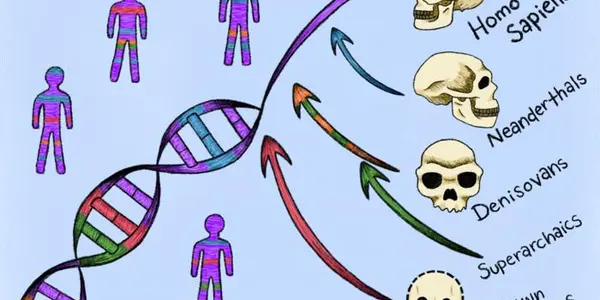
A research team co-led by a scientist at New Zealand's University of Otago has sequenced the first complete mitochondrial genome of a 2500-year-old Phoenician dubbed the "Young Man of Byrsa" or "Ariche".
This is the first ancient DNA to be obtained from Phoenician remains and the team's analysis shows that the man belonged to a rare European haplogroup -- a genetic group with a common ancestor -- that likely links his maternal ancestry to locations somewhere on the North Mediterranean coast, most probably on the Iberian Peninsula.
The findings are newly published in the prestigious international journal PLOS ONE.

Female Meerkats Compete To Outgrow Their Sisters

Female Meerkats Compete To Outgrow Their Sisters

Meerkats live in groups of up to 50 individuals, yet a single dominant pair will almost completely monopolise reproduction, while subordinates help to raise offspring through feeding and babysitting. Since only a small minority of individuals ever get to be dominants, competition for the breeding role is intense in both sexes and females are unusually aggressive to each other.
Within groups, subordinate females are ranked in a hierarchy based on age and weight, forming a "reproductive queue". When dominant females die, they are usually replaced by their oldest and heaviest daughter, though younger sisters sometimes outgrow their older sisters and can replace them in breeding queues.

Scientists Discover How Supermassive Black Holes Keep Galaxies Turned Off

Scientists Discover How Supermassive Black Holes Keep Galaxies Turned Off

An international team of scientists has identified a common phenomenon in galaxies that could explain why huge numbers of them turn into cosmic graveyards.
Galaxies begin their existence as lively and colourful spiral galaxies, full of gas and dust, and actively forming bright new stars. However, as galaxies evolve, they quench their star formation and turn into featureless deserts, devoid of fresh new stars, and generally remain as such for the rest of their evolution. But the mechanism that produces this dramatic transformation and keeps galaxies turned off, is one of the biggest unsolved mysteries in galaxy evolution.

Out Of Tune: Mismatch Of Vascular And Neural Responses Suggests Limits Of FMRI

Out Of Tune: Mismatch Of Vascular And Neural Responses Suggests Limits Of FMRI

In an article published online ahead of print on May 25, 2016 in Nature, investigators at the Medical University of South Carolina (MUSC) report that, during sensory stimulation, increases in blood flow are not precisely "tuned" to local neural activity, challenging the long-held view that vascular and local neural responses are tightly coupled.
Many brain-imaging techniques that rely on changes in the flow and oxygenation of blood--including functional magnetic resonance imaging (fMRI)--assume that vascular changes reflect a proportional change in local neural activity.

Investigating How 'chemo Brain' Develops In Cancer Patients

Investigating How 'chemo Brain' Develops In Cancer Patients

During and after chemotherapy, many cancer patients describe feeling a mental fog, a condition that has been dubbed "chemo brain." Why this happens is unclear, but researchers have found a new clue to understanding this syndrome. A study in the journal ACS Chemical Neuroscience reports that chemotherapy in rats affects their chemical messengers dopamine and serotonin, which are associated with cognition.

Anemia Negatively Affects Recovery From Traumatic Brain Injuries

Anemia Negatively Affects Recovery From Traumatic Brain Injuries

COLUMBIA, Mo. (May 25, 2016) - Approximately half of patients hospitalized with traumatic brain injuries are anemic, according to recent studies, but anemia's effects on the recovery of these patients is not clear. Now, researchers from the University of Missouri School of Medicine have found evidence that anemia can negatively influence the outcomes of patients with traumatic brain injuries.

Forget Peacock Tails, Fruit Fly Sperm Tails Are The Most Extreme Ornaments

Forget Peacock Tails, Fruit Fly Sperm Tails Are The Most Extreme Ornaments

When it comes to mating, male animals show off the flashiest of ornaments to convince females of their suitability. A peacock's ornate tail may be the best-known example of a mate-attracting ornament, but a new study finds that peacock tails have nothing on a tail of another kind. Sperm tails in fruit flies are the most extreme ornament ever described.

What Can Pavlov's Dogs Tell Us About Drinking?

What Can Pavlov's Dogs Tell Us About Drinking?

Montreal, May 25, 2016 -- Humans aren't much different from other animals. Just like Pavlov's dogs, we can become conditioned to associate environmental cues with rewards. Innocent enough when the sight of your sneakers makes you want to go for a run, but not necessarily so when the sight of the liquor store prompts you to want a drink.
Indeed, Pavlovian cues that predict alcohol can lead us toward addiction. And sometimes those cues can become desirable in and of themselves, as shown in a new study published in Frontiers in Behavioral Neuroscience by researchers from Concordia University in Montreal.

Zika Virus May Be Linked To More Eye Problems In Brazilian Babies With Microcephaly

Zika Virus May Be Linked To More Eye Problems In Brazilian Babies With Microcephaly

SAN FRANCISCO - May 25, 2016 - Researchers studying babies with a Zika virus-related birth defect say they have found previously unreported eye problems possibly linked to the virus that could result in severe visual impairment. In three Brazilian infants with microcephaly, the researchers observed retinal lesions, hemorrhaging and abnormal blood vessel development not noted before in relation to the virus. The findings are being published online today in Ophthalmology, journal of the American Academy of Ophthalmology.

Current Atmospheric Models Underestimate The Dirtiness Of Arctic Air

Current Atmospheric Models Underestimate The Dirtiness Of Arctic Air

Black carbon aerosols--particles of carbon that rise into the atmosphere when biomass, agricultural waste, and fossil fuels are burned in an incomplete way--are important for understanding climate change, as they absorb sunlight, leading to higher atmospheric temperatures, and can also coat Arctic snow with a darker layer, reducing its reflectivity and leading to increased melting. Unfortunately, current simulation models, which combine global climate models with aerosol transport models, consistently underestimate the amount of these aerosols in the Arctic compared to actual measurements during the spring and winter seasons, making it difficult to accurately assess the impact of these substances on the climate.
Money Back Guarantees For Non-reproducible Results?

Money Back Guarantees For Non-reproducible Results?

There are better solutions to the "reproducibility crisis" in research, according to an editorial published today.
Should an academic institution refund its financial payment if the basic science or pre-clinical results prove to be irreproducible?
Such an "incentive-based approach" for improving data reproducibility was recently proposed by a senior executive at Merck, although the idea is said not to represent the company's position.
But in an editorial published by The BMJ today, Eric Topol, Director of Scripps Translational Science Institute in California, argues that there are better solutions to the "reproducibility crisis" in research.

Wildfire -- It's Not Spreading Like Wildfire

Wildfire -- It's Not Spreading Like Wildfire

A new analysis of global data related to wildfire, published by the Royal Society, reveals major misconceptions about wildfire and its social and economic impacts.
Prof. Stefan Doerr and Dr Cristina Santin from Swansea University's College of Science carried out detailed analysis of global and regional data on fire occurrence, severity and its impacts on society.
Their research, published in Philosophical Transactions of the Royal Society B, looked at charcoal records in sediments and isotope-ratio records in ice cores, to build up a picture of wildfire in the past.