News Articles

News Account

News Account

News Releases From All Over The World, Right To You
RSS Feed
Avoiding Mixtures Of Different Mitochondria Leads To Effective Mitochondrial Replacement

Avoiding Mixtures Of Different Mitochondria Leads To Effective Mitochondrial Replacement

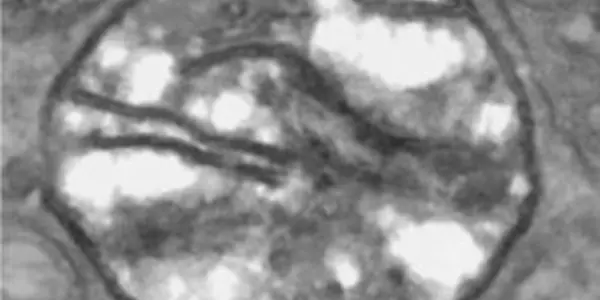
New York, NY (May 19, 2016) - Scientists at The New York Stem Cell Foundation (NYSCF) Research Institute discovered an important biological phenomenon in human cells that will help scientists and clinicians design safer treatments to prevent mitochondrial diseases. NYSCF first pioneered a technique, mitochondrial replacement therapy (MRT), in 2012 to prevent inheritance of these devastating and debilitating diseases. Now, scientists at the NYSCF Research Institute and Columbia University are working to hone this technique and understand the biological processes that would impact patients as this process is brought into clinical trials.

How Birds Turn Red

How Birds Turn Red

In the bird world, the color red has special significance. Many species use red signals to attract mates or deter rivals, adding the color to their beaks, feathers, or bare skin. Generally speaking, as far as many birds are concerned, redder is better. Now, two teams of researchers have independently identified an enzyme-encoding gene that allows some bird species to convert yellow pigments from their diets into that remarkable red. Their findings are reported on May 19 in Current Biology.

'Piggybacking' Mitochondrial DNA Can Compromise Mitochondrial Replacement Therapy

'Piggybacking' Mitochondrial DNA Can Compromise Mitochondrial Replacement Therapy

Mitochondrial replacement therapy, where a nucleus from a mother's egg cell is transferred into a donor egg containing healthy mitochondria, shows promise for preventing the inheritance of mitochondrial DNA diseases. However, small amounts of mitochondrial DNA can sometimes hitch a ride with the transferred nucleus, and a study publishing May 19 in Cell Stem Cell shows that this DNA can override the mitochondria in the donor cell. The findings may call into question the beneficial effect of nuclear transfer for mitochondrial replacement therapy.

Why Humans (and Not Mice) Are Susceptible To Zika

Why Humans (and Not Mice) Are Susceptible To Zika

Flaviviruses--such as Zika, dengue, and yellow fever--have emerged as human (and other primate) pathogens because of their ability to specifically overcome our anti-viral defenses. In the case of Zika, researchers at the Icahn School of Medicine at Mount Sinai report May 19 in Cell Host & Microbe that one of the virus's seven non-structural proteins (NS5) is singularly responsible for blocking the action of interferons (proteins that stop viral replication) in human cells, while mouse cells are unaffected.

Developing Tropical Storm Triggers Deadly Landslides In Sri Lanka

Developing Tropical Storm Triggers Deadly Landslides In Sri Lanka

A storm does not have to be especially powerful in terms of its winds to be deadly. Such is the case with Tropical Cyclone 01B (TC 01B) in the Bay of Bengal. Despite only reaching minimal tropical storm intensity just this morning at 06 UTC 18 May 2016, the system has been responsible for dumping heavy rains in and around Sri Lanka and southern Indian over the past few days as it tried to organize itself in the southwestern Bay of Bengal. This set the stage for two massive landslides, which buried 3 villages in south central Sri Lanka. So far, although several hundred people have been rescued, it is feared from 150 to as many as 400 others may have been buried by the mudslides.

A Tale Of A Tail: How Viruses Infect Bacteria

A Tale Of A Tail: How Viruses Infect Bacteria

Bacteriophages are viruses that infect bacteria. Using state-of-the-art tools, EPFL scientists have described a million-atom "tail" that bacteriophages use to breach bacterial surfaces. The breakthrough has major implications for science and medicine, as bacteriophages are widely used in research.

Genital Size Doesn't Matter -- For Fish

Genital Size Doesn't Matter -- For Fish

Big isn't always better when it comes to the size of male genitals.
Researchers at The Australian National University (ANU) have been looking at the breeding habits of fish, to test the theory that bigger genitals make males more attractive or successful in fathering offspring.
They found when it comes to fish, females don't find males with big genitals any more attractive than those with normal or smaller genitals.

Gambusia. Credit: Stuart Hay, ANU

Folic Acid Fortification Doesn't Reduce Brain, Spine Defects

Folic Acid Fortification Doesn't Reduce Brain, Spine Defects

Fortifying the U.S. food supply with folic acid was not associated with a decline in certain birth defects that researchers expected to see in California, a finding likely to contribute to an ongoing debate about the future of the fortification program.
The study of more than 1.3 million California births and pregnancies spanning two decades is published in Birth Defects Research Part A. The research examines neural tube defects, which affect a baby's brain and spine, and which were the intended target of fortification with folic acid, a B vitamin. However, neural tube defects were already becoming less common before fortification began, and their decline slowed substantially after fortification was introduced, the study found.

Pregabalin Pain And Anxiety Drug May Be Linked To Birth Defects

Pregabalin Pain And Anxiety Drug May Be Linked To Birth Defects

MINNEAPOLIS - A drug commonly used to treat pain, epilepsy, anxiety and other brain health disorders may be associated with an increased risk of major birth defects, according to a study in Neurology. 
The drug pregabalin is approved by the FDA to treat epilepsy, fibromyalgia and neuropathic pain, such as pain from diabetic neuropathy or pain after shingles or spinal cord injury. It is also used for generalized anxiety disorder and other mental health issues. This is called off-label prescribing.

Low Nicotine Cigarettes Still Reduce Body Weight

Low Nicotine Cigarettes Still Reduce Body Weight

It used to be a truism that when people stopped smoking, they were likely to gain weight, but the reasons for it were cloudy. Did people replace the mechanism of smoking with candy and food, or did nicotine suppress body weight gain independent of food intake. In other words, was it speeding up metabolism
A new paper in Nicotine&Tobacco Research using rats says it is the latter. Caution is always warranted in these sorts of studies, since mainstream media tends to hype animal model findings without ever noting that rats are actually not little people.
In rats self-administering a maximally-reinforcing dose of nicotine, body weight gain during the 20-day study period was attenuated by ~40% despite no change in food intake.  

Bending Hot Molecules In Extreme Environments

Bending Hot Molecules In Extreme Environments

Hot molecules, which are found in extreme environments such as the edges of fusion reactors, are much more reactive than those used to understand reaction studies at ambient temperature.
Detailed knowledge of their reactions is relevant for modeling nuclear fusion devices and simulating the reaction that takes place on a spacecraft's heat shield at the moment when it re-enters Earth's atmosphere. In a new in EPJ D paper, Masamitsu Hoshino from Sophia University, Tokyo, and colleagues reveal a method for controlling the likelihood that these reactions between electrons and hot molecules occur, by altering the degree of bending the linear molecules, modulated by reaching precisely defined temperatures.

Gut Microbiome And Broad-Spectrum Antibiotics Correlated To Worsened Complications In Transplant Patients

Gut Microbiome And Broad-Spectrum Antibiotics Correlated To Worsened Complications In Transplant Patients

Some broad-spectrum antibiotics that disrupt the gut microbiome may raise the risk of complications from stem cell transplantation, according to a new study evaluating data from more than 850 transplant patients, as well as from mice.
The findings suggest that selecting antibiotics that spare "good" bacteria may help protect against graft-versus-host disease (GVHD), which occurs when transplanted donor cells, recognizing their new home as foreign, attack the recipient's body.
Transplant patients vulnerable to life-threatening bacterial infections are often treated with broad-spectrum antibiotics.