News Articles

News Account

News Account

News Releases From All Over The World, Right To You
RSS Feed
Professors Often Lose Free Speech Disputes With Universities

Professors Often Lose Free Speech Disputes With Universities

When does free speech become important? In the halls of academia, it often comes down along political and cultural lines. An endorsement of business mogul Donald Trump leaves academics and students running for a safe speech while a professor bullying a journalism student claims she was oppressed.
When academics do choose to litigate speech disputes with colleges and universities, they end up losing nearly three-quarters of the time, and Michael LeRoy, a professor of labor and employment relations at
University of Illinois
says that is a sign of growing tension between academic freedom and campus speech codes, without recognizing that these issues only go to action when they are the most flagrant sort of violation.

Exploring The Mathematical Universe

Exploring The Mathematical Universe

San Jose, Calif., May 10, 2016 -- A team of more than 80 mathematicians from 12 countries has begun charting the terrain of rich, new mathematical worlds, and sharing their discoveries on the Web. The mathematical universe is filled with both familiar and exotic items, many of which are being made available for the first time. The "L-functions and Modular Forms Database," abbreviated LMFDB, is an intricate catalog of mathematical objects and the connections between them. Making those relationships visible has been made possible largely by the coordinated efforts of a group of researchers developing new algorithms and performing calculations on an extensive network of computers.

School Activities May Be Key To Tobacco Cessation For Native American Adolescents

School Activities May Be Key To Tobacco Cessation For Native American Adolescents

COLUMBIA, Mo. - According to the Centers for Disease Control and Prevention, Native American adolescents have higher rates of cigarette smoking than other racial or ethnic groups. New research from the University of Missouri on the smoking habits of Native American adolescents finds that family warmth and support, as well as participation in school activities, can play a role in tobacco prevention.

Tiger Moths Use Signals To Warn Bats: Toxic Not Tasty

Tiger Moths Use Signals To Warn Bats: Toxic Not Tasty

Acoustic warning signals emitted by tiger moths to deter bats - a behavior previously proven only in the laboratory - actually occur in nature and are used as a defense mechanism, according to new research from Wake Forest University.
Field research of free-flying bats conducted in their natural habitats by biology graduate student Nick Dowdy and colleagues shows that tiger moths produce ultrasonic signals to warn bats they don't taste good. This behavior - called acoustic aposematism - was previously proven in the laboratory by biology professor Bill Conner and Jesse Barber, who earned his doctorate at Wake Forest in 2007.

A Yellow Fever Epidemic: A New Global Health Emergency?

A Yellow Fever Epidemic: A New Global Health Emergency?

WASHINGTON -- Evidence is mounting that the current outbreak of yellow fever is becoming the latest global health emergency, say two Georgetown University professors who call on the World Health Organization to convene an emergency committee under the International Health Regulations. In addition, with frequent emerging epidemics, they call for the creation of a "standing emergency committee" to be prepared for future health emergencies.

Genetic Potential Of Oil-eating Bacteria From The BP Oil Spill Decoded

Genetic Potential Of Oil-eating Bacteria From The BP Oil Spill Decoded

Microbiologists at The University of Texas at Austin and their colleagues have cracked the genetic code of how bacteria broke down oil to help clean up the Deepwater Horizon oil spill, revealing that some bacteria have far greater potential for consuming oil than was previously known. The findings, published in the journal Nature Microbiology, have applications for responding to future oil spills and other ecological disasters, while shedding light on the ways in which tiny microbes played an outsized role in limiting damage from the 2010 spill caused by the explosion of a BP oil rig.

Specific Changes To Non-coding RNA May Be Part Of What Makes Us Human

Specific Changes To Non-coding RNA May Be Part Of What Makes Us Human

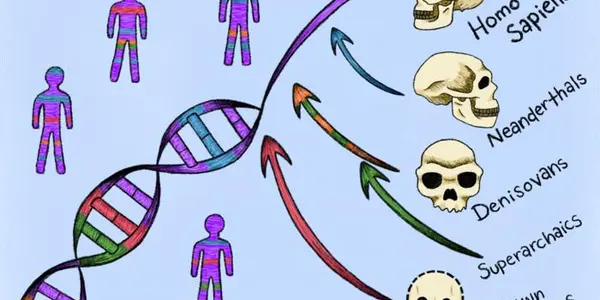
Human-specific variants of four microRNAs may have altered expression levels and gene targets compared to other great apes, according to a study published April 22, 2016 in the open-access journal PLOS ONE by Alicia Gallego from the Institute of Evolutionary Biology, Spain, and colleagues.
MicroRNAs are post-transcriptional gene regulators known to be involved in almost every biological function. They are highly conserved among species and, while some differences exist, the effect of the variations is often unclear. The authors of the present study analysed over 1500 microRNAs to identify variations between humans and other great ape species, including orangutans, gorillas, bonobos and chimpanzees, and the possible effect of these variations on function.
Honeybees More Likely To Regulate Hive's 'thermostat' During Rapid Temperature Increases

Honeybees More Likely To Regulate Hive's 'thermostat' During Rapid Temperature Increases

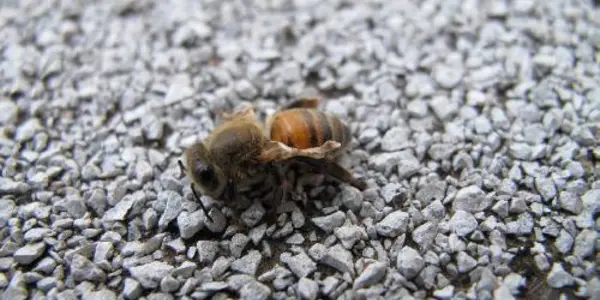
Honeybees use their wings to cool down their hives when temperatures rise, but new University of Colorado Boulder research shows that this intriguing behavior may be linked to both the rate of heating and the size of a honeybee group.
The findings, which were recently published in the journal Animal Behaviour, indicate that honeybees anticipate and react to rapid temperature increases sooner than they do when the increase is gradual -- but only when the bees are clustered in groups of 10.
"Larger groups of bees seem to be better than individuals or small groups at cuing in on how quickly an environment is changing," said Chelsea Cook, a doctoral researcher in the Department of Ecology and Evolutionary Biology at CU-Boulder and lead author of the study.

Fossils May Reveal 20-million-year History Of Penguins In Australia

Fossils May Reveal 20-million-year History Of Penguins In Australia

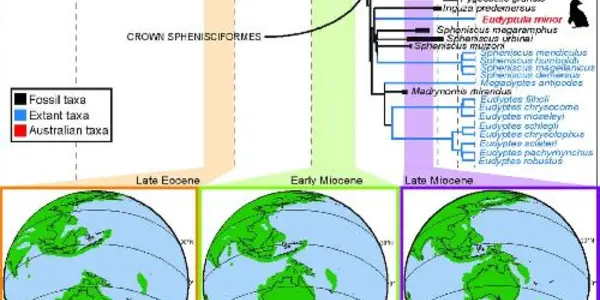
Multiple dispersals of penguins reached Australia after the continent split from Antarctica, including 'giant penguins' that may have lived there after they went extinct elsewhere, according to a study published April 26, 2016 in the open-access journal PLOS ONE by Travis Park from Monash University, Australia, and colleagues.

Newly Discovered Titanosaurian Dinosaur From Argentina, Sarmientosaurus

Newly Discovered Titanosaurian Dinosaur From Argentina, Sarmientosaurus

Scientists have discovered Sarmientosaurus musacchioi, a new species of titanosaurian dinosaur, based on an complete skull and partial neck fossil unearthed in Patagonia, Argentina, according to a study published April 26, 2016 in the open-access journal PLOS ONE by Rubén Martínez from the Laboratorio de Paleovertebrados of the Universidad Nacional de la Patagonia San Juan Bosco (UNPSJB), Argentina, and colleagues.

First Multi-year Study Of Honey Bee Parasites And Disease Reveals Troubling Trends

First Multi-year Study Of Honey Bee Parasites And Disease Reveals Troubling Trends

Honey bee colonies in the United States are in decline, due in part to the ill effects of voracious mites, fungal gut parasites and a wide variety of debilitating viruses. Researchers from the University of Maryland and the U.S. Department of Agriculture recently completed the first comprehensive, multi-year study of honey bee parasites and disease as part of the National Honey Bee Disease Survey. The findings reveal some alarming patterns, but provide at least a few pieces of good news as well.